

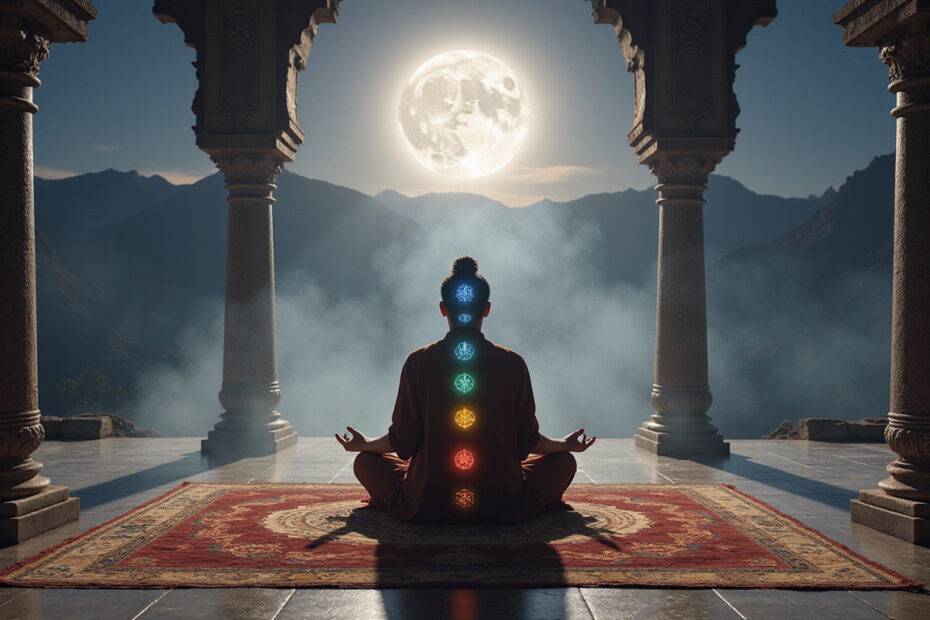
For centuries, mystics and yogis have spoken about siddhi—extraordinary abilities said to arise from deep meditation and spiritual discipline. Stories of levitation, mind-reading, and miraculous healings capture the imagination, but they can also lead to confusion or unrealistic expectations. What are siddhis really? Are they literal “superpowers,” subtle inner capacities, or both? And how can you approach them safely and practically in modern life?
This guide explores the real meaning of siddhi in the yogic tradition, the mindset you need, and concrete meditation techniques that cultivate clarity, insight, and energy—without getting lost in fantasy or ego-traps.
What Is Siddhi? Beyond the Hype
In Sanskrit, siddhi means “accomplishment,” “perfection,” or “attainment.” In yoga and Buddhism, it refers to special capacities or powers that may arise from:
- Deep meditation (dhyāna)
- Concentration (dharanā)
- Mantra and breath practices
- Ethical and lifestyle disciplines
Classical texts, such as the Yoga Sutra of Patanjali, describe both “great” (mahā-siddhis) and “minor” (aṇu-siddhis) powers. Examples include:
- Intensified intuition
- Clairaudience or clairvoyance
- Knowledge of past lives
- Exceptional physical resilience
- Influence over elements or subtle energies
Traditional teachers emphasize that the highest siddhi is liberation (moksha)—freedom from suffering and ignorance. All other siddhis are considered side-effects, not the main goal.
The Two Levels of Siddhi: Outer and Inner
To work with siddhi in a grounded way, it helps to distinguish two levels:
1. Outer Siddhis (Extraordinary Phenomena)
These are the “miracle powers” commonly associated with advanced yogis:
- Levitation or extreme lightness
- Invisibility
- Reading others’ thoughts
- Healing from a distance
- Manifestation of objects
Whether you take these literally, symbolically, or as rare energetic phenomena, the key point from the tradition is this: chasing outer siddhis can easily derail your path.
2. Inner Siddhis (Transformational Capacities)
These are the powers you can directly cultivate and experience as your practice deepens:
- Unshakable concentration
- Profound calm in chaos
- Heightened clarity and insight
- Natural compassion and patience
- Freedom from compulsive habits
- Stable awareness of the present moment
Inner siddhis are accessible to sincere practitioners and are far more relevant to everyday life. They are the “ancient powers” that can genuinely transform your relationships, work, and sense of purpose.
The Essential Mindset: Why Intent Matters More Than Power
Traditions consistently warn: the danger is not siddhi itself, but the ego that wants to own it.
Approach any siddhi-related practice with these safeguards:
-
Primary Goal: Liberation, Not Power
View siddhis—if they come at all—as side-effects of spiritual growth, not trophies. -
Humility and Secrecy
Historically, teachers advised keeping any unusual abilities private, to avoid ego inflation and exploitation. -
Service Orientation
Ask: “Does this help reduce suffering—for myself and others—or feed pride and fantasy?” -
Skeptical Curiosity
Remain open-minded but discerning. Many experiences (visions, lights, sounds) can be psychological or energetic phenomena rather than reliable “psychic powers.”
With this foundation, you can explore practical meditation techniques linked to siddhi without losing balance.
Foundations for Siddhi: Ethics, Breath, and Focus
Before specialized practices, every serious tradition emphasizes three pillars:
1. Ethical Living (Yama & Niyama)
Yogic texts say siddhi without ethics is dangerous. Core principles include:
- Non-harming (ahimsa)
- Truthfulness (satya)
- Non-stealing (asteya)
- Sexual responsibility (brahmacharya)
- Non-greed (aparigraha)
- Contentment and discipline (santosha, tapas)
Ethics stabilize your mind and energy, creating a safe container for any siddhi-like developments.
2. Breath Regulation (Pranayama)
Subtle powers are associated with prana, the life-force carried by the breath. Gentle pranayama builds focus and vitality:
- Equal breathing (sama vritti): inhale 4, exhale 4.
- Extended exhalation: inhale 4, exhale 6–8 to calm the nervous system.
- Nadi shodhana (alternate nostril breathing) to balance left/right energy channels.
Never force the breath; overdoing advanced pranayama can cause agitation or imbalance.
3. Stable Concentration (Dharana)
Siddhi arises from one-pointed mind. Without concentration, energy is scattered. Initially, your “superpower” is simply the ability to stay with one object for more than a few seconds.
A basic practice:
- Choose an anchor: breath at nostrils, heart center, or a mantra.
- Gently rest your attention there.
- Each time the mind wanders, notice and return—without judgment.
- Practice 10–20 minutes daily.
This simple training in dharana lays the groundwork for deeper siddhi practices like dhyana (meditation) and samadhi (absorption).
Practical Meditation Techniques Traditionally Linked to Siddhi
Below are accessible, historically rooted techniques. Approach them as tools to deepen presence and insight. Any siddhi-like effects are secondary.
1. Trataka: Candle-Gazing for Laser Focus
Trataka is a visual concentration practice mentioned in classic Hatha Yoga texts as a purifier of eyes and mind.
How to practice:
- Sit comfortably in a dark or dim room.
- Place a candle at eye level, about an arm’s length away.
- Soften your gaze at the flame without blinking, as long as comfortable.
- When eyes water or tire, close them and see the after-image of the flame in your mind’s eye.
- When the image fades, open eyes and repeat 3–5 rounds.
Benefits and inner siddhis it supports:
- Sharper concentration and willpower
- Increased visual memory and imagery
- Subtle awareness of the “inner screen” of the mind
This builds the capacity to hold a steady image or intention, a foundational siddhi in itself.

2. Mantra Japa: Tuning Consciousness Through Sound
Repetition of sacred sounds (mantra japa) is one of the safest traditional pathways toward siddhi. Yogic literature states that each mantra carries a specific vibration that can transform consciousness over time (source: Chinmaya Mission).
Basic method:
- Choose a mantra from a living tradition, ideally with teacher guidance. Common examples:
- “Om”
- “So’ham” (“I am That”)
- “Om Namah Shivaya”
- Sit with a straight spine, relax the body.
- Repeat the mantra softly or mentally, synchronized with the breath.
- If thoughts arise, return to the sound.
- Practice 15–30 minutes daily.
Potential inner siddhis:
- More stable, continuous awareness
- Subtle perception of mental patterns
- Spaciousness around thoughts and emotions
- Heightened intuition as mental “noise” reduces
The real siddhi here is the ability to rest in a quiet, clear field of consciousness at will.
3. Insight Meditation on the Elements (Bhuta Shuddhi)
Many traditional siddhi descriptions relate to mastery over the elements—earth, water, fire, air, and space. While tales of walking on water or becoming weightless are dramatic, the practical version is learning to directly experience these elemental qualities in your body and environment.
A simplified element meditation:
-
Earth (stability)
- Feel the solid contact points of your body with the ground.
- Notice weight, density, structure.
- Internally repeat: “This is the earth element.”
-
Water (flow)
- Sense saliva, blood pulse, subtle movements within.
- Feel fluidity and adaptability.
- Repeat: “This is the water element.”
-
Fire (heat, transformation)
- Notice warmth in the body, digestion, metabolic energy.
- Reflect on transformation—food to energy, ideas to action.
- Repeat: “This is the fire element.”
-
Air (movement)
- Observe the breath, micro-movements, faint vibrations.
- Recognize motion and change.
- Repeat: “This is the air element.”
-
Space (openness)
- Sense the space inside your body cavities, between thoughts, around you.
- Rest in the feeling of openness and possibility.
- Repeat: “This is the space element.”
Rotate through each for a few minutes, then sit quietly.
Emerging inner siddhis:
- Deep embodiment and grounding
- Reduced fear of change and death (seeing all as elemental play)
- Ability to relax into spacious awareness during stress
4. Witness Consciousness: The Master Siddhi
Many teachers say the supreme siddhi is abiding as the witness—unchanging awareness that observes all experiences without being entangled.
Practice:
- Sit or stand in a natural posture.
- For a few breaths, settle with your anchor (breath or mantra).
- Begin to notice thoughts, sensations, and emotions as if from a slight distance.
- Silently label: “thinking, sensing, feeling,” then return to bare noticing.
- Periodically ask: “Who is aware of this?” without seeking an intellectual answer—just rest in the sense of being the knower.
Over time, this grows into a stable recognition: “I am not my thoughts, I am the awareness in which thoughts appear.” That recognition is a profound inner siddhi, dissolving much suffering and fear.
Safety, Discernment, and Common Pitfalls with Siddhi Practice
As your practice deepens, you might experience unusual states: inner lights, vibrations, spontaneous movements, intuitive flashes, or vivid dreams. These can be interesting but can also be distracting.
Key guidelines:
- Don’t over-interpret: Not every sensation is a paranormal event; many are natural stages of nervous-system adjustment.
- Stay grounded: Maintain regular work, relationships, exercise, and sleep.
- Avoid obsession: If you spend more time chasing phenomena than cultivating compassion, clarity, and ethics, re-balance.
- Seek guidance: If intense experiences arise—overwhelming fear, energy surges, or disorientation—consult an experienced teacher or, if needed, a mental-health professional who understands contemplative practice.
Remember: authentic siddhi makes you more sane, kind, and effective in the world—not less.
A Simple Daily Routine to Cultivate Inner Siddhi
To integrate these practices, consider this 30–40 minute routine:
-
5 minutes — Centering & Intention
- Sit quietly, feel your body, set the intention: “May this practice deepen wisdom and compassion.”
-
5–10 minutes — Breath or Nadi Shodhana
- Calm and balance your system.
-
10–15 minutes — Mantra Japa or Breath Focus
- Build concentration and inner spaciousness.
-
10 minutes — Witness or Element Meditation
- Explore deeper awareness or direct experience of elements.
-
1–2 minutes — Dedication
- Mentally offer benefits of practice to all beings. This reorients any emerging siddhi toward service.
Consistency matters more than intensity. The true siddhi is showing up every day, even when it’s boring or challenging.
FAQ About Siddhi and Meditation
1. Are siddhis real, and can anyone develop them?
Traditional texts and many practitioners affirm that siddhis are real, but their expression varies greatly. The more accessible form of siddhi—mental clarity, intuition, emotional resilience—is available to anyone who practices sincerely. Dramatic paranormal siddhis, if they occur at all, are rare and should never be the main goal.
2. How long does it take for siddhi powers to appear through meditation?
There is no fixed timeline. Some notice subtle changes in focus and intuition within weeks; deeper shifts in awareness may take years of disciplined practice. Remember that in yogic terms, freedom from craving and fear is already a profound siddhi, and this unfolds gradually as your practice matures.
3. Which meditation is best for gaining siddhi powers safely?
Practices rooted in established traditions—such as mantra japa, breath meditation, and witness awareness—are generally safest. Combine them with ethical living and guidance from an experienced teacher. When these foundations are in place, any siddhi that emerges is more likely to be integrated, stable, and beneficial rather than destabilizing or ego-driven.
Step Onto the Path: Your Siddhi Begins Now
The most powerful siddhi is not levitation or mind-reading; it’s the ability to live with clear awareness, open heart, and fearless honesty. That power is not reserved for monks in caves—it’s available to you, starting exactly where you are.
If you feel called to explore these ancient capacities:
- Choose one or two of the practices above and commit for 30 days.
- Keep a simple journal of shifts in clarity, mood, and intuition.
- Seek out a qualified meditation or yoga teacher to support your journey.
Begin today with just 10 minutes of intentional practice. In time, you may discover that the “ancient powers” you were seeking are not out there in supernatural displays, but within you—as clarity, compassion, and unshakable presence.