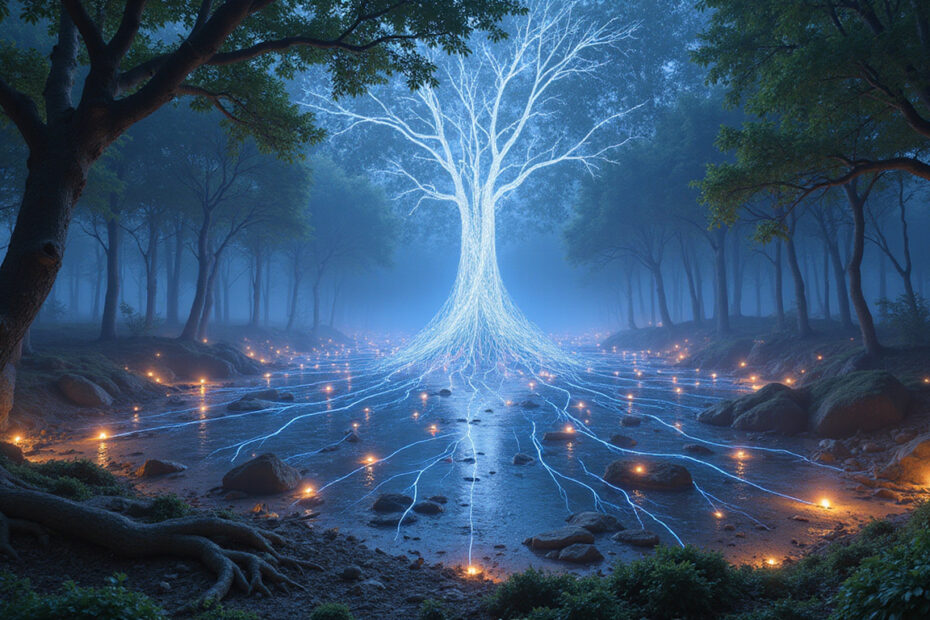
Among contemporary ideas about God and the universe, panentheism is one of the most intriguing. Sitting somewhere between classical theism and pantheism, panentheism offers a way of saying that God is in everything, while still remaining greater than the universe. For many people wrestling with questions about science, spirituality, and the nature of reality, panentheism provides a compelling middle path.
This guide explains what panentheism is, where it comes from, how it differs from other views of God, and why it matters for ethics, ecology, and everyday spiritual life.
What Is Panentheism?
At its core, panentheism (from the Greek pan = all, en = in, theos = God) means “all in God.” It holds two ideas together:
- The world is in God.
- God is more than the world.
Unlike pantheism, which tends to say that “God is the universe,” panentheism says “the universe exists within God, but God also transcends it.” So every creature, every event, every atom participates in God’s presence, yet God’s reality is not limited to the sum of all created things.
A common metaphor:
- The world is to God as your body is to your mind.
Your mind is intimately connected with your body, affected by it, aware of it—but your mind is not only your body. It exceeds it. Likewise, in panentheism, God is profoundly immanent in the world, yet also transcendent.
How Panentheism Differs from Other Views of God
To understand panentheism, it helps to contrast it with nearby concepts.
Panentheism vs. Classical Theism
Classical theism (especially in many Jewish, Christian, and Islamic traditions) emphasizes a God who is:
- Completely independent of creation
- All-powerful, all-knowing, unchanging
- Often imagined as “outside” space and time
Panentheism agrees that God transcends the universe, but insists more strongly that:
- God is dynamically present within every moment and every creature.
- The world makes a real difference in God’s experience (not just in ours).
- God and creation are in a genuine relationship of mutual influence—while God remains the ultimate ground of being.
Where classical theism may lean toward distance, panentheism leans toward relational intimacy without collapsing God into the world.
Panentheism vs. Pantheism
Pantheism is often summarized as “God is everything and everything is God.” It strongly emphasizes divine immanence: God is identical with the universe and its laws.
Panentheism shares the intuition that God is everywhere and in everything, but adds:
- God is more than the whole universe.
- God’s being is not exhausted by the cosmos; creation is within God, like a chapter within a much larger story.
So:
- Pantheism: God = the world.
- Panentheism: The world ∈ God, but God ≠ the world.
Panentheism vs. Deism
Deism imagines God as a distant architect: God creates the universe, sets up its laws, and then largely steps back.
Panentheism, by contrast, envisions:
- God continuously active within the world
- God experiencing, responding, and interacting with creation
- A living, ongoing relationship rather than a one-time act of creation
For those who feel that a distant “watchmaker God” is unsatisfying, panentheism offers a picture of immediate divine presence.
Historical Roots of Panentheistic Thought
The term “panentheism” is relatively modern (19th century), but the intuition behind it is much older and appears in several traditions.
Ancient and Classical Hints
- Greek philosophy: Thinkers like Plotinus described “The One” as the source of all being, present in everything yet beyond all things.
- Hindu traditions: Certain Vedantic views (e.g., qualified non-dualism) affirm that the world exists in Brahman, who is both immanent and transcendent.
- Christian mysticism: Writers like Meister Eckhart and Julian of Norwich emphasized God’s presence in all things while affirming God beyond all understanding.
These traditions often walked a fine line between saying God is “in all” and avoiding the idea that God is nothing more than the world.
Modern Philosophical Development
The explicit concept of panentheism grows clearer in modern philosophy and theology:
- German Idealism: Philosophers like Friedrich Schelling explored the idea of God evolving with the world, involving a deep unity while keeping a distinction.
- Process philosophy: Alfred North Whitehead and Charles Hartshorne developed a relational, evolving view of God, often cited as paradigmatic panentheism. God and world form a dynamic, interactive reality.
- Contemporary theology: Many eco-theologians, feminist theologians, and interfaith thinkers adopt panentheistic models to honor both divine mystery and the sacredness of the natural world.
For a deeper historical overview, the entry on panentheism in the Stanford Encyclopedia of Philosophy is a reliable academic resource (source).
Key Ideas at the Heart of Panentheism
While different panentheists emphasize different aspects, several core themes recur.
1. Immanence and Transcendence Held Together
Panentheism refuses to choose between a God who is:
- Immanent – fully present here and now, in every place and moment
- Transcendent – beyond any particular thing, concept, or universe
Instead, it affirms both as equally true. God is closer than your own breath and yet infinitely beyond your comprehension.
2. A Relational, Responsive God
In many panentheistic models:
- God genuinely responds to creation.
- Our choices influence how God experiences the world.
- Prayer, justice, compassion, and cruelty all matter to God in a real, interactive way.
This does not necessarily mean that God is weak. Rather, God’s power is often understood as persuasive, relational power rather than sheer force: God works from within reality, luring it toward greater beauty, goodness, and harmony, rather than constantly overriding it.

3. The World as the “Body of God”
A powerful panentheistic image is that creation is, in some sense, the “body of God.” That doesn’t mean God is reduced to the universe, but that:
- God expresses divine life through the evolving cosmos.
- The suffering of creatures is felt by God.
- The flourishing of life manifests something of God’s joy.
This image supports a strong sense of spiritual ecology: how we treat the Earth and all its beings is, symbolically and even metaphysically, how we treat the divine presence.
4. Ongoing Creation
Many panentheists see creation not as a one-time event in the distant past but as an ongoing process:
- Every new moment is a fresh instance of divine creativity.
- God continually invites the universe toward more complexity, consciousness, and compassion.
- Evolution and cosmology become ways of studying how God creatively unfolds reality over time.
This can provide a natural bridge between modern science and spiritual meaning.
Why Panentheism Appeals to Many Today
Panentheism’s growing popularity is not accidental. It connects with several contemporary concerns and intuitions.
It Respects Science Without Losing the Sacred
For people who accept modern cosmology and evolutionary biology, panentheism offers:
- A universe with real autonomy and process—consistent with physics and biology.
- A sense that this vast, evolving cosmos is suffused with divine presence.
- No need to choose between scientific explanations and spiritual significance.
The laws and patterns we study in science can be seen as expressions of God’s faithful, creative activity rather than competitors to divinity.
It Ground Ethics in Interconnectedness
If the world is within God, then:
- Every act of kindness participates in divine compassion.
- Every injustice and cruelty wounds not only creatures but, in some sense, God.
- Our lives are deeply interwoven with one another and with the divine life.
This can undergird moral commitments to justice, nonviolence, and solidarity: harming others is not just “breaking a rule” but violating a sacred relationship.
It Strengthens Ecological Responsibility
In panentheistic thinking, environmental destruction is not only a practical problem; it is spiritually tragic:
- Forests, oceans, and ecosystems are not merely resources; they are expressions of divine presence.
- Extinction, pollution, and climate change affect the “body of God,” not just human economic interests.
- Ecological healing becomes sacred work, not merely technical maintenance.
This resonates strongly with emerging forms of eco-spirituality and faith-based climate activism.
Everyday Spirituality in a Panentheistic Frame
Panentheism is not only a high-level philosophy; it can reshape how ordinary life is experienced.
Seeing the World as Sacramental
If God is in everything and beyond everything, then:
- Washing dishes can be a moment of quiet communion.
- Walking in nature becomes a form of contemplative prayer.
- Human relationships are arenas where divine love can be mirrored and deepened.
The divide between “sacred” and “secular” begins to soften. Every moment carries potential for encounter with God.
Prayer as Participation, Not Persuasion
From a panentheistic view:
- Prayer is less about convincing a distant God to intervene, and more about aligning yourself with the divine flow of compassion and wisdom already active in the world.
- Silence, gratitude, lament, and intercession become ways of cooperating with God’s ongoing creative and healing work.
- Your inner life is one way God experiences and engages the world.
Prayer and meditation are therefore not escapes from reality, but deep participation in it.
Suffering and Hope
Panentheism doesn’t offer easy answers to the problem of evil, but it frames it differently:
- God is not an aloof spectator to suffering; God shares in the pain of creation.
- God’s power is seen in patient solidarity and relentless, non-coercive work for healing—rather than instant fixes.
- Hope lies in the conviction that God is with all who suffer and that every act of love, however small, is never lost within the divine life.
For many, this portrayal of God feels more morally credible and emotionally honest than images of an all-controlling ruler.
A Quick Summary of Panentheism’s Distinctives
To bring the main points together, panentheism teaches that:
- The universe exists within God.
- God is in everything, yet more than everything.
- God and creation are in a real, dynamic relationship.
- Every creature and event matters deeply to the divine life.
- Science, ethics, and spirituality can be harmonized in a single, coherent vision.
FAQs About Panentheism and Related Ideas
1. What is the difference between panentheism and pantheism in simple terms?
Pantheism says “God is the universe”—God and the cosmos are identical. Panentheism says “the universe is in God”—God permeates everything but is not limited to or identical with the universe. God includes and exceeds the cosmos.
2. Is Christian panentheism compatible with traditional Christian beliefs?
Many Christian theologians propose forms of Christian panentheism that affirm core beliefs—such as creation, incarnation, and resurrection—while reimagining God’s relationship to the world as more relational and participatory. Others argue it departs from classical doctrines. There is ongoing debate within Christian thought, but panentheistic ideas appear in many Christian mystics and contemporary theologians.
3. How does process panentheism understand God’s power?
In process panentheism, influenced by Alfred North Whitehead, God’s power is primarily persuasive rather than coercive. God constantly offers possibilities for greater beauty, harmony, and love, but does not unilaterally override creaturely freedom or natural processes. God is intimately involved in every moment, but not as a dominating force—more like an ever-present, creative lure toward the good.
Moving Forward: Exploring and Living Panentheism
If the idea that God is in everything and beyond everything resonates with you, consider how panentheism might reshape:
- How you see your own life—as a unique way God experiences the world
- How you treat others—as bearers of divine presence
- How you approach nature—as a sacred expression of God’s creative life
- How you pray or meditate—as an alignment with the divine presence already surrounding and sustaining you
Explore further through serious philosophical and theological works, interfaith dialogues, and your own practices of contemplation and ethical living. Let the possibility that “all is in God” deepen your wonder, sharpen your conscience, and enlarge your hope.
If you’re ready to go deeper, set aside time this week to walk quietly outdoors, reflect on the possibility that every sound, leaf, and breath is held within an all-encompassing divine presence—and ask how embracing panentheism might change the way you live, love, and care for the world.