

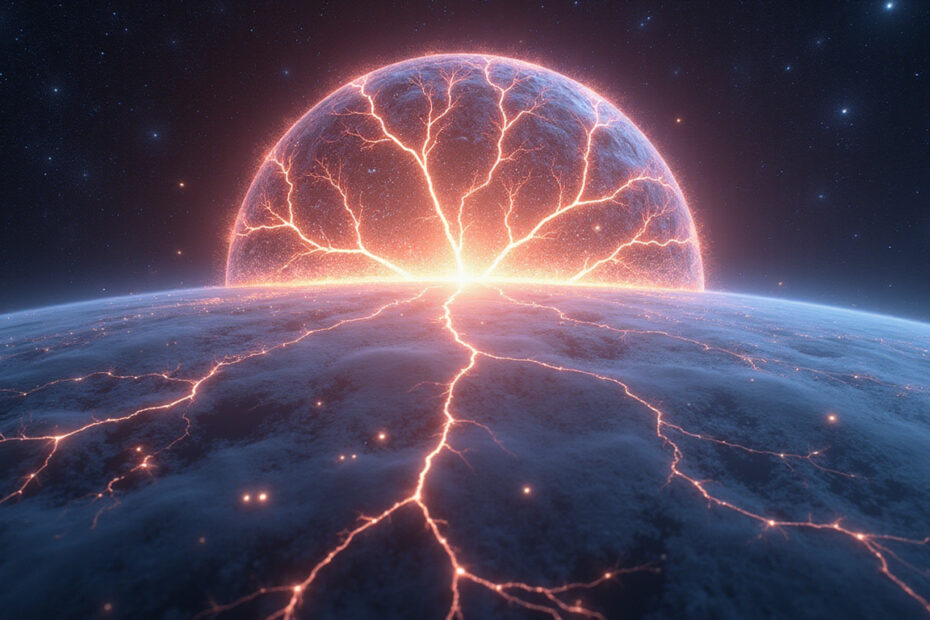
The idea of the noosphere has moved from obscure philosophical circles into the heart of today’s biggest questions: How can we think better together? How do we coordinate billions of people to solve planetary-scale problems? And what does “collective intelligence” really mean in a hyper-connected digital age? Understanding the noosphere—literally, the “sphere of mind”—offers a powerful framework for transforming how societies organize knowledge, make decisions, and evolve.
This article explores where the concept came from, how it’s showing up right now in technology and culture, and what it could mean for the future of humanity.
What Is the Noosphere?
The term noosphere (from the Greek nous, meaning “mind” or “intellect”) was popularized in the early 20th century by:
- Vladimir Vernadsky, a Russian geochemist
- Pierre Teilhard de Chardin, a French Jesuit priest and paleontologist
They saw Earth as evolving in distinct “spheres”:
- Geosphere – the realm of rocks, minerals, and physical matter
- Biosphere – the layer of life that blankets the planet
- Noosphere – the layer of thought, culture, and shared intelligence emerging from human minds
In this vision, the noosphere is not just a metaphor. It is a real, evolving “skin of thought” encircling the Earth, shaped by:
- Language
- Culture and religion
- Science and technology
- Institutions and laws
- Digital networks and media
As communication technologies accelerate, the noosphere densifies: more people, more interactions, more ideas, more feedback loops.
From Philosophy to the Internet: The Noosphere Goes Digital
When Teilhard and Vernadsky wrote about the noosphere, there was no internet. Yet many see the web as the early technological skeleton of a fully formed noosphere.
The Internet as Nervous System
Consider these parallels:
- Neurons ↔ People and devices
- Synapses ↔ Connections (social networks, email, APIs)
- Neural networks ↔ Online communities and platforms
- Memory ↔ Databases, archives, and the open web
The internet and mobile networks allow billions of minds to communicate in near real-time. Every post, search query, and shared file becomes part of a collective information layer—exactly what the noosphere concept anticipates.
Some developments that turbocharged the digital noosphere:
- Search engines and knowledge graphs (e.g., Google, Wikipedia)
- Social media platforms (Twitter/X, Facebook, TikTok, Reddit)
- Distributed collaboration tools (GitHub, Slack, Notion, open-source platforms)
- AI systems that learn patterns from billions of human-generated data points
These infrastructures create a global “thinking layer” where ideas appear, mutate, recombine, and spread at unprecedented speed.
Collective Intelligence: The Engine of the Noosphere
At the core of the noosphere is collective intelligence: the capacity of groups to think, learn, and solve problems in ways that surpass individuals alone.
This happens at multiple levels:
- Small teams – startups, research groups, design teams
- Communities and networks – open-source projects, fandoms, activist movements
- Institutions – universities, governments, NGOs, corporations
- Civilization-scale systems – global science, markets, and governance
How Collective Intelligence Emerges
Several mechanisms help turn many minds into a coherent intelligence:
- Shared language and concepts – make complex ideas communicable and combinable
- Common knowledge repositories – like Wikipedia and scientific databases (source: Wikipedia)
- Incentive structures – markets, reputation systems, peer review
- Feedback loops – upvotes, citations, purchases, polls, and ratings
- Coordination tools – calendars, version control, project management software
When these are well-designed, the noosphere becomes an engine for progress. When they’re misaligned, it becomes an engine for confusion, distraction, and conflict.
The Bright Side: How the Noosphere Can Transform Society
Optimistically, a mature noosphere can help humanity solve problems that no single group or nation can handle alone.
1. Accelerating Science and Innovation
The scientific enterprise is one of the clearest examples of the noosphere in action:
- Open-access journals and preprint servers (e.g., arXiv, bioRxiv)
- Global collaboration on projects like the Human Genome Project and CERN
- Shared software and datasets enabling reproducible research
This has already transformed fields like genetics, climate science, and astrophysics, where progress depends on integrating vast amounts of distributed data and expertise.
2. Smarter Governance and Policy
The noosphere can support more informed, participatory governance:
- Crowdsourced policy design and digital public consultations
- Data-driven decision-making grounded in open statistics and modeling
- Prediction markets that aggregate distributed forecasts
- Deliberative democracy platforms where citizens co-create proposals
Instead of top-down rule-making by a small elite, we can imagine bottom-up, networked problem-solving that continually incorporates new evidence and perspectives.
3. Solving Global Challenges
Issues like climate change, pandemics, and economic instability are inherently noospheric problems:
- They’re caused partly by our collective beliefs, incentives, and coordination failures.
- They require shared understanding and cooperation across cultures and borders.
A highly functional noosphere could:
- Spread accurate models of climate risks and solutions
- Coordinate global supply chains and resource allocation in crises
- Align local and global incentives via smarter policy and finance tools
- Support rapid learning from successes and failures worldwide
The Shadow Side: When the Noosphere Becomes a “Noisosphere”
The same networks that enable collective wisdom can also amplify collective folly.
Information Overload and Fragmentation
Instead of a single coherent noosphere, we often see:
- Echo chambers and filter bubbles
- Competing reality tunnels and conspiracy networks
- Tribal identities reinforced by algorithmic feeds
Rather than increasing shared understanding, the digital layer can fracture it, leading to parallel “micro-noospheres” with incompatible worldviews.
Misinformation and Manipulation
Attention-driven platforms reward emotionally charged, viral content. This can:
- Elevate misinformation and polarizing narratives
- Undermine trust in institutions and expertise
- Enable large-scale psychological operations and propaganda
In this sense, the noosphere is powerful but not inherently wise. It amplifies whatever signals dominate: fear or insight, outrage or empathy.
Cognitive and Emotional Strain
The density of the noosphere affects individuals:
- Constant novelty → anxiety and distraction
- Online conflict → burnout and cynicism
- Comparison and status games → depression and self-doubt
Without tools and norms for healthy engagement, the noosphere can overwhelm the very minds that constitute it.
Designing a Wiser Noosphere
The critical question is not whether the noosphere will continue to grow—it will—but how we shape its evolution.

Core Principles for a Healthy Noosphere
-
Truth-seeking over attention-seeking
- Reward accuracy, transparency, and correction, not just virality.
-
Pluralism with coherence
- Allow diverse perspectives, but maintain shared standards of evidence and reasoning.
-
Human-centered technology
- Build systems that augment human judgment and well-being, rather than hijack attention.
-
Resilience and adaptability
- Design institutions and platforms that can learn, update, and self-correct.
Practical Levers of Change
Some concrete ways to improve the quality of the noosphere:
-
Better platform design:
- Ranking content by credibility and diversity of sources, not just engagement
- Giving users more control over their feeds and information diets
-
Information literacy and critical thinking education:
- Teaching how algorithms work
- Training people to evaluate sources, recognize manipulation, and change their minds
-
Open standards and interoperability:
- Preventing monopolies over key parts of the noosphere
- Enabling data portability and healthier competition among platforms
-
Public-interest infrastructure:
- Supporting independent journalism, open science, and public knowledge commons
AI and the Noosphere: Partner, Mirror, or Master?
Artificial intelligence is radically changing the texture of the noosphere.
AI as a Noospheric Amplifier
Modern AI systems:
- Learn from vast amounts of human-generated data (texts, images, code, behavior)
- Generate new content, ideas, and designs
- Help filter and summarize overwhelming flows of information
In this sense, AI is part of the noosphere—trained on it—and also a tool for navigating it.
Risks and Responsibilities
AI also raises critical questions:
- Whose values and perspectives shape AI training data?
- How do we detect and mitigate bias, misinformation, and synthetic media?
- What happens when AI can convincingly mimic human voices and identities at scale?
These are not just technical issues; they are noospheric governance problems. We’re deciding how powerful new cognitive tools plug into, steer, and reshape our shared mind-layer.
How You Participate in the Noosphere (Whether You Notice or Not)
Every digital action contributes to the structure and quality of the noosphere:
- What you click, share, write, and fund
- Which communities you strengthen or abandon
- How you respond to disagreement and uncertainty
Your micro-level behaviors aggregate into macro-level patterns.
Practical Ways to Improve Your Noospheric Footprint
You can think of this as “noosphere hygiene.” For example:
-
Curate your information diet:
- Follow a mix of high-quality sources with different perspectives.
- Limit doomscrolling and reactive engagement.
-
Contribute constructively:
- Add evidence, nuance, and empathy to online discussions.
- Support projects that build shared understanding, not just clicks.
-
Practice epistemic humility:
- Be willing to update your views.
- Distinguish between what you know, what you think, and what you feel.
Over time, these small actions help shift the noosphere toward greater clarity and wisdom.
Quick Summary: Key Aspects of the Noosphere
- A conceptual “sphere of mind” formed by all human thought and communication
- Embodied today in language, culture, institutions, and digital networks
- Enables collective intelligence but also collective confusion
- Deeply shaped by technology design, incentives, and governance
- Something you influence with every online interaction
FAQ: Exploring the Noosphere and Collective Mind
Q1: How does the noosphere relate to a collective consciousness?
While some use “noosphere” and “collective consciousness” interchangeably, the noosphere is usually framed more concretely: the total network of human ideas, communications, and symbolic systems. Collective consciousness is often discussed in more psychological or spiritual terms, whereas the noosphere includes institutions, technologies, and information flows as well.
Q2: Is the noosphere just another term for the internet?
No. The internet is a major infrastructure of the noosphere, but the noosphere also includes pre-digital culture, oral traditions, printed books, scientific institutions, legal systems, and more. You can think of the internet as a nervous system upgrade inside a much larger organism of shared human meaning.
Q3: Can we intentionally evolve the noosphere toward greater wisdom?
Yes, at least in part. By redesigning platforms, incentives, education, and governance around truth-seeking, compassion, and long-term thinking, we can steer the noosphere away from pure attention-maximization and toward genuine collective intelligence. This is a design, policy, and cultural challenge—not an inevitability.
Step Into the Noosphere With Intention
The noosphere isn’t an abstract philosophy parked in a textbook; it’s the living fabric of conversations, code, ideas, and institutions you touch every day. It’s the invisible environment shaping what you believe, how you decide, and who you become—individually and together.
If we treat the noosphere as a passive backdrop, it will be shaped by the strongest short-term incentives: clicks, outrage, and control. If we treat it as a shared responsibility, we can turn it into a transformative force for solving real problems and building a more humane civilization.
Start today by curating your feeds more deliberately, engaging in one thoughtful conversation, or contributing to a project that improves our shared knowledge commons. Then invite others to do the same. The quality of the noosphere—and the future it makes possible—depends on how each of us chooses to think, share, and build together.