

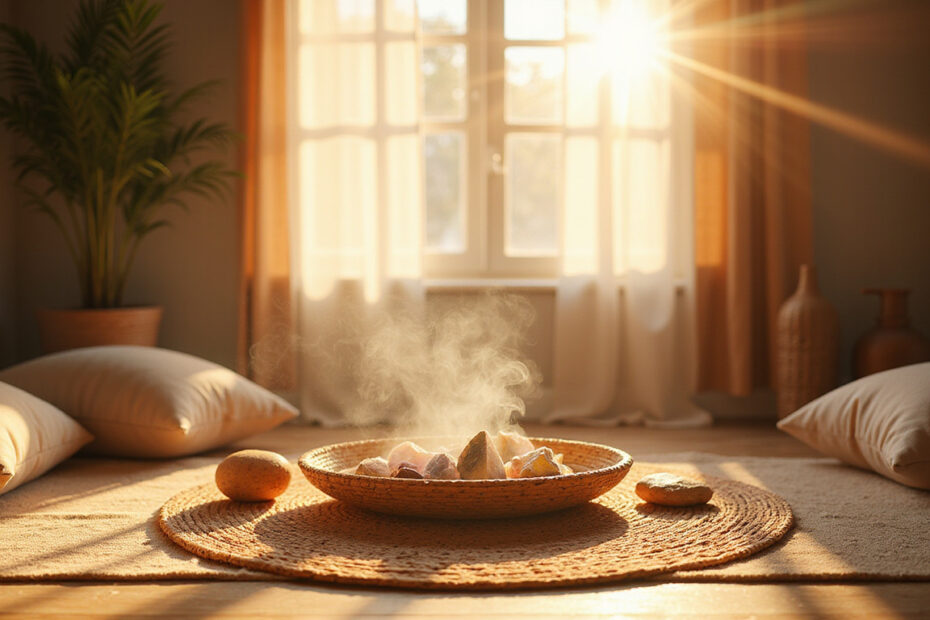
Creating a sacred space at home isn’t just about candles and crystals—it’s about intentionally shaping an environment that supports your well-being, calms your nervous system, and reflects your deepest values. A thoughtfully designed sacred space can become your refuge from stress, a center for spiritual practice, or simply a corner where you reconnect with yourself each day.
Below, you’ll find practical, grounded rituals to transform any home—no matter the size—into a sanctuary that truly nurtures you.
What is a sacred space, really?
A sacred space is any area you deliberately set aside to feel safe, present, and connected—to yourself, to others, to nature, or to something greater than you. It doesn’t have to be religious or elaborate. It can be:
- A whole room
- A corner of your bedroom
- A windowsill altar
- A chair by a favorite plant
- A section of your desk
What matters is intention. When you treat a space as sacred, you interact with it differently: you move more mindfully, you breathe deeper, and you allow yourself to slow down.
Step 1: Clarify the purpose of your sacred space
Before you move a single piece of furniture, get clear about why you’re creating this sacred space. Different intentions will ask for different designs and rituals.
Ask yourself:
- Do I want this space for meditation or prayer?
- For journaling and reflection?
- For creativity and inspiration?
- For emotional healing and self-soothing?
- For connection with nature, ancestors, or spiritual guides?
Choose one primary purpose and 1–2 secondary purposes. This clarity will guide everything that follows: where you set up, what you include, and how you use it.
Step 2: Choose the right location in your home
You don’t need a spare room to create a sanctuary; you just need a spot you can return to consistently.
Consider:
- Privacy: Can you close a door, draw a curtain, or at least turn your back on the rest of the room?
- Noise level: Is it relatively quiet or can it be quiet at certain times of day?
- Natural light: Sunlight or even a view of the sky or trees can deepen the sense of a sacred connection.
- Regular access: If you never sit in your guest room, that may not be the best place. A sacred space should be easy to visit, even for a five-minute reset.
Common options:
- A corner of the bedroom
- A section of the living room
- A balcony or porch
- A part of your home office
- A spot near a window with plants
Let your body help you choose. Walk around your home and pause where you feel most relaxed or inspired—that’s a strong candidate for your sacred space.
Step 3: Clear the energy with simple cleansing rituals
Before creating something new, release what’s already there. Energy cleansing isn’t mystical by default—it can be as simple as a deep clean that helps your nervous system relax.
Physical clearing
Start with the tangible:
- Remove clutter, trash, and unnecessary items
- Dust and wipe surfaces
- Sweep or vacuum the floor
- Launder any fabrics (throws, cushions, curtains) in the area
Research suggests cluttered environments can increase stress and make it harder to focus (source: Princeton Neuroscience Institute).
Energetic cleansing rituals
Layer a few of these options to shift the “feel” of the space:
- Sound cleansing: Gently clap in corners, use a singing bowl, ring a bell, or play soft instrumental music.
- Smoke or scent: If appropriate for your home, use incense, ethically sourced herbs, or essential oil diffusers. Open a window as you do this.
- Air and light: Open windows to bring in fresh air. Let natural light flood in, or turn on warm, soft lighting.
- Visualization: Close your eyes and imagine a gentle light filling the area, dissolving heaviness and tension.
As you cleanse, repeat a simple intention, such as:
“This space is clear, calm, and safe. I welcome peace and presence here.”
Step 4: Anchor your sacred space with meaningful objects
Now you’ll choose a few key items that mark this area as special. Think of them as physical anchors for your intention.
You might include:
- A focal point: A candle, small statue, meaningful photo, or plant that draws your attention and centers your mind.
- Comfort items: Cushions, a favorite chair, a soft blanket, a rug that defines the area.
- Nature elements: Stones, shells, flowers, leaves, feathers, wood, or a bowl of water to connect you to the natural world.
- Spiritual or personal symbols: Religious items, oracle or tarot cards, ancestral photos, meaningful artwork, or written affirmations.
- Tools for practice: Journal and pen, meditation beads, a Bible or spiritual text, art supplies, or a musical instrument.
Aim for intentional simplicity. A sacred space is not a storage shelf for “spiritual stuff.” Every object should earn its place by having emotional, symbolic, or practical value.
Step 5: Design for the senses
To truly feel like a sanctuary, your sacred space should engage your senses in ways that ground and soothe you.
Sight
- Soft, warm lighting (salt lamps, candles, fairy lights)
- Calm color palette (soft neutrals or hues that relax you)
- Minimal visual clutter
- A view of nature or a piece of art that evokes peace
Sound
- A small speaker for ambient music or soundscapes
- A singing bowl, chimes, or even a gentle ticking clock
- Earplugs or noise-canceling headphones if you live in a noisy environment
Scent
- Essential oils (lavender, frankincense, cedarwood, citrus)
- Incense or natural candles
- Fresh flowers or herbs from your garden
Touch
- Soft blankets and cushions
- Natural materials like wood, cotton, wool, stone
- A textured rug under your feet
Taste (optional)
- A special tea you only drink in this space
- Infused water (lemon, cucumber, mint)
- A small bowl for mindful eating (like a piece of dark chocolate)
By cultivating sensory cues, your body starts to recognize: “When I’m here, I can soften, breathe, and be.”
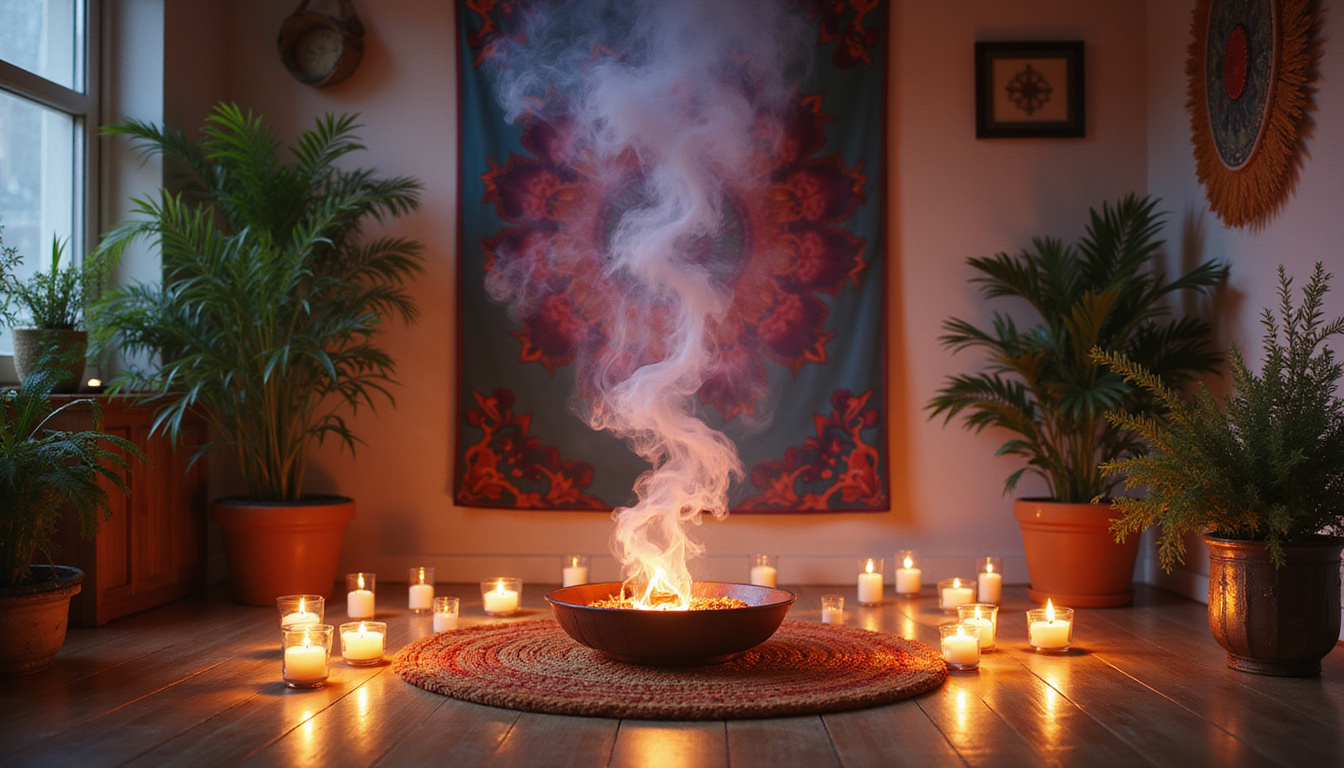
Step 6: Establish daily sacred space rituals
Your sacred space only becomes truly powerful through regular use. Simple, repeatable rituals help train your mind and body to drop into a calmer state more quickly.
Choose one or two of these to practice daily:
-
Three-breath arrival
- Sit or stand in your sacred space.
- Close your eyes.
- Take three slow, deep breaths, exhaling tension each time.
- Silently say: “I am here. This space is safe. I can rest.”
-
Gratitude moment
- Keep a small notebook or jar nearby.
- Each visit, write down one thing you’re grateful for or a moment you want to remember.
-
Morning intention setting
- Light a candle.
- Ask yourself: “How do I want to feel today?” (e.g., grounded, kind, focused).
- Set a simple intention: “Today I move from groundedness.”
-
Evening release
- Mentally review your day.
- Imagine placing any stress, regret, or worry into a bowl, candle flame, or imaginary river.
- Say: “What no longer serves me, I release.”
-
Five-minute silence
- Sit in quiet stillness.
- Focus on your breath, a word/mantra, or a focal object.
- When thoughts arise, notice them and gently return your attention.
Small, consistent rituals will nourish your sacred space—and let it nourish you in return.
Step 7: Create personal sanctuary rituals for transitions
Rituals are especially powerful around transitions: waking up, starting work, ending the day, or moving through a life change. Your sacred space can support you through these moments.
Morning sanctuary ritual
- Light a candle or open the curtains wide.
- Take a few stretches or yoga poses.
- Speak an affirmation out loud, such as:
“I meet this day with openness and courage.”
Workday boundary ritual (for remote workers)
- Before starting work, spend two minutes at your sacred space:
- Breathe, set a clear work intention.
- After work, return:
- Place your hand on your heart and say:
“Work is complete for today. I can now rest and be.”
- Place your hand on your heart and say:
Stress release ritual
When you feel overwhelmed:
- Go to your sacred space.
- Place both feet on the floor.
- Inhale for a count of 4, hold for 4, exhale for 6–8.
- On each exhale, imagine tension draining out through your feet.
Integrating your sacred space into daily transitions helps your home feel like a true sanctuary, not just a place you sleep.
Step 8: Keep your sacred space alive and evolving
A sacred space is not static; it should grow with you.
- Seasonal refresh: Change flowers, fabrics, or colors with the seasons.
- Life events: Add symbolic items during big transitions—births, losses, new jobs, moves.
- Regular cleansing: Do a quick energetic reset weekly or monthly: tidy, dust, refresh water or flowers, and reset your intention.
- Check-in questions: Every so often, ask:
- Does this space still feel nourishing?
- What needs to be added, removed, or simplified?
If your sacred space ever starts to feel stale or cluttered, that’s an invitation to gently re-curate it.
Simple ideas for tiny homes and shared spaces
You don’t need much room—or total privacy—to experience the benefits of a sacred space.
Try:
- A tray or box that holds your sacred objects; bring it out when needed.
- A blanket you lay down to temporarily mark your sanctuary area.
- A folding screen or curtain to create visual privacy.
- Headphones with calming audio to create a “sound cocoon.”
- Scheduling “sacred time” with roommates/family, so everyone respects each other’s quiet moments.
What matters is your consistent intention, not how impressive the setup looks.
Quick checklist: building your sacred space
Use this to guide your process:
- [ ] I’ve chosen the purpose of my sacred space.
- [ ] I’ve selected a location that feels relatively peaceful.
- [ ] I’ve physically cleaned and decluttered the area.
- [ ] I’ve done a simple energetic cleanse (sound, scent, light, or visualization).
- [ ] I’ve chosen a few meaningful objects that support my intention.
- [ ] I’ve engaged my senses (sight, sound, touch, scent, taste).
- [ ] I’ve created at least one small daily ritual for this space.
- [ ] I’ve planned to revisit and refresh the space regularly.
FAQ about sacred spaces at home
How do I create a sacred space in my bedroom?
Choose a corner away from your work area or TV. Add a small table, cushion, or chair, and place just a few meaningful objects—such as a candle, plant, or spiritual symbol. Keep it uncluttered and reserve it for quiet practices like reading, reflection, prayer, or meditation so your body associates that spot with calm.
What can I put in a sacred home altar space?
A home altar can include photos of loved ones or ancestors, candles, crystals, flowers, natural objects, spiritual texts, written intentions, or symbolic items from important life events. Focus on things that represent gratitude, guidance, protection, or whatever qualities you want your altar space to embody.
How do I maintain the energy of my spiritual sanctuary space?
Regular, simple attention is key. Tidy it often, dust surfaces, replace wilted flowers or burnt-out candles, and cleanse with sound, scent, or fresh air weekly or monthly. Most importantly, keep visiting your sanctuary space—your consistent, mindful presence is the strongest way to maintain its energy.
Transforming part of your home into a sacred space is an act of self-respect. It tells your nervous system, your heart, and your spirit: “You matter enough to have a place of refuge.” You don’t need perfection or expensive décor—only intention, consistency, and a willingness to slow down.
If you’re ready to turn your home into a sanctuary, choose one small area today and begin. Clear it, add a few meaningful items, and commit to visiting it for just five minutes a day. Over time, that simple practice can reshape how you feel in your body, your home, and your life.
Begin now—your sacred space is waiting to be created by you.