
Sacred Art for Modern Homes: Transform Your Space into a Sanctuary
Sacred art isn’t just for churches, temples, or museums anymore. More people are intentionally bringing sacred art into their modern homes to create spaces that feel peaceful, grounded, and meaningful. Whether you live in a studio apartment or a large family house, the right spiritual imagery and symbolism can transform everyday rooms into calming sanctuaries that support your values and well-being.
Below, you’ll learn what sacred art really is, how to choose pieces that resonate with you, and practical ways to style them so your home feels both contemporary and deeply soulful.
What Is Sacred Art, Really?
At its core, sacred art is any creative work designed to express, evoke, or honor the spiritual, divine, or transcendent. It’s less about a specific religion and more about the intention behind the imagery.
Sacred art can include:
- Traditional icons and religious paintings
- Mandalas, yantras, and geometric patterns
- Nature-based symbols (trees of life, animals, elements)
- Abstract works inspired by meditation or mystical experiences
- Calligraphy of sacred texts, mantras, or affirmations
Historically, sacred art was created to uplift the viewer, tell spiritual stories, or guide people into contemplation. That purpose still holds. In a noisy, fast-paced world, spiritual imagery at home can become a visual reminder to slow down, breathe, and reconnect.
Why Sacred Art Belongs in Modern Homes
You don’t need a formal altar room to benefit from sacred art. Integrating spiritual pieces into a modern interior offers several meaningful advantages.
1. Emotional Calm and Stress Relief
Sacred images, colors, and symbols can trigger a sense of peace and safety. Studies on visual art and mental health show that viewing art can reduce anxiety and support emotional regulation (source: National Institutes of Health). When that art is also spiritually significant to you, the effect is often amplified.
2. Clearer Intentions for Your Space
A home filled only with functional objects can feel flat. Sacred art helps define how you want a room to feel:
- A mandala in your living room might set a tone of harmony.
- A serene Buddha image in your bedroom can signal rest and inner stillness.
- An icon or cross in your entryway can serve as a daily reminder of faith and blessing.
3. Daily Spiritual Practice—Without Extra Time
You may not have hours for formal meditation or prayer, but you do walk through your home every day. Placing sacred art in key sightlines turns daily movements—brushing your teeth, making coffee, shutting off the lights—into mini-moments of mindfulness.
4. A Unique, Authentic Design Statement
Minimalist, modern interiors can start to look alike. Sacred art personalizes your home with pieces that reflect your inner life. The contrast between clean lines and deeply symbolic artwork creates a visually striking, conversation-starting environment.
Choosing Sacred Art That Truly Resonates
Not every piece of sacred art will be right for you. The most powerful works are those that feel both beautiful and emotionally or spiritually significant.
Start with Your Spiritual Language
Ask yourself:
- Do I connect most with a specific religion or tradition?
- Am I more drawn to universal or nature-based spirituality?
- Do words, symbols, or images move me most?
Some examples:
- Religious imagery: Icons, saints, the Virgin Mary, Christ, Islamic calligraphy, Hindu deities, Bodhisattvas.
- Symbolic imagery: Lotus flowers, chakras, Om symbols, the Tree of Life, circles, spirals, labyrinths.
- Elemental/nature imagery: Mountains, rivers, sunrise/sunset, animals with symbolic meaning (eagle, owl, lion, etc.).
- Abstract spiritual art: Color fields designed for contemplation, geometric grids, or intuitive paintings created in meditative states.
Consider Color and Mood
Color profoundly affects how sacred art feels in your space:
- Cool tones (blues, greens, violets): Calm, introspective, restful. Ideal for bedrooms and meditative corners.
- Warm tones (reds, oranges, golds): Energizing, passionate, uplifting. Great for creative studios or altars.
- Monochrome or earth tones: Grounding, minimalist, subtle. Fits clean, modern interiors beautifully.
Match the emotional tone of the art to the purpose of the room.
Match the Style to Your Interior
Sacred art doesn’t have to feel old-fashioned. You can find (or commission) pieces that align with your aesthetic:
- Minimalist homes: Simple line drawings of sacred symbols, monochrome icons, black-and-white photography of temples or nature.
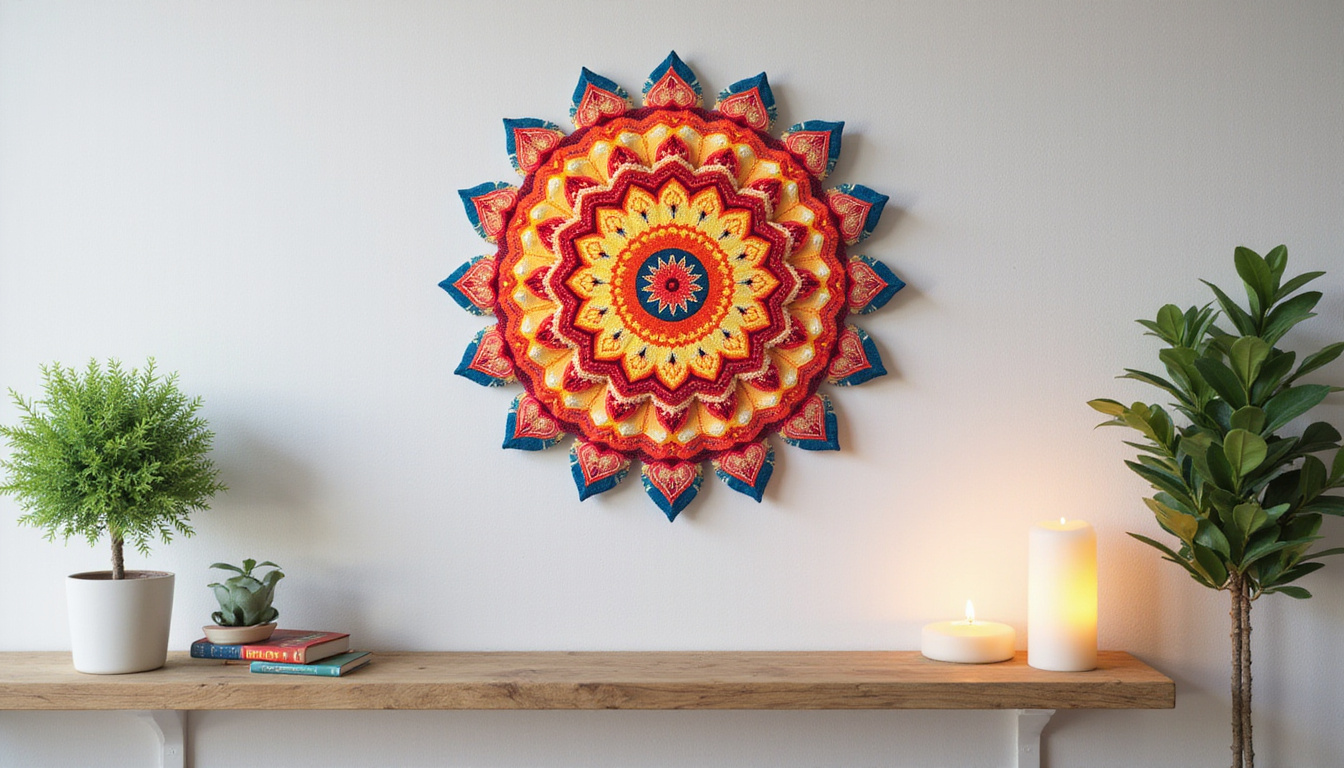
- Bohemian/eclectic spaces: Colorful mandalas, textile hangings, devotional folk art, layered altars.
- Industrial/urban lofts: Large-scale contemporary abstracts inspired by sacred geometry, metal or neon interpretations of traditional symbols.
- Scandinavian/modern: Clean, soft forms, muted palettes, light-wood frames around spiritual imagery.
Where to Place Sacred Art in Your Home
Location matters. Placing sacred art thoughtfully can help each room support a different aspect of your life.
Entryway: Setting the Tone
The first thing you see when you come home influences your energy. Consider:
- A blessing or protection symbol by the door
- A small icon shelf with a candle
- A framed mantra or affirmation about peace, love, or gratitude
This subtly signals: “You’re stepping into a different, more intentional space.”
Living Room: Shared Sanctuary
Your main gathering area can balance beauty, spirituality, and comfort:
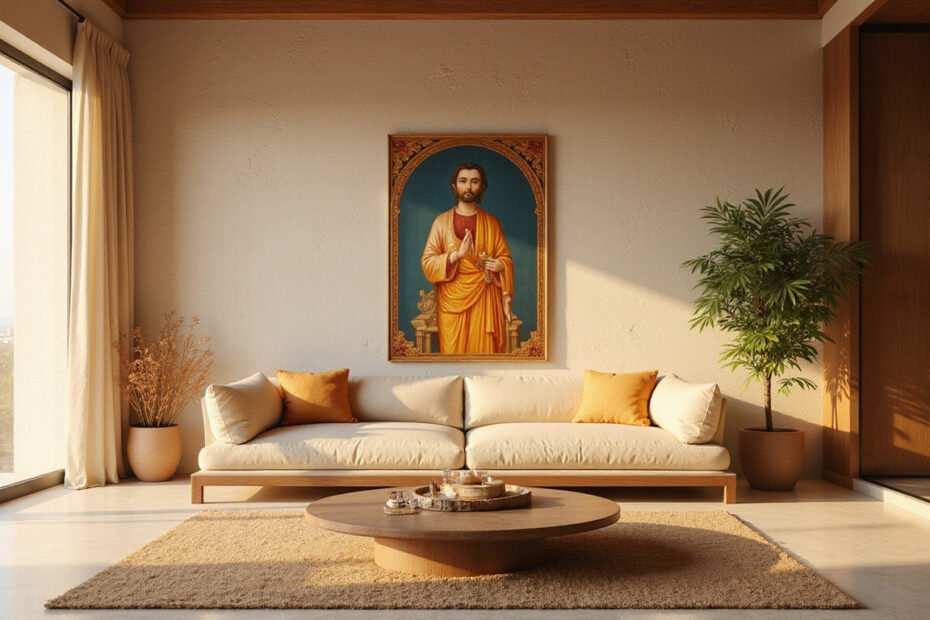
- A large centerpiece artwork above the sofa or fireplace that reflects your highest values
- A gallery wall mixing sacred prints with family photos or travel images
- A low table with a candle, a small statue, and a plant to create a mini-altar without dominating the room
Aim for inclusivity if you host guests from diverse backgrounds—universal spiritual symbols or nature-based sacred art can feel welcoming to all.
Bedroom: Quiet Inner Temple
The bedroom is ideal for deeply personal sacred imagery:
- A calming spiritual image opposite your bed (so it’s the last thing you see at night, first in the morning)
- Soft, meditative colors and gentle forms
- Nightstand altars with crystals, prayer beads, or a small framed image
Avoid overly active or intense imagery here; think “restorative” rather than “dramatic.”
Workspace or Studio: Focus and Inspiration
For your home office or creative studio:
- Sacred geometry prints to encourage clarity and structure
- Art featuring deities or figures associated with wisdom, creativity, or protection
- A small shrine or focal point on the wall you face while working to remind you of purpose and integrity
Corners and Transitional Spaces
Hallways, stair landings, and odd corners can become tiny sanctuaries:
- A single icon with a candle niche
- A mandala or labyrinth print you pass many times each day
- A small wall shelf with a plant and sacred object
These details quietly charge your whole home with a sense of presence.
You don’t need to cover every wall with icons and mandalas. A few well-chosen pieces are often more powerful than many.
Here’s a simple approach:
-
Clarify your intention.
Decide what you want more of in your life: peace, courage, compassion, clarity, devotion, creativity. -
Choose 1–3 key spaces.
Select the rooms or corners where sacred art will have the most impact (often entryway, living room, and bedroom). -
Start with one anchor piece per space.
Pick one significant artwork for each area, then build around it. -
Layer with subtle accents.
Add candles, plants, stones, textiles, or meaningful objects that complement the imagery without overwhelming it. -
Edit regularly.
Sacred art should feel alive and relevant. Rotate pieces seasonally or as your spiritual focus shifts.
Respect and Cultural Sensitivity
When working with sacred art from traditions other than your own, approach with humility and respect:
- Learn the meaning behind symbols and images before displaying them.
- Avoid placing deeply revered images in locations that could be seen as disrespectful (e.g., directly on the floor, near toilets, or in areas associated with chaos or mess).
- Where possible, support artists and communities from that tradition by buying directly from them or from ethical sources.
This not only honors the art but also enriches your relationship with it.
Practical Tips for Displaying Sacred Art
A few design details can help your spiritual pieces look intentional and harmonious:
- Use consistent framing. Matching or complementary frames tie diverse sacred artworks together in a modern way.
- Create visual altars. Even on a plain shelf, grouping a framed image with a candle, a small bowl, and a plant instantly feels sacred.
- Mind height and sightlines. Hang sacred art at eye level or slightly above so it invites contemplation.
- Use lighting thoughtfully. A small spotlight or nearby lamp can give sacred art a gentle glow without feeling theatrical.
- Balance negative space. Let the wall around the artwork breathe; crowding diminishes its presence.
FAQ: Sacred Art in Everyday Living
1. How do I start incorporating sacred artwork at home if I’m not religious?
You don’t need formal religious beliefs to live with sacred art. Begin with universal symbols—like the Tree of Life, mandalas, or sunrise landscapes—that reflect qualities you value (growth, unity, renewal). Abstract spiritual art based on geometry or color fields can also feel deeply sacred without referencing a specific faith tradition.
2. Is it okay to mix different types of spiritual art in one space?
Yes, as long as it’s done with respect and intention. You can mix Christian icons, Buddhist imagery, and nature-based sacred symbols if they genuinely support your path. To avoid visual chaos, keep a consistent color palette or framing style, and let each piece have enough space so it doesn’t feel like a collage of beliefs, but rather a coherent personal cosmology.
3. What’s the best way to create a small sacred art corner in a small apartment?
Choose one wall or corner that’s naturally a bit quieter—near a window, by your bed, or beside a favorite chair. Hang a single piece of sacred art at eye level, then add:
- A small surface (floating shelf, stool, or crate)
- One candle or soft lamp
- One living element (plant or flowers)
- One or two meaningful objects (stone, photo, small statue, or talisman)
You’ve created a minimalist altar that fits into even the smallest home.
Bringing sacred art into your modern home is less about decoration and more about devotion—to peace, presence, beauty, and your own deepest values. Each image, symbol, or object can become a quiet invitation to live with more awareness and intention.
If you’re ready to turn your living space into a true sanctuary, start with just one piece that moves you. Let it anchor a corner or a room. Notice how the energy shifts. Then, piece by piece, grow a home that doesn’t just look stylish, but feels like a refuge for your soul.
Now is the perfect time to begin. Explore sacred art that resonates with your spirit, choose one spot in your home to transform, and create a sanctuary that supports who you are—and who you’re becoming—every single day.