
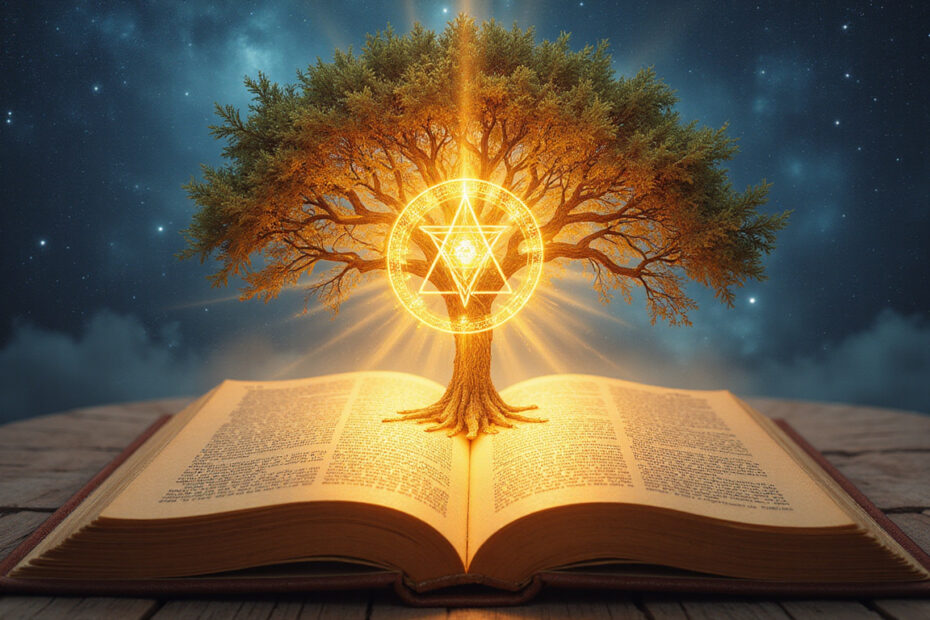
The allure of perennial philosophy lies in a bold, beautiful claim: beneath all the world’s great spiritual and wisdom traditions runs a single, timeless current of truth. This “golden thread” speaks directly to who you are, why you’re here, and how to live with meaning in a chaotic age. Far from being an abstract academic idea, perennial philosophy offers practical guidance for clarity, purpose, and inner peace—right now, in the middle of your real life, with all its pressures and distractions.
What Is Perennial Philosophy, Really?
At its core, perennial philosophy (Latin: philosophia perennis) is the idea that:
- Reality has a spiritual or ultimate dimension.
- Human beings can directly experience that dimension.
- The world’s great traditions—mystical Christianity, Sufism, Vedanta, Buddhism, Taoism, Indigenous wisdom, and others—are diverse expressions of this one underlying truth.
Think of it as a “universal grammar” of wisdom. Just as languages are different but share common structures, so too do the great wisdom traditions differ in symbols, myths, and rituals while pointing to the same fundamental insights.
Classic expositors of the perennial philosophy include Aldous Huxley, René Guénon, Frithjof Schuon, and Huston Smith. But long before them, mystics and sages in every culture intuited that the same light shines through many colored windows.
The Three Core Pillars of Perennial Philosophy
While formulations vary, most perennialists converge on three essential pillars:
1. A Sacred, Ultimate Reality
Different traditions name it God, Brahman, the Tao, the Absolute, the One, or simply the Real. Perennial philosophy holds that:
- This Reality is the source and ground of all that exists.
- It is both transcendent (beyond the world) and immanent (within all things).
- It cannot be fully grasped by concepts, only pointed to through symbols, metaphors, and paradox.
This is why mystical teachings often sound poetic or paradoxical—our language can describe the path, but not fully contain the destination.
2. The Divine Ground Within You
Perennial philosophy asserts that at the deepest level, your essence is not separate from this sacred Reality. In different traditions you find:
- The “image of God” in Christian mysticism
- Atman (the true Self) in Vedanta
- Buddha-nature in Mahayana Buddhism
- The “original face” in Zen
All are attempts to say: your deepest identity is more than your personality, history, or roles—it is a spark, reflection, or expression of the infinite.
3. A Path of Transformation
If this is true, then human life isn’t just about survival or success; it’s about awakening. The perennial philosophy suggests:
- There are practices that clear, purify, and expand consciousness.
- Ethical living, contemplation, and love align you with Reality.
- Over time, you can shift from ego-centered living to a life rooted in wisdom and compassion.
Different traditions map this journey in different ways—saintliness, enlightenment, union with God, liberation—but the movement is the same: from fragmentation to wholeness.
Why Perennial Philosophy Matters in Modern Life
In a hyper-distracted, secular, achievement-driven culture, perennial philosophy can feel like inhaling pure oxygen. It speaks directly to several modern pain points:
1. From Fragmentation to Coherence
Many people feel torn between science and spirituality, reason and faith, work and meaning. Perennial philosophy doesn’t ask you to reject science or modernity. Instead, it:
- Places science within a larger, meaningful picture of reality.
- Affirms empirical truth while pointing beyond its limits.
- Offers a worldview where values, purpose, and inner experience belong.
It’s a “both/and” lens: your life can be rational and deeply spiritual, practical and transcendent.
2. From Consumer Identity to Deeper Self
Advertising, social media, and career culture train you to see yourself as:
- What you own
- What you achieve
- How others respond to you
Perennial philosophy quietly dismantles this by reminding you that:
- You are more than your history, preferences, and status.
- There is a dimension of you that is unchanging, even amid loss and change.
- Real security comes from aligning with that deeper ground, not from endlessly upgrading your lifestyle.
This shift doesn’t make you passive; it makes you freer and less easily manipulated.
3. From Tribalism to Shared Humanity
In an age of polarization, the idea that there is a shared spiritual core behind the great traditions is radically healing. It encourages:
- Respect for different paths without collapsing them into “all the same.”
- Curiosity instead of fear when encountering unfamiliar beliefs.
- A sense of belonging to a wider human family seeking the Real, each in its own tongue and symbol-system.
Perennial philosophy is not a new religion; it’s a way of perceiving the deep kinship between religions—and between people.
Seven Practical Ways to Apply Perennial Wisdom Today
You don’t have to become a scholar to live the insights of perennial philosophy. You only need a willingness to experiment in your own life. Here are seven accessible practices:
-
Create Daily Space for Silence
Set aside 10–20 minutes each day for silent sitting, prayer, or watching the breath. This simple act:- Trains attention.
- Softens identification with your thoughts.
- Opens a doorway to deeper awareness.
-
Practice “Double Awareness”
Throughout the day, hold two levels of awareness:- Outer: what you’re doing (working, talking, walking).
- Inner: the quiet field of awareness in which it’s happening.
Ask occasionally: What is aware of this moment? That simple question points toward the deeper Self emphasized in perennial teachings.
-
Live Ethically as Spiritual Practice
Ethical guidelines—non-harming, honesty, generosity, integrity—are not moralistic add-ons; they refine consciousness. Notice how:- Lying, resentment, and cruelty disturb your inner life.
- Truthfulness and kindness create clarity and peace.
-
Cultivate Reverence for Everyday Life
Perennial philosophy calls the world a manifestation of the sacred. Practice:- Eating one meal as if it were a sacred ritual.
- Walking outside as if every tree and person were luminous.
- Saying a brief thank-you before routine tasks.
-
Engage with a Wisdom Text Slowly
Choose a text from any tradition that speaks to you—say, the Bhagavad Gita, the Gospel of John, the Tao Te Ching, Rumi’s poetry, or the Dhammapada. Then:- Read just a few lines daily.
- Reflect, journal, or meditate on them.
- Look for the perennial themes: unity, compassion, detachment, surrender, inner freedom.
-
Find Community—Without Dogmatism
Human beings awaken more easily in company. Seek out:- A meditation group, contemplative church, Sufi circle, or study circle.
- Communities that emphasize practice and transformation over argument and ideology.
-
Serve Someone, Quietly
Service is a cornerstone of perennial wisdom. Try:- Helping someone in need anonymously.
- Volunteering regularly.
- Treating your work itself as service to the whole, not just a way to get ahead.
When done consistently, these practices translate perennial philosophy from an idea into a lived experience.
Common Misunderstandings About Perennial Philosophy
Because it seems so inclusive, perennial philosophy is easy to misconstrue. Clarifying a few myths can deepen your understanding.
“So… All Religions Are Basically the Same?”
No. Perennial philosophy doesn’t flatten the differences between traditions. It recognizes that:
- Doctrines, rituals, and cultural expressions genuinely differ.
- Not all ideas are equally refined or helpful.
- Some religious forms can even block deeper realization.
What it proposes is that at their mystical core—where direct experience of the Real becomes central—you find striking convergences in insight and attitude. Unity at the deepest level, diversity at the surface.
“Is This Just Vague Spirituality Without Commitment?”
Perennial philosophy can be used that way, but at its best it encourages depth, discipline, and humility. It often leads people to:
- Go deeper into the tradition they already belong to, with new eyes.
- Respectfully learn from other paths without “cherry-picking” superficially.
- Commit to serious contemplative practice.
Rather than promoting a shallow mix of everything, it invites a rooted openness—standing firmly somewhere while recognizing the truth shining elsewhere.
“Is There Any Intellectual Support for This?”
Yes. While perennial philosophy is not “proved” in a mathematical sense, many respected scholars of religion and philosophy have noted deep convergences among the world’s wisdom traditions. Huston Smith, one of the 20th century’s foremost scholars of comparative religion, articulated this eloquently in books like The World’s Religions (source: Huston Smith – Oxford University Press).
The perennial view is a serious, debated position within philosophy of religion and comparative theology, not just a New Age slogan.
How Perennial Philosophy Transforms Your Inner Landscape
Living from the principles of perennial philosophy gradually reshapes how you relate to yourself, others, and life itself.
A New Relationship with Suffering
Instead of seeing pain as senseless, you begin to:
- Recognize suffering as part of the human condition, not a personal failure.
- Use difficulty as fuel for awakening—cultivating patience, compassion, and detachment.
- Trust that meaning can emerge even from what you cannot presently understand.
This doesn’t romanticize suffering, but it keeps you from being crushed by it.
A Deepening Sense of Belonging
As you taste—even slightly—the idea that the sacred is within you and around you, isolation softens. You feel:
- Less like a separate, threatened self scrambling for survival.
- More like a participant in a larger, living whole.
- Connected to people across cultures and eras who have walked this same path toward the Real.
Belonging shifts from a fragile social status to a fundamental fact of existence.
Freedom from Compulsive Identity
Bit by bit, you become less tightly bound to:
- Your opinions
- Your successes and failures
- Your social image
You still care about these things, but they stop defining your worth. That subtle inner freedom is one of the deepest gifts of perennial wisdom.
FAQ: Perennial Philosophy and Your Spiritual Journey
Q1: What is the perennialist view of religion?
The perennialist view holds that the great religious and wisdom traditions are diverse expressions of a single underlying Reality and path of transformation. It respects differences in belief and practice while emphasizing a shared mystical core—direct experience of the sacred, cultivation of virtue, and movement from ego-centeredness to unity and compassion.
Q2: How does perennial wisdom relate to modern spirituality?
Modern spirituality often borrows intuitively from perennial wisdom—ideas like oneness, inner divinity, and the importance of direct experience over blind belief. Perennial philosophy provides a deeper, more rigorous framework for these intuitions, grounding them in centuries of mystical thought across cultures and offering a coherent map instead of a random assortment of practices.
Q3: Can I explore perennial philosophy without leaving my current religion (or lack of one)?
Yes. Many people use perennial philosophy to deepen their existing path rather than replace it. If you follow a particular religion, you can look for its contemplative or mystical stream and dive in more fully. If you’re secular or unaffiliated, you can still adopt perennial practices—meditation, ethical refinement, service, reflective study—to cultivate inner growth and meaning without signing up for a new belief system.
Step Into the Stream of Timeless Wisdom
If something in you resonates with the idea of a shared, timeless wisdom behind the world’s traditions, treat that resonance as an invitation. Perennial philosophy is not meant to sit on a bookshelf; it’s meant to be lived in your thoughts, words, relationships, and work.
You don’t need to have all the answers. Start with simple practices: a few minutes of silence each day, a wisdom text at your bedside, a conscious act of service each week. Let your life become the laboratory where these perennial truths are tested, refined, and made real.
If you’re ready to go deeper, commit—today—to one concrete step: choose a daily practice, find a teacher or community, or pick a book that speaks to your heart and explore it slowly. The great traditions insist that when you take a sincere step toward the Real, the Real moves toward you. The path of timeless wisdom is already under your feet; your task is simply to walk it with growing awareness.