The word sacrament might sound formal, ancient, or reserved for clergy and theologians, but its real power is intensely personal. Across Christian traditions, the sacrament is understood as a visible sign of an invisible grace—a concrete way God reaches into our ordinary lives. When you begin to see how sacramental life works beneath the surface, you discover surprising ways it can reshape your heart, your relationships, and even your sense of purpose.
This article explores how the sacrament, especially as lived in everyday faith, can quietly but profoundly transform your spiritual life.
What Is a Sacrament, Really?
At its core, a sacrament is more than a ritual; it’s an encounter.
- Visible sign: something you can see, touch, hear, taste, or experience—like water, bread, wine, oil, or spoken words.
- Invisible grace: the spiritual reality God works in and through that sign—like forgiveness, healing, or the strengthening of love.
Different Christian traditions define “the sacrament” differently. For example:
- Catholic, Orthodox, and some Anglican traditions usually recognize seven sacraments (such as Baptism, Eucharist, Marriage).
- Many Protestant communities focus on two central sacraments instituted directly by Christ in Scripture: Baptism and the Lord’s Supper (Communion).
Despite these differences, most agree on one essential point: the sacrament is a God-given way for divine grace to intersect with human life in a concrete, transformative way (source: Vatican – Catechism of the Catholic Church).
The Hidden Psychology of the Sacrament
Spiritual transformation isn’t just mystical—it’s also deeply human. The sacrament engages your whole person: body, mind, and soul.
1. Engaging the Body to Reach the Soul
Modern psychology and neuroscience affirm what Christians have long practiced: physical actions shape inner life. Kneeling, standing, tasting, hearing—these bodily actions:
- Anchor spiritual experiences in memory
- Deepen emotional impact
- Help truth move from the head into the heart
When you participate in a sacrament, your body “remembers” along with your soul. The repeated gestures of the sacrament form a kind of spiritual muscle memory that makes faith more stable and less dependent on momentary feelings.
2. Story, Symbol, and Identity
Each sacrament is packed with symbolic meaning:
- Water in Baptism: cleansing, death and rebirth, new identity
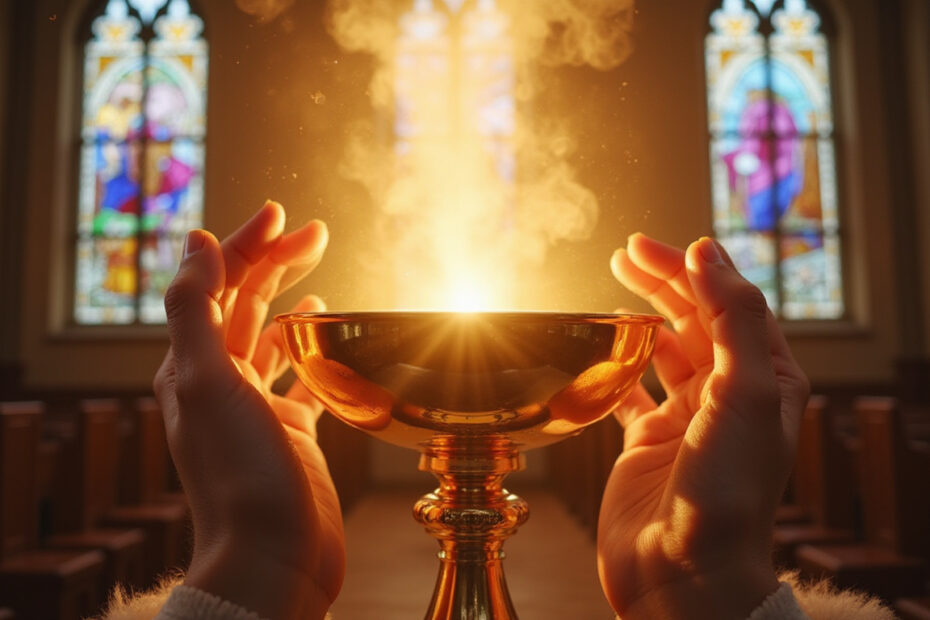
- Bread and wine in Eucharist: nourishment, sacrifice, shared table
- Oil in Anointing or Confirmation: strength, healing, commissioning
These symbols aren’t just poetic—they help reframe your life story. You begin to see yourself not just as someone who is trying to be “spiritual,” but as someone invited into God’s story of salvation. Over time, the sacrament forms a new identity: beloved, forgiven, sent.
How the Sacrament Reshapes Your Relationship with God
One of the most surprising effects of sacramental life is how it changes your everyday perception of God.
From Distant Deity to Present Companion
It’s easy to drift into thinking of God as distant—out there somewhere, vaguely watching. The sacrament re-teaches your heart that God is near:
- In Baptism, God’s promise is spoken personally over you.
- In Communion, Christ is not just remembered but encountered in a unique, intimate way.
- In Reconciliation or Confession, grace meets you in your deepest shame and fear.
Participating in the sacrament regularly trains you to look for God’s presence not only in church but in daily life—at meals, in pain, in forgiveness, in service.
From Self-Reliance to Trust
Many of us live like everything depends on our effort: self-improvement, self-forgiveness, self-protection. The sacrament gently subverts this:
- You receive the sacrament; you don’t earn it.
- Grace is given as a gift, not as a reward.
- You’re reminded that God acts first, and you respond.
Over time, this pattern of receiving breaks the illusion of self-sufficiency and grows a deeper, quieter trust in God’s initiative and faithfulness.
The Sacrament and Inner Healing
Some of the deepest transformations the sacrament brings are invisible to others but life-changing for you.
Healing from Guilt and Shame
For many, the sacrament of Reconciliation (or a similar practice of confession and absolution) becomes a watershed moment in spiritual healing:
- Guilt says, “I did something wrong.”
- Shame says, “I am something wrong.”
When, in the context of the sacrament, you hear words of real forgiveness spoken out loud over your specific failures, the lie of shame begins to lose its grip. You’re reminded that your worst sins don’t have the last word about who you are.
Reframing Suffering Through the Sacrament
Sacraments related to illness and suffering—such as the Anointing of the Sick—carry a quiet but powerful grace:
- They affirm that your pain matters to God.
- They connect your suffering to Christ’s own suffering and resurrection.
- They bring the community around you in prayer and support.
Even when physical healing doesn’t come, many testify to a new peace, courage, and sense of God’s closeness born out of the sacrament.

The Sacrament and Everyday Holiness
A key “secret” of the sacrament is that it’s not meant to stay locked inside the church building. Its power is meant to spill into your normal routines.
Making Ordinary Life Sacred
When you see sacrament as a meeting place between God and humanity, you begin to look at your ordinary life differently:
- Meals become reminders of the Eucharist—places of gratitude and sharing.
- Water—from showers to rain—recalls your Baptism, cleansing and new beginnings.
- Acts of forgiveness echo the mercy you receive in sacramental moments.
Your home, workplace, and friendships begin to feel less like “secular” spaces and more like arenas where God’s grace is already at work.
Strength for Daily Faithfulness
The sacrament doesn’t just give you spiritual “highs”; it strengthens you for long-term faithfulness:
- Communion nourishes you to love when you’re drained.
- Marriage as sacrament (for traditions that hold this) gives lasting grace to keep your vows through seasons of joy and difficulty.
- Confirmation seals and equips you for a life of witness and service.
You become less dependent on inspiration and more rooted in a rhythm of grace.
The Communal Power of the Sacrament
Spiritual life is not just “me and God.” The sacrament teaches you that faith is profoundly communal.
Belonging to a People, Not Just a Place
In many traditions, receiving the sacrament marks your belonging to the Church:
- Baptism recognizes you as part of the Body of Christ.
- Sharing in Communion unites you with believers across time, culture, and geography.
This sense of belonging can be healing in a fragmented, lonely world. You don’t just attend a service; you share in a life.
Learning Love Through Ritual
The sacrament isn’t magic; it works in cooperation with your freedom. But by repeatedly joining with others to receive the sacrament, you practice:
- Patience (waiting your turn, honoring others)
- Humility (receiving rather than controlling)
- Reconciliation (sharing the same sacramental table as those you might struggle with)
The very structure of sacramental worship slowly trains your heart to love more like Christ.
Practical Ways to Let the Sacrament Transform You
If you long for deeper spiritual transformation through the sacrament, consider these practical steps:
-
Show up regularly
Don’t underestimate the cumulative power of consistent participation—especially in Communion and your tradition’s central sacramental life. -
Prepare intentionally
- Read the Scripture readings beforehand.
- Spend a few minutes in silence asking God to make the sacrament fruitful in you.
- Examine your conscience honestly before reconciliation or Communion.
-
Engage your senses consciously
Pay attention to the physical realities: the taste of bread and wine, the feel of water, the smell of incense, the sound of prayers. Let them speak to you. -
Pray after receiving
Take a moment after the sacrament to speak simply and honestly to God: gratitude, surrender, intercession. -
Live the sacrament during the week
Ask: “What did I receive in the sacrament? How can I live that out today?”- Forgiven? Practice concrete forgiveness.
- Nourished? Offer yourself in service.
- Sent? Share hope or faith with someone who needs it.
FAQ: Common Questions About the Sacrament
1. What is a sacrament in simple terms?
A sacrament is a God-given sign—something you can see, touch, or experience—through which God gives grace in a special way. It’s a sacred action where God meets you personally, using ordinary elements like water, bread, wine, oil, and spoken words to do something extraordinary in your soul.
2. How does the sacrament of Communion (the Lord’s Supper) change my spiritual life?
The sacrament of Communion deepens your unity with Christ and with the Church. It nourishes your faith, reminds you of Jesus’ sacrifice, and strengthens you to love and serve others. When received with faith and repentance, it becomes a steady source of spiritual renewal, not just a symbolic reminder.
3. Why are sacraments important if I already pray and read the Bible?
Prayer and Scripture are essential, but the sacraments add a unique dimension: they bring God’s grace to you through physical, communal, and ritual actions. The sacrament reinforces what you read in Scripture and pray about by letting you experience it with your whole being—body and soul—within the life of the Church.
Let the Sacrament Be More Than a Ritual
If the sacrament has felt distant, confusing, or merely routine, you’re not alone. Many people go through the motions for years before discovering how powerfully the sacrament can reshape their spiritual life. But it’s never too late to begin again.
You can start now: approach the next sacrament you receive with fresh intention. Ask God to reveal what He wants to do in you through it—healing, forgiveness, courage, deeper love. If you’ve been away from sacramental life, consider reaching out to a local church community, talking with a pastor or priest, and taking a simple step back toward Baptism, Communion, or Reconciliation.
Don’t let the sacrament remain just a word in a catechism or a brief moment in a service. Let it become what it was always meant to be: a living encounter with the God who meets you, transforms you, and sends you into the world with His grace.