
Drum Circle Secrets: Transform Your Community With Rhythm and Joy
A well-facilitated drum circle can turn a quiet room into a vibrant, connected community in minutes. Whether you’re working with kids, corporate teams, neighbors, or friends, group drumming has a unique power to dissolve barriers, spark joy, and build trust. This guide reveals practical drum circle secrets to help you transform any group using rhythm—no musical experience required.
Why Drum Circles Are So Powerful
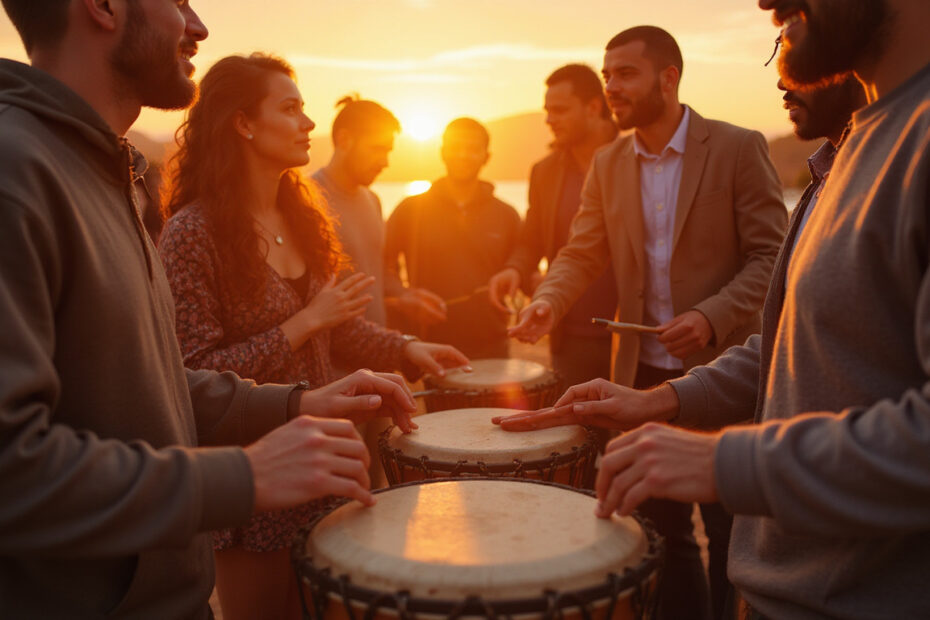
At its core, a drum circle is about connection, not performance. Participants sit or stand in a circle with drums or percussion instruments and create music together through improvisation, listening, and play.
Research into group music-making shows:
- Playing in rhythm together increases feelings of social bonding and belonging (source: Harvard Gazette).
- Rhythmic synchronization can reduce stress and support emotional regulation.
- Nonverbal communication (like drumming) helps people feel safe enough to open up.
In other words, when we drum in a circle, our brains and bodies are literally syncing up. That’s why a simple drum circle can quickly transform a tense team, a shy classroom, or a disconnected community gathering.
The Core Ingredients of a Transformative Drum Circle
To unlock the full potential of a drum circle, focus less on musical “perfection” and more on experience and intention. The most effective circles share these core ingredients:
1. A Safe, Welcoming Space
People need to feel comfortable making noise and making mistakes.
- Arrange chairs in a true circle so everyone is equal and visible.
- Keep the center of the circle open; that’s the group’s “shared space.”
- Use friendly, inclusive language: “There are no wrong notes here.”
2. A Clear Purpose
Different goals call for different approaches:
- Community-building: relaxed, playful rhythms; lots of interaction.
- Wellness/therapy: slower tempos, softer dynamics, reflective moments.
- Corporate/team-building: structured activities tied to communication and leadership themes.
- Education: simple patterns that teach timing, listening, and collaboration.
Naming your purpose upfront helps participants buy in and frames the experience.
3. Simple, Accessible Instruments
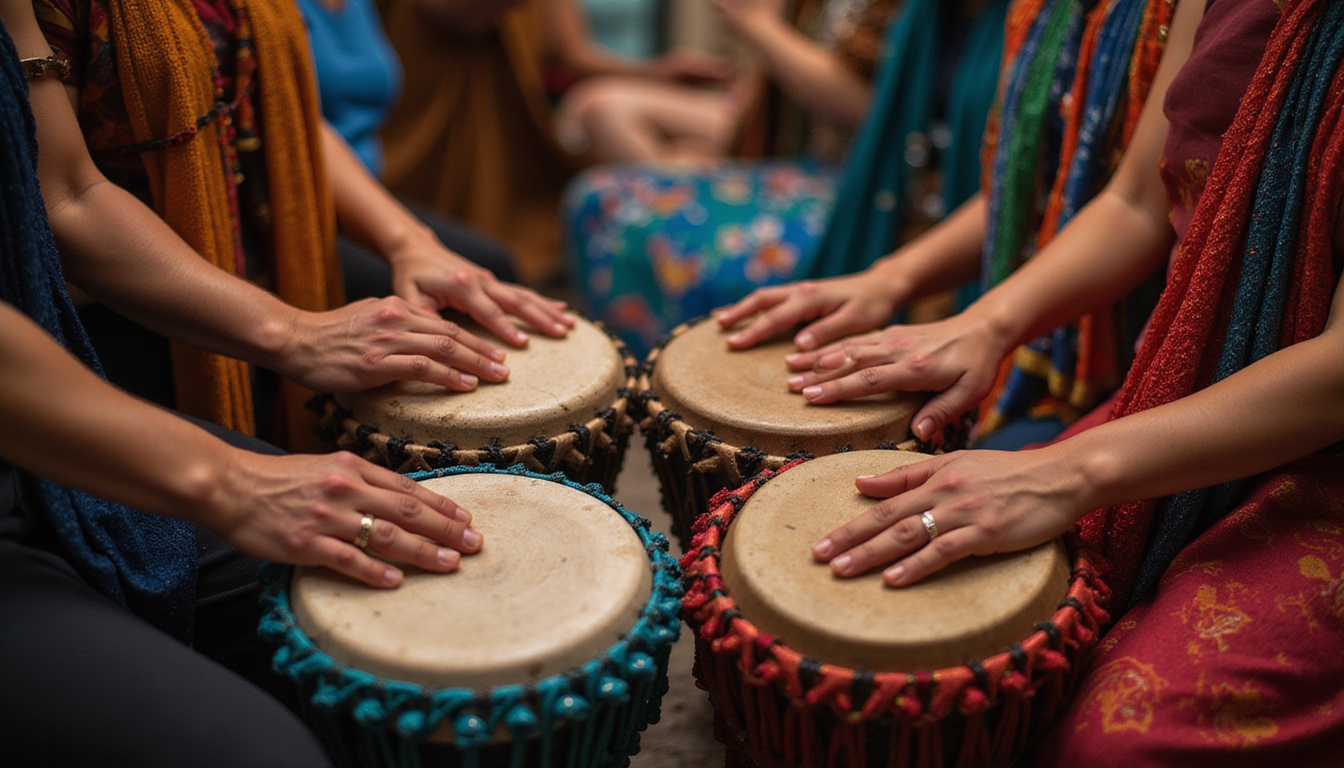
You don’t need expensive gear. A successful drum circle might include:
- Djembes, congas, bongos
- Frame drums, tubanos, cajóns
- Shakers, maracas, egg shakers
- Tambourines, bells, woodblocks, claves
- Hand claps, foot stomps, body percussion
The secret: give people something they can play easily and comfortably for 30–60 minutes.
How to Start a Drum Circle: Step-by-Step
Here’s a simple blueprint you can adapt to almost any group.
Step 1: Welcome and Orientation (5–10 minutes)
Begin with a warm welcome and a quick explanation:
- Why you’re here: “We’re going to use rhythm to connect, relax, and have fun.”
- What’s expected: “No experience needed. If you can speak, you already have rhythm.”
- Ground rules: listen to each other, no criticism, respect the instruments and each other.
A short icebreaker—like asking people to share their name and a sound—can help break the ice.
Step 2: Introduce the Pulse
Every drum circle needs a steady pulse.
- Start by clapping a simple beat: 1-2-3-4.
- Invite the group to clap with you.
- Transition from claps to simple drum hits once everyone is together.
Keep it slow and steady. The pulse is the glue that will hold more complex rhythms together.
Step 3: Layer Simple Rhythms
Once the pulse feels solid:
- Split the group into 2–3 sections.
- Give each section a simple pattern (e.g., Group A: play on beats 1 and 3, Group B: on 2 and 4).
- Demonstrate each part and slowly combine them.
Encourage people to listen as much as they play. Active listening turns noise into music.
Step 4: Invite Play and Improvisation
When the group is comfortable:
- Offer short “solo spots” where one person can play freely for a few bars.
- Encourage call-and-response: you play a pattern; the group echoes it.
- Gradually let the group create variations while keeping the main pulse steady.
Remind everyone: it’s about exploration, not perfection.
Step 5: Shape Energy with Dynamics
To keep the drum circle engaging, guide the energy:
- Use hand signals to get quieter (hands down) or louder (hands up).
- Signal a stop (closed fist) or a restart (open palm).
- Bring the volume way down, then build back up to a joyful peak.
These waves of intensity help people feel the emotional journey of the circle.
Step 6: Close with Intention
Don’t just let it fizzle out. End intentionally:
- Gradually slow the tempo together.
- Cue a unified final hit.
- Invite a short reflection: “How do you feel right now?” or “What did you notice?”
This helps participants integrate the experience and recognize its impact.
Drum Circle Secrets for Specific Groups
Different communities have different needs. Adjust your drum circle approach for maximum impact.
For Schools and Youth Programs
With kids and teens, structure and play are both crucial.
- Use short, varied activities to match their attention span.
- Turn practice into games: “freeze rhythm,” “copy the leader,” or rhythm relays.
- Connect rhythms to stories, moods, or classroom subjects.
Benefits for youth include improved focus, self-expression, and social skills.
For Corporate and Workplace Teams
A corporate drum circle is a potent team-building tool when you link activities to real work challenges.
- Leadership: Let different people lead the pulse or start new rhythms.
- Communication: Use call-and-response to show how signals spread (and get distorted).
- Collaboration: Demonstrate how listening creates harmony; “playing over” others creates chaos.
Wrap up with a debrief: what did they notice about listening, leadership, and support?
For Wellness, Therapy, and Recovery Groups
For emotional healing, focus on safety, grounding, and gentle expression.
- Keep tempos moderate to slow, with lots of repetition.
- Use soft instruments and encourage mindful breathing with the beat.
- Invite participants to “play how you feel” for short intervals.
Group drumming can support stress reduction, emotional release, and resilience in a nonverbal, nonjudgmental way.
For Neighborhood and Community Events
Community drum circles shine when they’re inclusive and fun.
- Offer a range of instruments, including low-volume options.
- Welcome all ages and abilities: kids, elders, people with no musical background.
- Encourage dancing, singing, or clapping around the circle.
These gatherings build social cohesion and give people a positive, shared experience of their community.
Common Drum Circle Mistakes (and How to Avoid Them)
Even well-meaning facilitators can undermine the experience. Watch out for:
-
Over-teaching
- Too much instruction kills spontaneity.
- Solution: keep explanations short; get people playing quickly.
-
Playing Over the Group
- If the leader drums constantly, others stop taking risks.
- Solution: play less, listen more, and leave space for others.
-
Ignoring Volume
- Loud, chaotic volume can be overwhelming, especially indoors.
- Solution: regularly cue softer playing; remind people to protect their ears.
-
Not Setting Expectations
- Without ground rules, some may dominate while others withdraw.
- Solution: clearly invite everyone to participate and to share space.
-
Ending Abruptly
- Stopping without closure misses a chance for reflection.
- Solution: plan a clear, shared ending and a brief group check-in.
Simple Activities to Energize Any Drum Circle
Here are a few quick, reliable activities you can plug into your next circle:
- Name Rhythms: Each person says their name rhythmically and plays it on their drum; the group echoes it.
- Rhythm Pass: One person creates a short pattern and “passes” it to the next person, who transforms it slightly, and so on.
- Volume Waves: The group follows your hand to get louder, softer, or freeze; it builds listening and control.
- Emotion Beats: Call out emotions (“calm,” “excited,” “curious”) and invite the group to express them in rhythm.
These mini-games keep engagement high and make the experience memorable.
Frequently Asked Questions About Drum Circles
1. What is a drum circle, exactly?
A drum circle is a group of people playing drums and percussion together, typically in a circle, using improvisation rather than written music. The focus is on connection, communication, and shared experience rather than performance or technical skill.
2. Do I need musical experience to join a community drum circle?
No experience is needed to join a community drum circle. A good facilitator will keep rhythms simple, provide clear cues, and emphasize listening and play. If you can clap along to a song, you can participate successfully in a drum circle.
3. What are the benefits of group drumming circles?
Group drumming circles offer social, emotional, and even physical benefits: they can reduce stress, boost mood, build a sense of belonging, support teamwork, and encourage creative expression. For many, the biggest benefit is feeling connected—to themselves and to others—through shared rhythm.
Bring Drum Circle Magic to Your Community
You don’t need to be a professional musician to spark transformation with a drum circle. With a clear intention, a few simple rhythms, and a commitment to listening, you can turn any group into a vibrant, connected community—one beat at a time.
If you’re ready to experience this for yourself, gather a few instruments (or even just hands and voices), invite your group, and start with a simple pulse. Or, if you’d like guidance, consider bringing in a trained drum circle facilitator to design a powerful, customized session for your school, workplace, or community event.
Don’t wait for connection to happen by accident—pick up a drum, step into the circle, and create it together.