

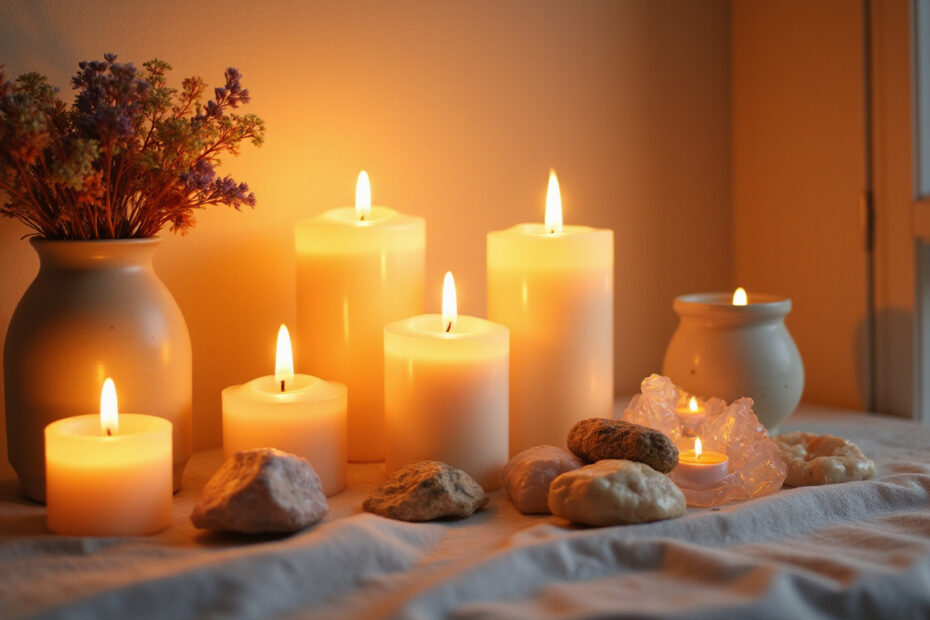
A thoughtfully styled altar can turn any corner of your home into a powerful spiritual focal point. You don’t need expensive tools or a big room; with a few intentional choices, your altar can feel more alive, grounded, and aligned with your practice. By understanding how to work with light, color, symbolism, and placement, you can transform your altar into a space that truly supports your inner life.
Why Your altar Styling Matters More Than You Think
An altar is more than a decorative shelf. It’s a visual and energetic reminder of what matters most to you—your values, your path, your ancestors, or your connection to the divine.
Styling your altar with care can:
- Deepen your sense of presence during prayer, meditation, or ritual
- Help you shift quickly into a spiritual mindset
- Offer comfort and grounding in stressful times
- Reflect the seasons of nature and the seasons of your life
When your altar looks and feels coherent, your nervous system picks up on that harmony. That’s why even small tweaks—moving a candle, swapping a cloth, shifting the height of objects—can create a surprisingly big spiritual impact.
Step One: Clarify the Purpose of Your altar
Before you move a single object, decide what your altar is for. Its purpose will guide every styling decision.
Ask yourself:
- Is this altar for daily meditation and reflection?
- Is it dedicated to a particular deity, saint, or spiritual lineage?
- Is it an ancestral altar for remembrance and connection?
- Is it seasonal, shifting with the wheel of the year or lunar cycles?
- Is it a manifestation altar focused on specific intentions (love, healing, prosperity)?
You can absolutely combine purposes, but choose a primary focus. That clarity will help you select colors, symbols, and items that tell one clear story rather than a confusing mix of themes.
Styling tip:
Write a single sentence about your altar’s role, like:
“This altar is a calm, nurturing space for daily meditation and gratitude.”
Keep this sentence in mind as you rearrange and edit.
Choosing the Right Location: The Power of Placement
Where you place your altar shapes how often you use it and how it feels.
Consider:
- Visibility: Can you see your altar easily from a frequently used area? If it’s hidden, you’ll connect with it less.
- Privacy: Choose a spot where you can have quiet moments without constant interruption.
- Cleanliness: Avoid cluttered or chaotic spaces. A calm corner helps your altar feel anchored.
- Natural elements: Near a window (but not in harsh direct sun) allows for fresh air and shifting natural light, which adds life.
Some people like to align their altar according to traditional systems such as feng shui or the four directions. While not required, these can inspire creative placement if it resonates with you (source: National Institutes of Health, spirituality & health overview).
The “Less But Deeper” Rule: Edit Your altar Intentionally
Many spiritual practitioners start adding objects to their altar over time—crystals, notes, feathers, photos, gifts from nature. Suddenly, the space is overcrowded, making it harder to focus.
A simple but powerful styling shift:
Keep fewer items, and relate more deeply to each one.
Try this mini reset:
- Remove everything from your altar.
- Clean the surface with intention (water, a natural cleanser, or smoke/ sound if that fits your practice).
- Hold each item and ask, “Does this still have meaning for me right now?”
- Only return what feels active, alive, and relevant.
You might surprise yourself by how much lighter and more focused your altar becomes with fewer, more meaningful pieces.
Working with Levels: Height Creates Hierarchy
One of the easiest ways to transform how your altar looks and feels is to play with height.
When everything sits at the same level, the altar can feel flat or visually cluttered. By creating layers, you introduce a sense of sacred order.
Use:
- Sturdy boxes or small risers hidden under cloths
- Stacked books dedicated only to spiritual use
- Small stands for statues, candles, or bowls
A helpful rule of thumb:
- Objects of central importance (a statue, a cross, a main candle, a central crystal) go on the highest point.
- Supporting items (offerings, flowers, incense, secondary candles) sit at mid-level.
- Grounding items (stones, earth, shells, written intentions) rest at the lowest level or directly on the altar surface.
This visual hierarchy guides your eye and your energy toward what you most intend to honor.
Color Magic: How Palette Shapes Mood and Meaning
Color is a subtle yet powerful way to shift the energy of your altar. Even changing a single altar cloth can alter the entire mood.
Consider what you’re calling in:
- Calm & clarity: Whites, soft blues, light grays
- Love & compassion: Pinks, soft greens, rose tones
- Protection & grounding: Deep browns, blacks, dark reds
- Joy & creativity: Oranges, yellows, vibrant tones
- Mystery & intuition: Purples, indigos, dark blues
You don’t need to follow any strict system. Let your intuition guide you. One or two main colors plus a neutral base usually feels balanced and intentional.
Small change, big impact: Rotate a simple altar cloth with the seasons or with your primary intention. Keep everything else mostly the same. Your altar will feel fresh without needing to be rebuilt constantly.
Light as a Spiritual Tool: Candles and Natural Glow
Lighting is one of the most important aspects of altar styling. The way light falls on your sacred objects can completely change the atmosphere.
Think about:
- Candle placement: One central flame as a focal point can be more powerful than many scattered candles.
- Safety: Ensure candles are stable, clear of fabrics, and never left unattended. Consider enclosed glass votives.
- Natural light: Notice how morning vs. evening light touches your altar. You may choose to face your practice toward the time when the light feels most supportive.
- Soft artificial light: A small warm-toned lamp or string of soft fairy lights can keep the altar gentle and inviting when candles aren’t practical.
Even lighting a single candle at the same time daily becomes a ritual that anchors your spiritual rhythm.

Symbolic Balance: Align Earth, Water, Fire, Air & Spirit
Many traditions honor the balance of elements on an altar. You don’t have to follow a strict system, but lightly representing each element can bring cohesion.
For example:
- Earth: Stones, crystals, plants, soil, salt
- Water: A small bowl of water, seashells, a chalice
- Fire: Candles, an oil lamp, a small (safe) incense coal
- Air: Incense, feathers, bells, wind chimes, written prayers
- Spirit / Ether: A central image that represents the divine to you—deity, symbol, mandala, or a simple empty space
You can keep this very minimal. A small rock, a single feather, a tealight, and a bowl of water can be enough to feel the harmony of elements on your altar.
Personal Anchors: Photos, Mementos, and Intention Objects
What makes an altar truly powerful is its personal resonance. Include a few carefully chosen items that embody what you care about most.
Possibilities:
- A photo of an ancestor or spiritual teacher
- A meaningful piece of jewelry or a ring that marks a life transition
- A key symbol for your path (rosary, mala beads, protective symbol, rune, etc.)
- Objects from nature that “found you”: a leaf, shell, or branch that felt charged
- A small journal or box where you place written prayers or intentions
Place these where your eyes naturally settle. These personal anchors can instantly reconnect you with your deepest motives for practice.
A Simple Daily Ritual to Activate Your altar
Styling is important—but interaction is what makes your altar glow with spiritual significance. Build a very small, repeatable ritual to do at your altar.
You might:
- Light a candle.
- Take three slow, conscious breaths.
- Speak a short affirmation, prayer, or gratitude.
- Touch or hold one anchor object (like a stone or bead) to reinforce your intention.
Even 2–3 minutes daily at your altar will charge the space with the energy of your presence. Over time, simply standing there can trigger a sense of calm, openness, or reverence.
One-Time Tweaks, Long-Term Impact
Here are seven small changes you can make today that can have an outsized spiritual impact on your altar:
- Clear and clean: Remove dust and stale offerings; replace with fresh water or flowers.
- Create height: Elevate your central object on a book, box, or stand.
- Simplify: Put away 3–5 items that no longer feel relevant.
- Refresh color: Swap or add a cloth in a color that matches your current intention.
- Refine lighting: Adjust candle or lamp placement to create a warm focal glow.
- Add one natural element: A stone, plant, or shell instantly grounds the space.
- Set a daily cue: Place something you use daily (like a journal or meditation cushion) near the altar to remind you to visit.
Small, intentional updates like these keep your altar alive without requiring a full redesign.
FAQs About altars and Styling
Q1: How do I start a simple altar at home if I’m a beginner?
Begin with a clear, flat surface in a calm corner. Place one cloth, one central object that symbolizes the sacred for you (such as a candle, statue, or meaningful stone), and one natural element like a plant or bowl of water. As your comfort grows, you can gradually add more items that feel genuinely meaningful, but keep your altar uncluttered.
Q2: What should I avoid placing on my spiritual altar?
Avoid objects that feel emotionally heavy, unresolved, or purely decorative without meaning. Don’t let your altar become a storage area—keys, phones, mail, and random trinkets dilute the energy. If something on your altar stresses or distracts you instead of soothing and focusing you, it probably doesn’t belong there.
Q3: How often should I change or refresh my altar setup?
There’s no fixed rule. Some people update their altar weekly, others seasonally, others only when something in their inner life shifts. A good rhythm is to do a light refresh at least once a month: dust, replace offerings, and check that each item still reflects your current intentions. If your altar starts to feel “invisible,” that’s a sign it wants your attention.
Styling your altar is not about striving for perfection or mimicking someone else’s aesthetic. It’s about listening deeply to what supports your spirit and letting that take visible form in your space. Even the smallest, quietest changes—moving a candle, choosing a new cloth, removing an item that no longer resonates—can create a surprisingly profound shift in how you feel when you approach your altar.
Take a few minutes today to stand before your altar and really look. What wants to stay? What wants to leave? What small addition would make this space feel more like a true reflection of your heart?
Begin with just one change. Then sit, breathe, and notice: your altar will meet you where you are—and, with a little care, help you step into where you’re meant to go.