
Anxiety can feel like a constant storm: racing thoughts, tightness in the chest, sleepless nights, and a sense that something is wrong—even when you can’t explain why. While traditional therapy and medication are powerful tools, more people are discovering that spiritual counseling offers an additional path: one that addresses the deeper questions of meaning, purpose, and connection that often lie beneath anxiety.
This approach doesn’t replace medical or psychological care; rather, it complements them by engaging the whole person—mind, body, and spirit—to help you heal anxiety and rediscover a lasting inner peace.
What Is Spiritual Counseling?
Spiritual counseling is a form of guidance that integrates psychological insight with spiritual wisdom, practices, and perspectives. Unlike strictly clinical counseling, it openly acknowledges and works with:
- Your beliefs about life, death, and purpose
- Your relationship to something larger than yourself (God, Source, the Universe, Higher Self, etc.)
- Your inner wisdom, intuition, and soul-level needs
Spiritual counseling is not limited to any single religion or doctrine. It can be:
- Faith-based (e.g., Christian, Buddhist, Hindu, Jewish, Muslim counseling)
- Interfaith (embracing multiple traditions)
- Non-religious but spiritually oriented (focusing on inner awareness, mindfulness, and connection)
At its core, spiritual counseling invites you to explore who you truly are beneath your fears, stories, and roles—and how reconnecting with that deeper self can transform your relationship with anxiety.
How Spiritual Counseling Helps Heal Anxiety
Anxiety is often fueled by uncertainty, fear of the unknown, and feeling disconnected—from others, from ourselves, and from any sense of deeper meaning. Spiritual counseling targets these roots in several ways.
1. Reconnecting You With a Sense of Meaning
Anxiety frequently spikes when life feels random, unfair, or meaningless. Spiritual counseling helps you explore questions like:
- Why am I going through this?
- What is this experience trying to teach or awaken in me?
- How can my pain become a doorway to growth?
When anxiety is reframed as part of a larger journey of growth, you may feel less trapped and more empowered. Research on meaning-making shows that finding purpose in adversity can significantly improve mental resilience (source: American Psychological Association).
2. Calming the Nervous System Through Spiritual Practices
Many spiritual traditions include practices that directly calm the body and mind:
- Breathwork and meditation
- Prayer or contemplative silence
- Mantras or sacred phrases
- Mindful movement (yoga, qigong, walking meditation)
A spiritual counselor can guide you in choosing and integrating practices that resonate with your beliefs and lifestyle. Over time, these practices regulate the nervous system and make anxious episodes less intense and frequent.
3. Transforming Fear-Based Beliefs
Anxiety is often sustained by subconscious beliefs such as:
- “I’m not safe.”
- “I’m not good enough.”
- “I’m alone, and no one really understands me.”
Through spiritual counseling, you explore where these beliefs came from—family, culture, religion, trauma—and gently question whether they’re actually true. You begin to replace them with more compassionate, life-affirming perspectives aligned with your deeper spiritual understanding, such as:
- “I am supported.”
- “I am worthy and lovable as I am.”
- “I am connected to something greater than my fear.”
This inner shift doesn’t happen overnight, but with consistent work it can dramatically soften the grip of anxiety.
4. Encouraging Self-Compassion and Acceptance
Many people with anxiety judge themselves harshly: “I should be stronger,” “Why can’t I just get over it?” Spiritual counseling emphasizes self-compassion as a sacred practice. Your anxiety is no longer a sign of weakness, but an invitation to:
- Honor your sensitivity
- Listen more closely to your needs
- Treat yourself with the same kindness you would offer a friend
This can reduce the secondary layer of shame and self-criticism that often makes anxiety worse.
What to Expect in a Spiritual Counseling Session
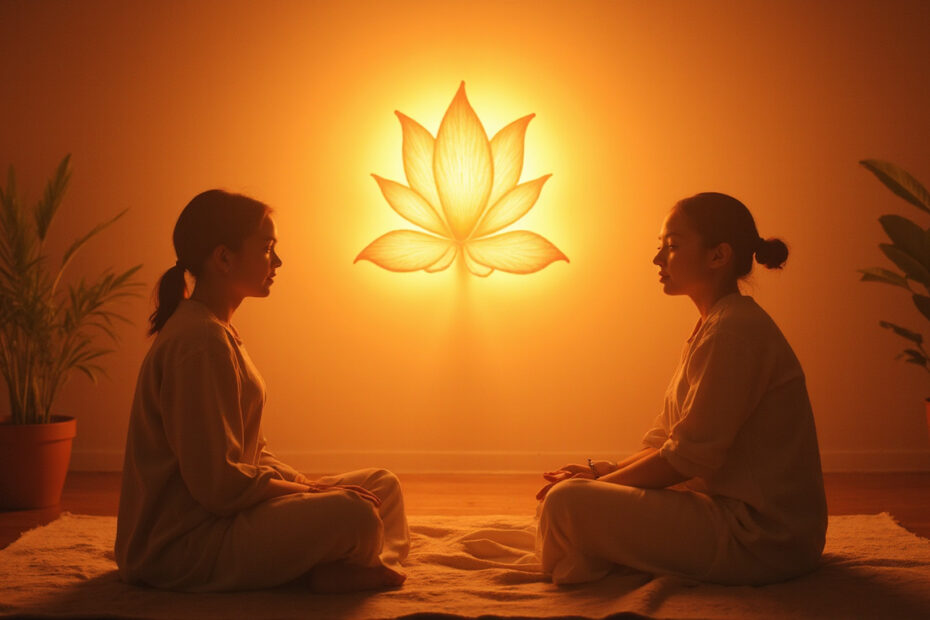
Each spiritual counselor has a unique style, but most sessions include a blend of conversation, reflection, and practical tools. A typical session might involve:
-
Grounding and Centering
You might start with a brief meditation, prayer, or breathing exercise to arrive fully in the moment and create a safe, sacred space. -
Exploring Your Experience of Anxiety
You describe your current challenges: when anxiety shows up, what triggers it, how it feels, and how it affects your life. -
Connecting Emotional and Spiritual Themes
The counselor helps you explore deeper layers:- Are you navigating a spiritual crisis or loss of faith?
- Do you feel disconnected from your values or purpose?
- Are there spiritual beliefs adding to your fear (e.g., fear of punishment, unworthiness)?
-
Introducing Spiritual Practices
Depending on your comfort level and background, your counselor may suggest:- Mindfulness exercises
- Journaling prompts
- Affirmations or mantras
- Guided imagery or visualization
- Rituals for release, forgiveness, or gratitude
-
Integration and Action Steps
You’ll leave with concrete practices or reflections to explore between sessions, allowing the healing to continue in your daily life.
Types of Spiritual Counseling Approaches
Not all spiritual counseling looks the same. Understanding the different approaches can help you find the right fit.
Faith-Based Spiritual Counseling
If you belong to a particular religious tradition, you might seek a counselor who works from that same faith. For example:
- A Christian counselor who incorporates Scripture and prayer
- A Buddhist counselor who emphasizes mindfulness and compassion
- A Hindu counselor who uses concepts like dharma and karma
This can be especially comforting if your faith is a significant part of your identity and you want guidance aligned with those values.

Interfaith or Non-Denominational Counseling
If your beliefs are fluid, evolving, or not tied to a particular religion, an interfaith or non-denominational spiritual counselor may be ideal. They often:
- Draw from multiple traditions (e.g., Christianity, Buddhism, Sufism, indigenous wisdom)
- Focus on universal themes like love, presence, and interconnectedness
- Respect your personal experience of the sacred, however you define it
Secular but Spiritually-Informed Counseling
Some professionals blend evidence-based therapy with a spiritual lens, without promoting any specific belief system. They may be psychologists, social workers, or coaches who:
- Use cognitive-behavioral or somatic tools
- Encourage mindfulness, purpose, and values-based living
- Invite spiritual exploration only to the extent you’re comfortable
Signs You Might Benefit From Spiritual Counseling
You don’t have to identify as “religious” to benefit from spiritual counseling. It may be particularly helpful if:
- You have tried traditional therapy but still feel something is missing.
- Your anxiety is tied to questions of purpose, death, or “what it all means.”
- You’re experiencing a crisis of faith or belief.
- You feel disconnected, numb, or spiritually “empty.”
- You sense that your anxiety is asking you to grow, but you’re not sure how.
If any of these resonate with you, exploring spiritual counseling can be a powerful next step in your healing journey.
Simple Spiritual Practices to Ease Anxiety Today
While working with a professional offers personalized guidance, you can begin incorporating spiritually grounded practices on your own. Here are a few to try:
-
Grounding Breath with Intention
- Inhale slowly for a count of 4, thinking: “I receive peace.”
- Exhale slowly for a count of 6, thinking: “I release fear.”
- Repeat for 3–5 minutes.
-
Gratitude and Surrender Journal
- Each night, write down three things you’re grateful for.
- Then write one worry and end with the phrase, “I release this to [God/Universe/Life]. Show me the next right step.”
-
Sacred Pause Practice
When anxiety flares:- Pause and place a hand on your heart.
- Take three deep breaths.
- Silently say, “In this moment, I am safe. I am not alone.”
-
Nature Connection
Spend 10–20 minutes outside, without headphones, simply noticing: the sky, trees, ground, and sounds. Many people experience nature as a direct doorway to the spiritual—a reminder of a larger, supportive presence.
How to Choose a Spiritual Counselor
Because spiritual counseling is deeply personal, finding the right guide matters. When searching, consider:
-
Credentials and Training
- Do they have training in counseling, psychology, chaplaincy, coaching, or theology?
- Are they accredited by a professional body, where applicable?
-
Spiritual Orientation
- Do they share or respect your beliefs and background?
- Do you feel safe exploring your doubts and questions with them?
-
Approach to Anxiety
- Do they understand anxiety from both psychological and spiritual perspectives?
- Are they open to collaborating with your therapist or doctor if you have one?
-
Personal Fit
- Do you feel heard, respected, and not judged?
- Do you leave sessions feeling calmer, clearer, or more hopeful—even if you’re still working through difficult emotions?
Most counselors offer a brief consultation. Use that time to ask about their approach, experience with anxiety, and how they integrate spirituality into their work.
Working With Spiritual Counseling Alongside Other Treatments
Spiritual counseling is often most effective as part of a holistic healing plan that can include:
- Psychotherapy (e.g., CBT, EMDR, somatic therapies)
- Medication prescribed by a healthcare provider
- Lifestyle changes (sleep, nutrition, exercise)
- Support groups, community, or faith communities
Always inform your medical or mental health professionals about your use of spiritual counseling so they can support you in a coordinated way. If your anxiety is severe, persistent, or includes suicidal thoughts, seek immediate help from a licensed mental health professional or emergency services.
FAQ About Spiritual Counseling for Anxiety
1. Is spiritual counseling the same as Christian counseling for anxiety?
Not necessarily. Christian counseling for anxiety is one specific form of spiritual counseling rooted in Christian beliefs and Scripture. Spiritual counseling is a broader term that may be Christian, interfaith, or non-religious, depending on the counselor’s orientation and your needs.
2. Can spiritual therapy for anxiety replace regular therapy or medication?
Spiritual therapy for anxiety is best seen as a complement, not a replacement, for evidence-based treatment. Some people find spiritual counseling sufficient for mild anxiety, but if your symptoms are moderate to severe, working with a licensed therapist or doctor alongside spiritual counseling is strongly recommended.
3. How long does it take for spiritual counseling to help with anxiety?
Everyone’s journey is different. Some people feel a sense of relief or hope after the first few sessions of spiritual counseling, especially when they begin to see their anxiety through a new, more compassionate lens. Lasting change—shifts in beliefs, habits, and nervous system responses—usually unfolds over weeks or months of consistent practice and support.
Rediscover Inner Peace Through Spiritual Counseling
You are not your anxiety. Beneath the racing thoughts and tight chest, there is a deeper, wiser part of you that is steady, grounded, and connected to something larger. Spiritual counseling is an invitation to rediscover that part—to explore what your soul is trying to tell you through your anxiety, to release beliefs that no longer serve you, and to learn practices that bring you back home to yourself.
If you’re feeling called to heal on more than just a surface level, consider taking the next step: reach out to a spiritual counselor, schedule an exploratory session, and experience what it’s like to face your anxiety with both psychological tools and spiritual support. Your path to inner peace is already unfolding; you don’t have to walk it alone.