🌟 Daily Awakening Quiz 🌟
If you’re searching for a way to settle anxiety and sharpen inner clarity, satsang offers a simple, heart-centered doorway. In a satsang you gather — in person or online — to listen, reflect, and rest in a field of honest attention. This article shows practical steps to begin a satsang practice and how to keep it alive in daily life.
What is satsang?
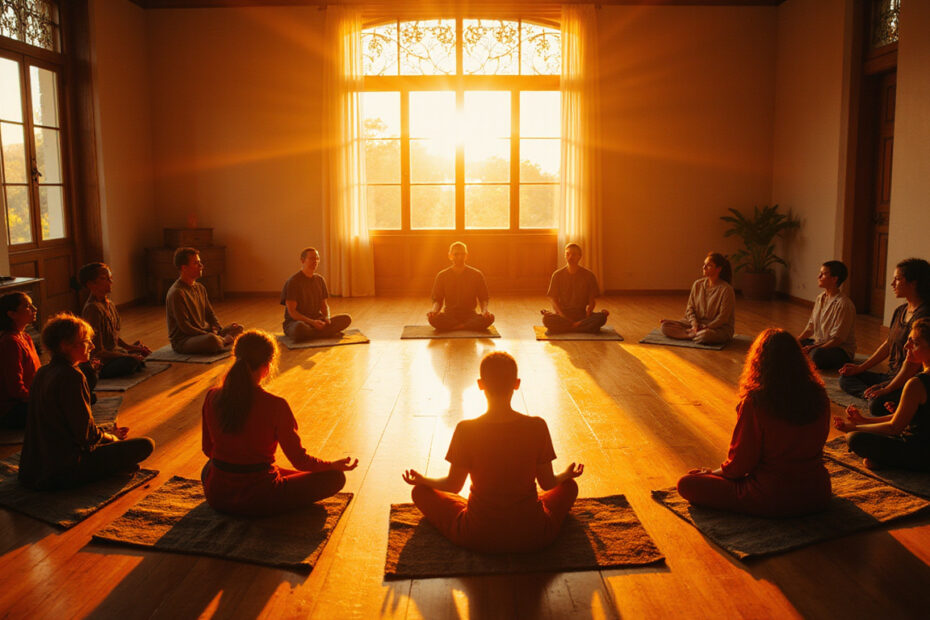
Satsang literally means “association with truth” and traditionally describes a gathering where seekers, a teacher, or spiritual friends attend to teachings, silence, and shared inquiry. The form varies by culture and teacher: it can be a talk and Q&A, silent sitting, chanting, or even a walk where participants listen deeply. At its core, satsang points away from mere intellectual belief and toward direct recognition of what is true for you in the present moment.
Why satsang brings peace and clarity
Satsang is effective because it changes the field around your attention. When people practice together, the usual internal noise softens. Shared attention calms the nervous system, encourages honest questioning, and supports the habit of pausing before reacting. From a psychological and practical point of view, community, ritual, and guided listening are proven stress-reduction tools — they make it easier to notice what’s true rather than being driven by habit.
According to Britannica (https://www.britannica.com/topic/satsang) (source), satsang has historically been a method for seekers to receive clarity through direct teaching and communal practice. Modern adaptations keep the same heart: seeking clarity by listening well and being willing to be changed by what you hear.
Simple steps to start a satsang practice
The most sustainable satsang practice is simple and repeatable. Use these steps to begin:
- Set intention and time — pick a consistent, realistic slot (even 15–30 minutes daily).
- Create a simple space — a quiet corner, a cushion, and a soft light or a small object to center on.
- Begin with silence — settle the breath for a few minutes before any reading or audio.
- Read or listen — choose a short teaching, a recorded talk, or a sacred text; in traditional satsang, a teacher’s talk often anchors the session.
- Share briefly (optional) — if you’re with others, offer a short, personal reflection or a question; keep it candid and concise.
- Close with silence — sit quietly for a few minutes to let the field of attention integrate.
- Note one takeaway — write one sentence about what you’ll carry into the rest of your day.
These steps create a container: intention steadies, silence opens, teaching points, sharing softens ego, and integration brings practical clarity.
How to participate in a group satsang
Group satsang is often more potent than solo practice simply because the shared field amplifies stillness. If you join a group, arrive early, disconnect from devices, and come with curiosity more than expectation. Listen generously — the simplest rule is to speak from your own experience rather than arguing abstract points. If there’s a teacher present, follow local etiquette about asking questions and offering reflections. Remember: the purpose is to be present and honest, not to perform or fix others.
At-home satsang and daily integration
You don’t need a physical group to gain the benefits of satsang. Solo practice can mirror the same structure: choose a recorded talk or a short passage, sit in silence first, listen as if someone else’s presence is supporting you, and then journal a few notes. To make satsang practical, identify one small change inspired by your session — a kinder word, a pause before reacting, or a prioritized task aligned with your values. Small, consistent actions are where inner clarity becomes lived reality.

Common obstacles and gentle fixes
- Resistance or boredom: Keep sessions short and compassionate. Curiosity breaks the loop—ask, “What exactly feels resistant right now?”
- Overthinking or analyzing: Use silence before and after listening to allow the heart, not only the mind, to respond.
- Feeling self-conscious in a group: Begin by listening quietly and only share when you feel grounded.
Satsang is not about perfection; it’s about the steady return to attention and honesty.
Short FAQ
Q: What is satsang and how does it help daily life?
A: Satsang is a practice of shared listening and honest inquiry. It helps by creating space to notice habitual reactions and by offering repeated gentle reminders of what truly matters, which gradually reshapes daily choices.
Q: How can I do satsang at home on my own?
A: Start with a short recorded talk or a reading, sit in silence for a few minutes, listen as if someone were present, reflect briefly, and note one action to practice that day. This home-based satsang builds continuity even without a group.
Q: Should I attend satsang regularly or only when I feel stuck?
A: Regular attendance — even brief, consistent sessions — deepens clarity faster than sporadic attendance. Regular satsang trains attention and reduces reactivity over time.
One authoritative resource to explore further is the Britannica overview of satsang for historical and cultural background (https://www.britannica.com/topic/satsang) (source).
Final thoughts and a simple invitation
Satsang is remarkably accessible: you don’t need extraordinary conditions, just a willingness to show up and listen — to a teacher, to a text, and to your own moment-by-moment experience. Start small. Commit to one short practice for two weeks and notice the shift: more spaciousness in your thinking, clearer priorities, and a quieter reactivity. If you’d like, join a local satsang group, subscribe to a teacher’s short weekly talk, or set a daily alarm for a 15-minute home session. The path to deep inner peace and clarity is walked one listening moment at a time — begin today.