🌟 Daily Awakening Quiz 🌟
Dharma is one of those words that feels profound the moment you hear it—but also mysterious and hard to pin down. Is dharma a job, a spiritual calling, a moral code, or something else entirely? In this guide, we’ll decode dharma in clear, modern language and walk through practical steps you can use to align your daily life with a deeper sense of purpose.
What Is Dharma, Really?
The word dharma comes from ancient Indian spiritual traditions (Hinduism, Buddhism, Jainism, and others). While each tradition defines it a bit differently, a simple modern understanding is:
Dharma = your right path + right way of living, aligned with truth, integrity, and your unique role in the world.
You can think of dharma as:
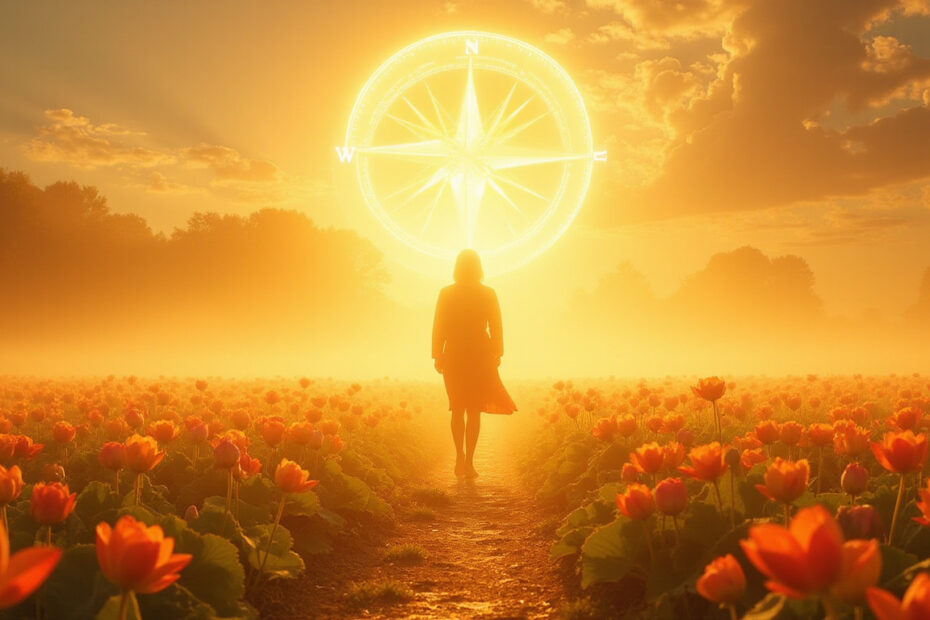
- Your inner compass that points to what feels deeply right, not just convenient
- The combination of your values, responsibilities, natural gifts, and contribution
- A way of living where your actions support both your growth and the well-being of others
In many Eastern philosophies, following your dharma is not about chasing status or external success; it’s about acting in harmony with your true nature and the larger order of life (source: Encyclopaedia Britannica).
The Four Layers of Dharma
To make the idea practical, it helps to see dharma as having four overlapping layers. Together, they shape your life’s purpose.
1. Universal Dharma: Values That Apply to Everyone
Universal dharma is about fundamental principles that support human flourishing, like:
- Honesty
- Non-harming
- Compassion
- Responsibility
- Respect for life
You don’t have to be religious or spiritual to recognize these as healthy foundations for living. When you violate these, you feel inner conflict. When you live by them, you feel more grounded and self-respecting.
2. Social Dharma: Your Roles and Responsibilities
This is the dharma connected to your roles in life:
- As a parent, partner, or child
- As a friend, colleague, or leader
- As a citizen in your community
Social dharma asks: What is the most responsible, ethical way to show up in the roles I’ve chosen or inherited? This doesn’t mean self-sacrifice to the point of burnout; it means honoring your commitments while staying true to yourself.
3. Personal Dharma: Your Unique Nature
Personal dharma is where purpose gets specific. It’s shaped by your:
- Talents and strengths
- Curiosities and passions
- Temperament and personality
- Lived experiences and challenges
This layer is about living in alignment with who you actually are, not who you’ve been told to be. When you’re close to your personal dharma, you often feel:
- A sense of “this fits me”
- Natural motivation (even when it’s hard)
- That your work or actions matter beyond your ego
4. Situational Dharma: What’s Right, Right Now
Life is full of moments where you must decide: What is the right thing to do in this specific situation?
Situational dharma is about discernment:
- Do I speak up or stay silent here?
- Do I protect my boundaries or compromise?
- Do I stay in this job/relationship or move on?
You don’t always get a perfect, certain answer. But dharma encourages you to choose with conscience, not just comfort or fear.
Signs You’re Out of Alignment With Your Dharma
You rarely get a loud announcement that you’ve drifted away from your dharma. Instead, it shows up as subtle (or not so subtle) symptoms:
- Persistent sense of emptiness, even when life looks “successful”
- Chronic stress, resentment, or burnout in your main activities
- Feeling like you’re acting a role instead of being yourself
- Numbing out through distractions, addictions, or constant busyness
- A quiet inner voice that keeps saying, “This can’t be all there is.”
These are not personal failures. They are signals. Dharma doesn’t shame you; it invites you: come back to what’s true for you.
Step 1: Clarify Your Core Values
Dharma starts with honesty about what really matters to you—not your parents, community, or culture, but you.
Try this quick exercise:
- List 10 values that resonate with you (e.g., integrity, creativity, freedom, family, growth, service, health, learning, love, courage).
- Circle the 5 that feel most essential.
- Now narrow it down to your top 3 non‑negotiable values.
Ask yourself:
- Where in my life am I honoring these values?
- Where am I regularly betraying them—for approval, money, or comfort?
Dharma requires alignment with values. Even a “dream job” that pushes you to violate your core values will eventually feel wrong.
Step 2: Map Your Natural Strengths and Joy
Your personal dharma often lives at the intersection of what you’re good at and what gives you energy.
Reflect on:
- What do people naturally come to you for? (Advice, organization, technical help, emotional support, creativity?)
- What activities make time fly because you’re absorbed?
- What kinds of problems are you drawn to solving?
Look back over your life:
- What did you love doing as a child, before you cared about impressing anyone?
- What achievements felt deeply satisfying (beyond praise or rewards)?
Make a simple list with two columns:
- Strengths I reliably show
- Activities that energize me
Where these overlap is fertile ground for your dharma.
Step 3: Understand Your Duties Without Losing Yourself
Your social dharma—responsibilities to family, work, or community—matters. But it’s only one layer, not the whole story.
Ask:
- What are my current non‑optional responsibilities?
- Which of these still feel meaningful, and which feel purely obligatory?
- Is there a way to honor my responsibilities while moving closer to my authentic path?
Sometimes dharma means staying and serving; sometimes it means evolving your role, setting boundaries, or eventually stepping away. The key is intentionality, not automatic obedience.
Step 4: Listen to Your Inner Feedback System
Your emotions and body provide real‑time information about your alignment with dharma.
Notice:
- Activities that leave you feeling expanded, clear, or quietly fulfilled
- Situations that reliably bring tightness, dread, or a sense of “shrinking”
- Moments when your intuition whispers, “This is right for me,” or “This is not it.”
You don’t have to make drastic changes overnight. Just begin to:
- Do more of what feels aligned (even in small doses)
- Do less of what chronically drains or distorts you
- Pay attention before your body or mind reaches a breaking point
Step 5: Experiment With Small Dharma Aligned Actions
You rarely “find” your dharma in one big revelation. More often, you discover it through experiments.
Pick one or two low‑risk ways to act more in line with your purpose:
- Volunteer in an area that interests you
- Take a short course in a field you feel drawn to
- Start a side project or creative practice that expresses your gifts
- Adjust your current job role slightly to use more of your strengths
- Have honest conversations about the changes you’d like to make
Think of it as running “life experiments,” not making irreversible decisions. Track what feels closer to your dharma through:
- A weekly reflection journal
- A simple rating: “How aligned did this week feel?” (1–10)
Over time, patterns emerge, and your path becomes clearer.

Step 6: Balance Self-Interest and Service
A key feature of dharma is that it’s not just about you. It’s about how you fit into the larger web of life.
Questions to guide you:
- Who benefits from me living this way?
- How does this path help others, even indirectly?
- Does this expression of my gifts reduce harm and increase well‑being?
Dharma tends to sit at the sweet spot where:
- You feel alive and authentic
- Others genuinely benefit from what you bring
- You can sustain the effort over time without self-destruction
You don’t have to be a saint. You just need to orient your life so that your fulfillment and others’ well‑being are allies, not enemies.
Step 7: Accept That Dharma Evolves
One of the biggest myths is that dharma is a single, fixed job or identity you have to “figure out” once and for all.
In reality, your dharma can change as you:
- Mature emotionally and spiritually
- Move through life stages (student, worker, parent, elder, etc.)
- Learn from crises, failures, and turning points
Instead of asking, “What is my dharma for the rest of my life?” ask:
“What feels like my right path, for this season of my life, given who I am and what I know now?”
This question is compassionate and flexible. It allows you to evolve without feeling like you’ve “failed” your purpose.
A Simple Dharma Alignment Checklist
Use this list as a quick self‑check when you’re making decisions:
- Values – Does this choice honor my top 3 values?
- Integrity – Can I explain this decision honestly without shame or excuses?
- Strengths – Does this allow me to use my real strengths at least some of the time?
- Energy – Do I feel more expanded or more contracted when I imagine this path?
- Impact – Does this reduce harm and contribute something of value to others?
- Sustainability – Can I realistically sustain this without severe damage to my health or relationships?
- Growth – Will this challenge me to grow in ways I respect?
You don’t need a perfect “yes” to everything. But if you’re saying “no” to most of these, you may be stepping away from your dharma rather than toward it.
Common Myths About Dharma
Clearing away misconceptions makes it much easier to live your purpose.
Myth 1: Dharma is just about your career.
Work is one expression of dharma, but not the only one. Your dharma may show up strongly in parenting, mentoring, community work, or creative pursuits outside paid employment.
Myth 2: If it’s your dharma, it will always feel easy.
Not true. Dharma can be demanding. The difference is that effort feels meaningful, not pointless. You’re willing to struggle for it, not because of it.
Myth 3: Dharma must be grand or world‑changing.
Your dharma might be raising emotionally healthy children, researching obscure fungi, or bringing kindness into a workplace culture. Scale doesn’t define significance.
Myth 4: You’re failing if you don’t know your dharma yet.
Dharma isn’t a quiz with a deadline. Exploring it is itself part of living your dharma—through curiosity, honesty, and responsible experimentation.
FAQ: Dharma and Life Purpose
Q1: How do I find my dharma if I feel completely lost?
Start small. Instead of “finding my dharma,” focus on “taking one step toward more alignment.” Clarify your values, notice what energizes you, and experiment with small changes in how you spend your time. As you act, feedback will guide you.
Q2: Can my job and dharma be different things?
Yes. Your occupation and your dharma don’t always fully overlap. Your job might currently be a way to meet practical needs, while your dharma is expressed through side projects, caregiving, art, or community service. Over time, you can explore gently moving your paid work closer to your dharmic expression—but it doesn’t have to be instant or absolute.
Q3: What is dharmic living in daily life?
Dharmic living means making everyday choices—how you speak, work, rest, love, and consume—in ways that align with your values, your authentic nature, and the well‑being of others. It’s less about labels and more about consistently choosing integrity over convenience.
Step Into Your Dharma, One Decision at a Time
You don’t need a dramatic life overhaul to live your dharma. You need willingness:
- To tell yourself the truth about what matters
- To listen to your inner signals
- To adjust your choices, roles, and priorities bit by bit
Dharma isn’t a destination; it’s a way of walking. If you’re ready to explore a life that feels more aligned, meaningful, and honest, begin today with one conscious action—no matter how small—that reflects who you really are.
Then keep going.
If you’d like support in clarifying and living your dharma, consider turning this into a real practice: set aside an hour this week to map your values, strengths, and next small experiment. Your purpose isn’t somewhere “out there”—it’s waiting to be revealed through the life you choose, starting now.