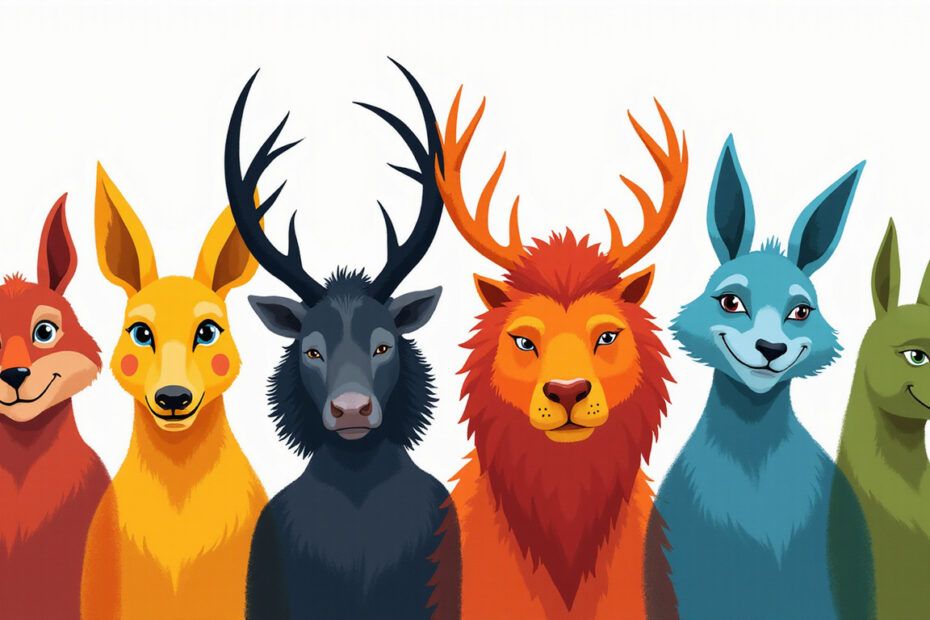
🌟 Daily Awakening Quiz 🌟
Introduction: why a spirit animal quiz can be more than fun
If you’ve ever wondered which creature best reflects your inner self, a spirit animal quiz can turn curiosity into clarity. In the first few questions you answer, these quizzes map preferences, values, and behavioral patterns to animal archetypes. The result often feels surprisingly accurate — not because animals secretly read your mind, but because animal traits provide a vivid, human-friendly way to describe personality styles and suggest careers where those styles shine.
How a spirit animal quiz links personality to archetype
Most spirit animal quizzes use a mix of personality questions (e.g., how you handle stress, your social energy, decision-making style) and scenario-based choices. Those answers correspond to animal archetypes that embody specific strengths and weaknesses. For example:
- A person matched with a wolf may value teamwork, loyalty, and strategic thinking.
- Someone paired with an owl might be introspective, analytical, and detail-oriented.
- A dolphin match often signals sociability, empathy, and playful creativity.
This mapping is useful because people naturally grasp animal metaphors. Rather than memorizing trait lists, you remember “I’m a wolf” — and that image quickly informs your career thinking and personal development.
What quizzes measure (and what they don’t)
A credible spirit animal quiz won’t promise absolute truth; instead it highlights tendencies. Typical measures include:
- Introversion vs. extraversion
- Risk tolerance
- Problem-solving style
- Leadership preference
- Empathy level
Quizzes do not diagnose mental health or replace professional personality assessments like the Big Five or MBTI. They are shorthand: engaging, memorable, and often a first step toward deeper self-awareness. For rigorous insights into animal behavior and how humans interpret it, reputable sources like National Geographic offer useful background on animal traits and ecosystems (https://www.nationalgeographic.com/animals/) (source).
Top spirit animals and their surprising career matches
Here are common spirit animal archetypes and the professional fields where those traits can thrive. Use this as a starting point, not a script.
- Wolf — Team strategist
- Traits: Loyal, strategic, values structure and clear roles
- Career matches: Project manager, military officer, operations director
- Owl — Analytical advisor
- Traits: Observant, reflective, loves deep research
- Career matches: Data scientist, research analyst, academic
- Dolphin — Communicative collaborator
- Traits: Social, playful, emotionally intelligent
- Career matches: Teacher, public relations, customer success
- Lion — Decisive leader
- Traits: Confident, authoritative, motivational
- Career matches: Executive roles, entrepreneurship, sales director
- Beaver — Detail-focused builder
- Traits: Methodical, practical, enjoys building systems
- Career matches: Engineer, architect, product manager
- Fox — Creative problem-solver
- Traits: Flexible, quick-thinking, enjoys ambiguity
- Career matches: Marketing strategist, consultant, creative director
A quick checklist to interpret your quiz result
If you’ve finished a spirit animal quiz, use this list to get actionable next steps:
- Note three traits your animal emphasizes.
- List two careers where those traits provide an advantage.
- Identify one skill to develop that complements your archetype.
- Try a short experiment (e.g., shadow a professional, take an online course) in a suggested field.
How to use your spirit animal result for career growth
Getting matched to an animal is the beginning, not the end. Translate insights into action:
- Emphasize natural strengths in interviews. Use your animal’s traits as storytelling anchors: “As someone who aligns with the owl archetype, I rely on research and attention to detail…”
- Address gaps with targeted learning. If you’re a creative fox but lack structure, try project-management tools to balance spontaneity with delivery.
- Seek roles and environments that match social needs. A dolphin thrives in collaborative teams, while an owl may prefer autonomy with occasional team sprints.
Common misconceptions about spirit animals
- Myth: Your spirit animal is fixed for life. Reality: People change; different life phases may align with different animals.
- Myth: The quiz defines you. Reality: The quiz highlights tendencies that you interpret and act on.
- Myth: Animal archetypes are scientifically proven personality types. Reality: They’re symbolic and should be used alongside evidence-based assessments.
Designing your own quick spirit animal quiz (DIY version)
If you prefer a personalized approach, create a five-question quiz that captures your core tendencies:
- When facing a deadline, do you: (A) Build a plan and stick to it, (B) Rally a team and delegate, (C) Stay flexible and improvise?
- In social settings, do you: (A) Observe and connect with a few, (B) Engage broadly, (C) Lead conversations?
- Under stress, do you: (A) Analyze options and retreat, (B) Seek support and collaborate, (C) Act fast and accept risk?
- What energizes you most: (A) Solving puzzles, (B) Helping others, (C) Leading change?
- Preferred problem-solving style: (A) Research and reflection, (B) Intuition and relationship-building, (C) Rapid experimentation.
Scoring: Mostly A = owl/beaver type; Mostly B = dolphin/wolf type; Mostly C = lion/fox type. Use that result to explore the career matches above.
Interpreting mixed or unexpected results
Many people get hybrid matches — for example, wolf-owl — and that’s a strength. A mixed profile shows versatility: strategic collaboration plus careful analysis. Instead of forcing a single label, list the complementary traits and prioritize which matter most for your next career move.

Three practical ways to deepen animal-inspired self-knowledge
- Journal for two weeks, noting moments when a specific trait shows up (e.g., leadership vs. collaboration).
- Request feedback from colleagues about where you add the most value.
- Try short-term projects aligned with your top animal traits to test fit before long-term commitments.
FAQ (three short Q&A using keyword variations)
Q: What is a spirit animal and how does it relate to personality?
A: A spirit animal is a symbolic representation that links consistent personality traits to an animal archetype. The concept helps translate abstract tendencies into concrete images you can use to guide career and personal choices.
Q: How accurate is a spirit animal quiz for determining what job I should do?
A: A spirit animal quiz offers directional insight rather than definitive career advice. Use it alongside skills inventories, job shadowing, and validated assessments to build a well-rounded career plan.
Q: How do I find my spirit animal if I don’t like quiz results?
A: If the quiz result doesn’t resonate, explore other quizzes, journal about patterns in your behavior, or ask trusted peers what animal traits they associate with you. “Find your spirit animal” is often an iterative process of reflection.
One authoritative perspective
Understanding animals’ behavior and traits can enrich how we assign symbolic meaning to them. For reliable information about animal characteristics and behavior, consult established sources like National Geographic’s animal pages (https://www.nationalgeographic.com/animals/) (source).
Final thoughts and next steps
A spirit animal quiz can be an enjoyable, surprisingly insightful tool for understanding your tendencies and mapping them to careers where you’re likely to thrive. Use your result as a springboard: test hypotheses, gather evidence from real-world experiments, and refine your choices based on outcomes. If you want a practical next move, take thirty minutes this week to either retake a well-rated spirit animal quiz or complete a short skills inventory — then pick one low-risk experiment (informational interview, online micro-course, volunteer project) to see how your archetypal strengths perform in the field.
Ready to explore further? Try a reputable spirit animal quiz, then copy your results into a one-page career action plan. Share that plan with a mentor or coach for accountability — and watch how a simple animal metaphor can catalyze meaningful change.