
🌟 Daily Awakening Quiz 🌟
Oneness Transforms Your Life: Simple Habits to Awaken Peace
Oneness is more than a spiritual concept—it’s a practical way of living that can transform how you think, feel, and relate to the world. When you begin to experience life through the lens of connection instead of separation, stress softens, relationships deepen, and your everyday moments become richer. You don’t need a monastery or a mountain retreat to experience this. With a few simple habits, the feeling of inner peace and unity can become part of your daily life.
In this guide, you’ll learn how to bring oneness down from the clouds and into your schedule, your relationships, and your inner dialogue.
What Is Oneness, Really?
Before you can live it, it helps to understand what oneness means in a grounded way.
At its core, oneness is the recognition that:
- You are not separate from life around you.
- Your thoughts, emotions, and actions affect the world—and the world affects you.
- Underneath differences in beliefs, culture, and personality, there is a shared essence.
Different traditions describe it in different ways—interbeing, unity consciousness, non-duality, universal love—but they all point to the same experience: a deep sense of connection with yourself, others, and life as a whole.
Oneness is not about erasing individuality. You still have preferences, boundaries, and a unique personality. Rather, it’s about sensing the deeper layer of connection beneath the surface of differences.
Why Living in Oneness Changes Everything
Experiencing oneness isn’t just a “nice idea.” It can have measurable, practical benefits in your everyday life:
- Reduced stress and anxiety: When you feel connected instead of isolated, you’re less overwhelmed by challenges and more able to trust life’s flow.
- Greater compassion: Oneness softens judgment, making it easier to understand and forgive others—and yourself.
- Improved relationships: You listen more deeply, react less defensively, and feel more empathy.
- Stronger sense of meaning: Life feels less like a random series of events and more like a coherent, connected journey.
- Emotional resilience: You relate to emotions as passing experiences, not as your entire identity.
Mindfulness and compassion practices—which often foster a sense of connection and oneness—are linked to improved mental health and well-being (source: American Psychological Association).
You don’t have to force yourself to “believe” in oneness. Instead, you can gently cultivate experiences that naturally reveal it.
Habit 1: Start Your Day With a Moment of Unity
How you begin your day sets the tone for how you experience yourself and others.
A Simple Morning Practice
Before you check your phone or dive into tasks:
- Sit comfortably and close your eyes.
- Take 5 slow, deep breaths, feeling the rise and fall of your chest or belly.
- Silently repeat:
- “I am part of life.”
- “Life is moving through me.”
- Visualize your breath connecting you to everything—people, nature, the wider world.
This tiny habit (2–5 minutes) gently shifts your identity from “separate self under pressure” to “living expression of a larger whole.” Over time, your nervous system starts to associate mornings with peace and connection rather than stress and urgency.
Habit 2: Practice “Micro-Moments” of Presence
You don’t need long meditations to feel oneness. You can experience it in short, intentional pauses throughout the day.
How to Create Micro-Moments of Oneness
Pick everyday activities and turn them into mini-practices:
- While washing your hands: Feel the water, the temperature, the movement. Notice that water has cycled through oceans, clouds, and rain to reach you.
- While walking: Notice the support of the ground. Imagine the earth holding every person walking at this very moment.
- While drinking water or tea: Sense the nourishment entering your body, connecting you with the earth, the people who grew or transported it, and the cycle of life.
Each micro-moment is a door into the present, where the experience of oneness is naturally more available. You’re training your mind to return, again and again, to a felt sense of wholeness.
Habit 3: Listen to Others as If They Are “Another You”
One of the most tangible ways to experience oneness is through how you relate to others—especially when you disagree.
The “Another You” Practice
The next time you’re in conversation, especially if it’s tense:
- Pause your inner commentary.
- Look at the person and, inwardly, say:
- “This is another expression of life, just like me.”
- “They want to be safe, loved, and understood, just like me.”
- Listen as if you’re listening to a hidden part of yourself trying to speak.
This doesn’t mean you must agree with them or accept harmful behavior. It simply shifts your perception from enemy or obstacle to shared humanity. Over time, conflict can feel less like a battle and more like an opportunity for understanding and growth.
Habit 4: Shift From “Me” to “We” in Your Inner Dialogue
Your inner dialogue can either reinforce separation or awaken oneness.
Notice how often your thoughts are centered around:
- “What do I get?”
- “Why is this happening to me?”
- “They did this to me.”
This is normal, but it also reinforces the feeling of being alone against the world. You can gently invite a more connected perspective.
Try “We-Based” Thoughts
Experiment with shifting your mental language:
- Instead of “Why is this so hard for me?” try “Many people struggle with this. I’m not alone in it.”
- Instead of “I failed,” try “Humans make mistakes. This is part of learning for all of us.”
- Instead of “My success,” try “This success came from many factors—teachers, friends, opportunities, and my own effort.”
You’re not erasing your individuality; you’re widening the lens. This subtle move from “me” to “we” softens shame, blame, and comparison, replacing them with connection and humility.
Habit 5: Connect With Nature Intentionally
Nature is one of the most direct teachers of oneness. You are literally made from the same elements as the trees, soil, and sky.
A Simple Nature Ritual
At least once a day, step outside if you can—even for a minute:
- Feel the air on your skin.
- Notice one natural element: a tree, a plant, the sky, or even a patch of weeds pushing through concrete.
- Acknowledge: “I am part of this same life. I’m not separate from nature.”
Even if you live in a city, you can look at the sky, a houseplant, or a small patch of earth. The goal is not scenery; it’s connection.
Habit 6: Use Breath to Dissolve the Sense of Separation
Your breath is a physical symbol of oneness: you exhale what others inhale; you inhale what plants release. You’re literally sharing life with everything around you.
The Shared Breath Exercise
Once or twice a day, try this 3-minute practice:
- Sit or stand comfortably.
- Breathe in for a count of 4, out for a count of 6.
- With each inhale, imagine you’re breathing in the support of all life—people, nature, existence itself.
- With each exhale, imagine you’re sending out calm, kindness, or gratitude to the world.
You’re not “making something happen”; you’re tuning into a relationship that’s already there.
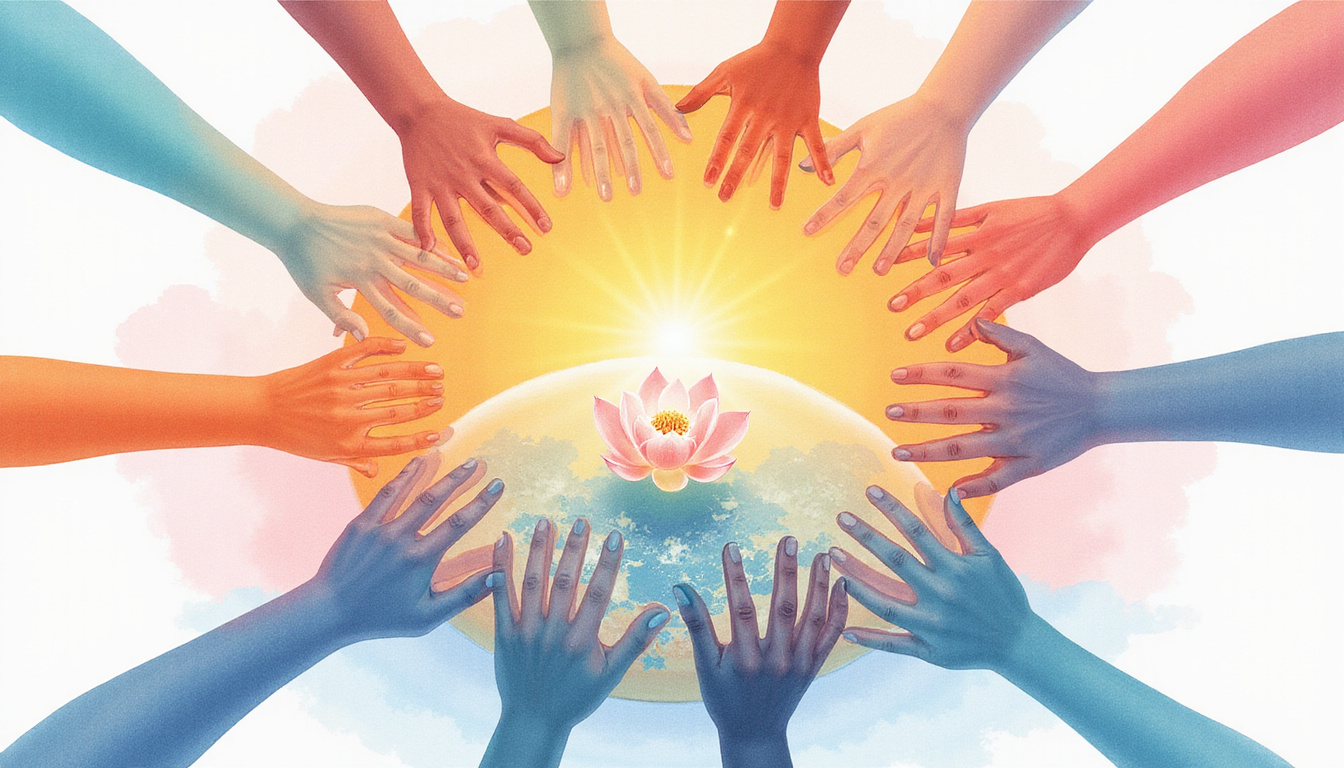
Habit 7: Turn Ordinary Acts Into Sacred Service
Oneness blossoms when you see your actions as contributions to the whole, not just personal tasks.
Reframing Your Daily Actions
Take any everyday activity and add the intention of service:
- Cooking: “May this food nourish whoever eats it.”
- Work emails: “May this message bring clarity or ease to someone’s day.”
- Cleaning: “I’m creating a space of care for myself and others.”
- Parenting or caregiving: “I’m supporting another expression of life to feel safe and loved.”
This mindset doesn’t require extra time—only a shift in how you relate to what you already do. Life begins to feel more meaningful, less mechanical.
Habit 8: End the Day With Gratitude for Interconnection
Before sleep, pause for a moment to recognize how deeply interconnected your day has been.
A Simple Evening Reflection
Ask yourself:
- Who helped me today, directly or indirectly?
- What did I receive—from people, nature, circumstances—that supported me?
- In what small ways did I contribute to someone else’s well-being?
You might realize:
- The farmer who grew your food.
- The engineer who designed your phone.
- The stranger who held a door for you.
- The friend who responded to a message.
This nightly reflection slowly dissolves the illusion that you’re moving through life alone.
A Quick Summary: Daily Habits of Oneness
To make it easy to remember, here’s a compact list of practices you can weave into your day:
- Morning unity pause – 2–5 minutes of connected breathing and intention.
- Micro-moments of presence – Use ordinary tasks as mini meditations.
- “Another you” listening – See others as different expressions of the same life.
- Shift to “we” language – Soften inner separation and isolation.
- Nature connection – One conscious moment outdoors or with a natural element.
- Shared-breath exercise – Breathe as if you’re in dialogue with life.
- Service intention – Infuse ordinary acts with the energy of contribution.
- Interconnection gratitude – End the day by noticing how supported you truly are.
You don’t need to do them all at once. Choose one or two that feel most natural and let them become part of your rhythm.
FAQ: Oneness, Unity, and Everyday Life
Q1: How do I experience oneness in daily life without feeling “spiritual” or forced?
You can experience oneness in very simple ways: paying full attention while talking with someone, feeling your breath, or noticing your dependence on water, food, and other people’s work. You don’t need special beliefs—just a willingness to notice how deeply connected life already is.
Q2: What is a practical oneness practice for relationships?
In relationships, oneness shows up as empathy and deep listening. When someone speaks, silently remind yourself: “Just like me, they want to feel safe, respected, and understood.” This unity-based perspective reduces defensiveness and opens the door to more honest, compassionate conversations.
Q3: Can oneness meditation help with stress and overthinking?
Meditations that focus on connection—like shared-breath practices, loving-kindness, or visualizing your place in the web of life—can calm the nervous system and reduce stress. By shifting your focus from isolated worries to a broader sense of belonging, you often feel less trapped in your thoughts and more grounded in the present.
Let Oneness Transform Your Life—Starting Today
Oneness is not a distant spiritual achievement; it’s a shift in how you meet this very moment. Every breath, conversation, and step is an invitation to remember that you are not separate, not alone, and not disconnected from the flow of life.
You don’t need to master every habit. Start with one small practice that resonates—maybe a morning unity pause, a nature moment, or listening to someone as “another you.” Let it become a daily anchor. As you do, you may notice more peace, more meaning, and a quieter sense of “I belong here” woven through your days.
Begin today: choose one habit of oneness, commit to trying it for the next seven days, and watch how even the simplest moments start to awaken a deeper peace within you.