🌟 Daily Awakening Quiz 🌟
Mala beads are more than a beautiful accessory; they’re a simple, tactile tool that can transform your daily meditation from a mental chore into a grounding, embodied ritual. Whether you’re completely new to meditation or looking to deepen an existing practice, integrating mala beads into your routine can add focus, comfort, and a sense of sacred structure—without needing hours of extra time.
What Are Mala Beads, Really?
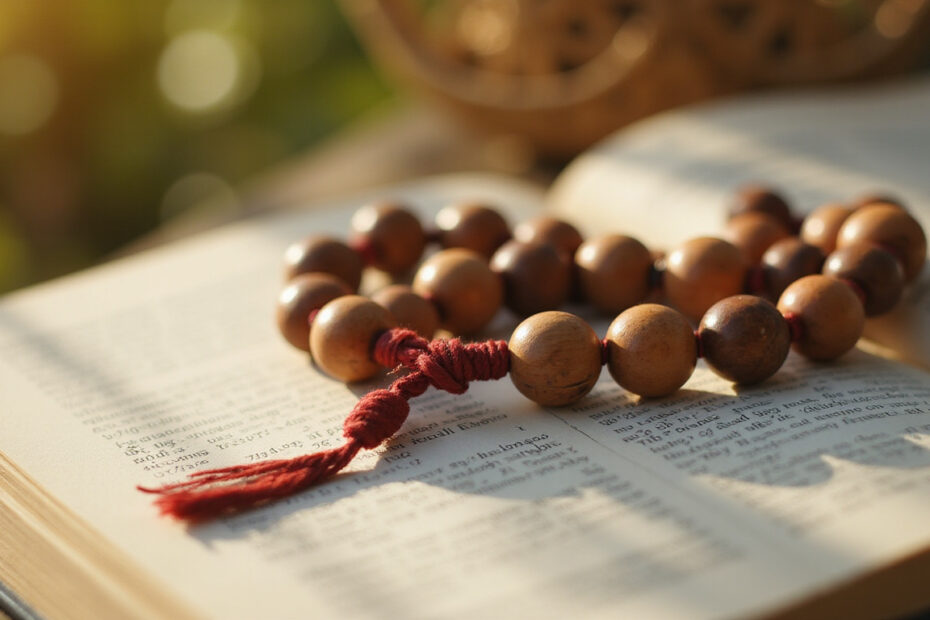
Mala beads originated in ancient India and have been used for thousands of years in Hindu, Buddhist, and yogic traditions as a tool for prayer and meditation. At their core, they’re a counting aid: a string of beads designed to help you keep track of mantras, breaths, or intentions so your mind doesn’t have to.
A traditional mala has:
- 108 beads: A sacred number in many spiritual traditions.
- 1 guru bead: A larger or distinct bead that marks the beginning and end of a full cycle.
- A tassel or marker: Symbolizing connection, completion, or enlightenment in many lineages.
While malas carry deep spiritual symbolism, you don’t need to adopt any particular belief system to benefit from them. You can treat your mala simply as a mindfulness tool that brings your attention back—bead by bead—to the present moment.
Why Use Mala Beads in Meditation?
If you’ve ever sat down to meditate and found your mind bouncing between to-do lists, random memories, and future worries, you’re not alone. Mala beads help by:
- Giving your hands something to do: The physical movement keeps restless energy anchored.
- Providing a rhythm: Each bead becomes a small, repeatable step in your practice.
- Reducing mental effort: You don’t need to count breaths or mantras in your head; the mala does it for you.
- Creating ritual: Reaching for your mala each day signals to your nervous system, “It’s time to slow down.”
Research on meditation shows consistent benefits for stress reduction, emotional regulation, and attention (source: National Center for Complementary and Integrative Health). Mala beads don’t replace meditation; they simply make it more approachable and sustainable, especially when you’re building a daily habit.
Choosing Mala Beads That Fit Your Practice
You don’t need a “perfect” mala to start. That said, choosing one intentionally can make your practice feel more personal and meaningful.
1. Decide How You’ll Use It
Ask yourself:
- Will you chant a mantra?
- Focus on breathing?
- Repeat a personal affirmation or intention?
- Simply use the beads as a grounding object during silent meditation?
Your answer can guide the style of mala that feels right for you, but any mala can support any of these practices.
2. Materials and Meaning
Common materials include:
- Wood (sandalwood, rosewood, tulsi): Often light, warm, and subtly fragrant; associated with grounding and devotion.
- Seeds (rudraksha, lotus): Traditional and rustic, with deep symbolic roots in Hindu and Buddhist traditions.
- Gemstones (amethyst, rose quartz, lava stone, jade): Many people choose based on the emotional qualities associated with different stones (e.g., calm, love, clarity).
You don’t need to believe in crystal properties to benefit. It’s enough that the beads feel good to touch and that you like how they look.
3. Size and Feel
- Bead size: Larger beads (8mm) are easier to feel; smaller ones (6mm or less) are more subtle and portable.
- Texture: Smooth, faceted, or textured—choose what your fingers enjoy moving over repeatedly.
- String style: Some malas are knotted between beads (more flexible, durable, and easier to move one bead at a time).
When possible, handle a mala before buying. Notice: Does it feel calming or inviting? That’s more important than symbolism or price.
A Simple Step-by-Step Mala Meditation (For Beginners)
Here’s a straightforward way to meditate with mala beads, even if you only have five to ten minutes.
Step 1: Settle In
- Sit comfortably: on a chair, couch, cushion, or bed.
- Rest your hands on your lap.
- Close your eyes or soften your gaze.
Take 3–5 slow breaths in through your nose, and out through your nose or mouth, letting your attention settle into your body.
Step 2: Choose Your Focus
Pick one of the following:
- A simple mantra: such as “So Hum,” “Peace,” or “I am here.”
- A short affirmation: “I am calm,” “I am safe,” “I choose presence.”
- A breath pattern: inhale on one bead, exhale on the next; or one full breath per bead.
Keep it simple. The easier it is to repeat, the less likely your mind will wander.
Step 3: Hold the Mala
- Drape the mala over your middle or ring finger of your right hand (traditional) or whichever hand feels natural.
- Use your thumb to move from one bead to the next.
- Start at the bead right next to the guru bead, not the guru bead itself.
There’s no need to grip tightly. Light, steady contact is enough.
Step 4: Move Bead by Bead
For each bead:
- Inhale gently.
- Exhale gently.
- During one breath (or over one breath cycle), silently repeat your mantra or affirmation.
- Slide your thumb to the next bead.
Continue this all the way around the mala. If you make it to the guru bead:
- Traditionally, you don’t cross over it.
- Instead, if you want to continue, you turn the mala around and go back the other way.
Even if you don’t finish all 108 beads, the structure helps you stay with the practice longer than you might without it.
Step 5: Close the Practice
When you’re done:
- Pause at the bead where you stopped.
- Take a few normal breaths.
- Notice how your body feels now compared to when you started—without judging it.
You might place the mala at your heart for a moment, on your knee, or in both hands as a small closing gesture.
Integrating Mala Beads Into Everyday Life
You don’t have to sit on a cushion in silence for 20 minutes to use your mala. Short, simple rituals woven into your day can be just as powerful.
1. Morning Intention Ritual (2–5 Minutes)
Before checking your phone:
- Sit on the edge of your bed or in a quiet corner.
- Hold your mala in both hands.
- Choose one word or phrase for the day: “Patience,” “Clarity,” “Kindness,” “Focus.”
- Move through 11 or 27 beads, repeating that word silently.
This anchors your day with a conscious direction, instead of waking up directly into reactivity.
2. Midday Reset for Stress
When anxiety or overwhelm rise:
- Step away for a brief break if possible (bathroom stall, parked car, empty office).
- Hold your mala out of sight in your pocket or bag.
- Breathe slowly and move through 10–20 beads, repeating a calming phrase like “Inhale calm, exhale tension.”
The physical sensation of the beads can help your nervous system switch from fight-or-flight toward a calmer state.
3. Evening Wind-Down
As part of your bedtime routine:
- Sit or lie down with your mala.
- For each bead, mentally review one thing you’re grateful for from your day, or simply repeat “Thank you.”
- Continue as long as feels good—no need to complete a full cycle.
This gently trains your mind to notice small positives, which can improve overall mood and sleep quality over time.
Creating Your Own Mala Rituals
Once you’re comfortable with the basics, you can personalize how you use mala beads so they feel like a natural extension of your life.
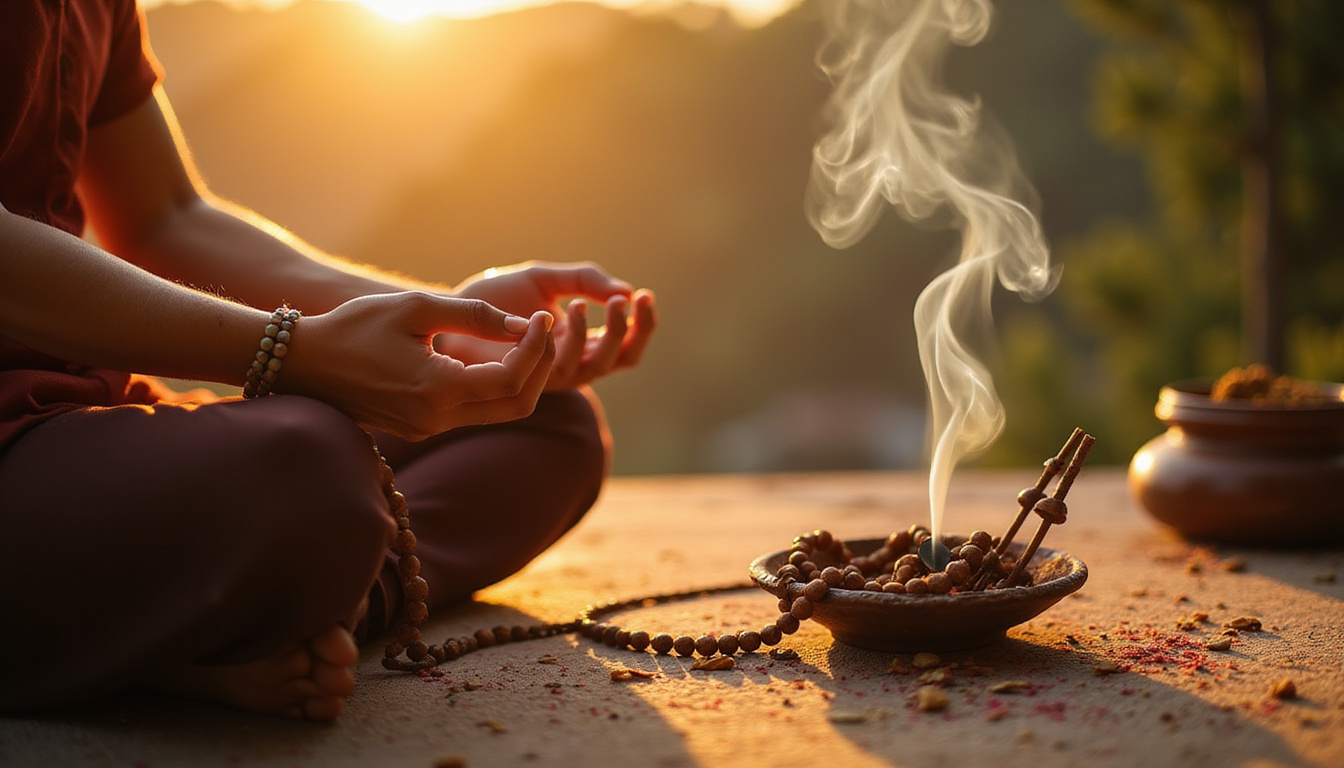
Here are some ideas to experiment with:
-
New Moon or Full Moon Check-in
Use your mala once a month to set intentions (new moon) or release what’s no longer serving you (full moon), bead by bead. -
Walking Meditation with Mala
Hold your mala in one hand as you walk slowly. With each step or every few steps, move one bead. Tie each bead to the words “Here” (step) “Now” (step). -
Affirmation Mala Practice
Choose a set of 3–4 affirmations. Repeat one for a full round (108 beads) each week or each month, focusing on a different theme: self-compassion, courage, healing, boundaries, etc. -
Support During Difficult Conversations
Keep your mala in your pocket during challenging work meetings or personal discussions. Lightly touch a bead whenever you feel triggered, using it as a reminder to breathe before reacting. -
Creative Focus Ritual
Before writing, painting, or working on a project, move through a short sequence of beads repeating an intention like “Steady focus” or “Create with ease.” This trains your brain to associate the mala with entering a flow state.
Caring for Your Mala Beads (Physically and Energetically)
To keep your mala durable and meaningful:
- Store it with care: In a pouch, on your altar, or in a jewelry dish—rather than tossed in a bag with keys.
- Avoid water and harsh chemicals: Especially for wooden or seed malas; remove before showering or swimming.
- Untangle gently: Don’t yank; smooth knots with your fingers.
Some people like to “cleanse” or reset their mala energetically, especially if they use it during emotional times. You might:
- Place it in sunlight for a short time (not too long for colored stones).
- Rest it on a windowsill under the moon.
- Hold it at your heart while taking a few slow breaths and intentionally releasing any heavy feelings it might represent.
None of this is required. The most important “care” for your mala is consistent, kind use—each time you pick it up with the intention to support your well-being, you deepen its personal significance.
Common Questions About Using Mala Beads
1. How do you meditate with a mala necklace if you’re completely new?
If you’re new to mala bead meditation, keep it extremely simple: hold the mala in one hand, choose a short word like “calm” or “peace,” and with each bead, just whisper or think that word once per breath. Don’t worry about completing all 108 beads; stop whenever you feel ready. Over time, as the motion and rhythm become familiar, you can add longer mantras or intentions if you like.
2. Do meditation beads only work if you follow a specific spiritual tradition?
No. Meditation beads—or Buddhist mala beads, Hindu japa malas, and similar tools in other traditions—can absolutely be used in a secular way. You can treat them exactly like a tactile timer or anchor for mindfulness, using them to track breaths, gratitude statements, or affirmations without adopting any belief system. What matters most is the consistency of your practice and the sincerity of your attention.
3. Can you wear prayer beads every day, or should they only be used for practice?
You can wear prayer or mala beads daily if that feels right. Many people wear their mala as a necklace or wrap it as a bracelet to keep their intention close and to have an immediate grounding tool when stress arises. If you choose to wear yours, be mindful of physical wear and tear, and consider taking it off for activities that might damage the beads or string.
Bring Your Practice to Life—One Bead at a Time
Meditation doesn’t have to be rigid, complicated, or reserved for long, silent retreats. Mala beads offer a gentle, practical way to weave mindfulness into the fabric of your daily life—on the train, at your desk, before bed, or during a five-minute break.
If you’ve been struggling to stay consistent with meditation, try inviting a set of mala beads into your routine. Start with one simple ritual—a 3-minute morning intention practice, a 10-breath reset during the workday, or a short gratitude round in the evening—and let it grow from there.
Choose a mala that feels good in your hands, give yourself permission to be imperfect, and see what shifts when you let each bead become a small step toward more presence, calm, and clarity. Your practice doesn’t need to be complicated to be powerful—it just needs you to show up, one breath and one bead at a time.