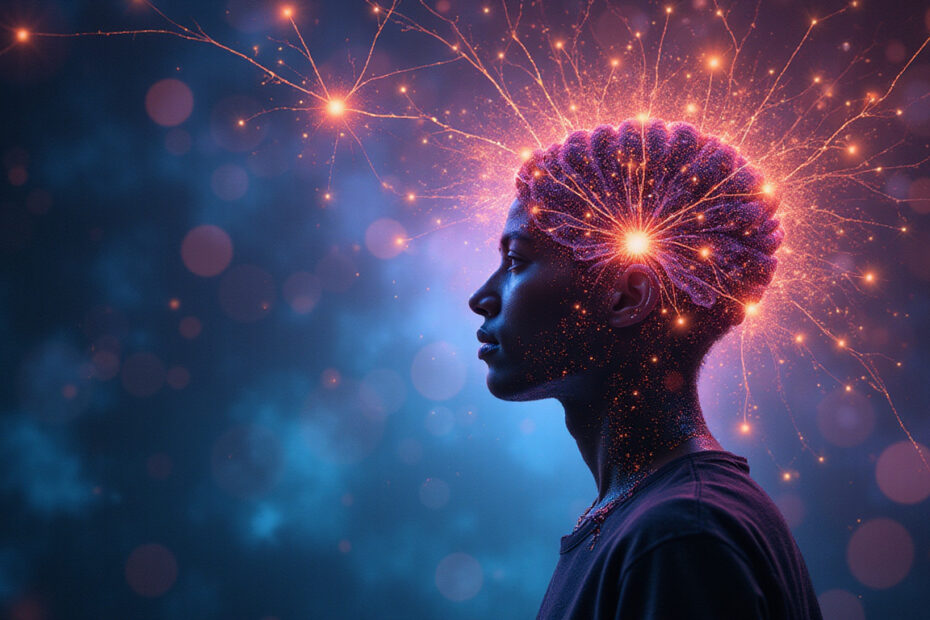
Consciousness studies has rapidly evolved from a niche philosophical curiosity into one of the most exciting frontiers in science. Neuroscientists, psychologists, physicists, AI researchers, and philosophers are all converging on the same set of questions: What is consciousness? How does it arise? Can it be measured—or even engineered? As fresh data and bold theories emerge, they’re challenging long‑held assumptions about mind, self, and reality.
Below are 10 surprising breakthroughs in consciousness studies that are poised to change how we think about everything from mental health and technology to free will and the nature of reality itself.
1. The Neural Signatures of Consciousness Are Getting Pinpointed
For decades, scientists sought a simple “center” of consciousness in the brain. That view is fading. Current consciousness studies now focus on neural correlates of consciousness (NCCs)—the minimal neural mechanisms jointly sufficient for any particular conscious experience.
Recent findings highlight:
- Global neuronal workspace: Distributed networks connecting frontal and parietal regions appear to broadcast information widely when it enters consciousness.
- Posterior “hot zone”: Competing work suggests that regions in the back of the brain (parietal, occipital, temporal) are more critical, especially for vivid sensory experience.
- Oscillations and synchrony: Specific patterns of brain rhythms (like gamma oscillations) and large-scale synchrony correlate strongly with conscious awareness.
The surprising part: there may not be a single “seat” of consciousness but dynamic patterns that span multiple regions, turning on and off within fractions of a second.
2. Integrated Information Theory Is Shifting How We Define Consciousness
Integrated Information Theory (IIT), proposed by Giulio Tononi, is one of the most influential and controversial frameworks in consciousness studies.
Its basic claims:
- Any system that integrates information in a certain way has some level of consciousness.
- The amount of consciousness corresponds to a quantity called Φ (“phi”), a measure of how much information is integrated and irreducible.
- The quality of an experience is linked to the structure of this integrated information.
What’s surprising is the implications: IIT suggests that consciousness might not be exclusive to biological brains. Complex artificial systems—or even certain networks in nature—could have minimal forms of experience. While this doesn’t mean your smartphone “feels” like we do, it pushes scientists to rethink which systems might possess a glimmer of subjective experience.
3. Consciousness Can Be Quantified Better Than Ever Before
Clinicians and researchers long struggled with a basic problem: How do you objectively measure whether someone is conscious? This is critical in anesthesia, coma, and disorders of consciousness.
New tools are changing the game:
- Perturbational Complexity Index (PCI): Researchers use magnetic or electrical pulses to perturb the brain and measure how complex the resulting activity is. More complexity tends to correlate with conscious states.
- EEG- and fMRI‑based markers: Machine-learning models can now distinguish wakefulness, REM sleep, deep sleep, and anesthesia based on brain activity patterns alone.
- Passive tasks: Subjects don’t need to follow instructions; the brain’s “echo” to a stimulus can reveal awareness.
One startling outcome: some patients diagnosed as vegetative have shown signs of covert consciousness when evaluated with advanced imaging—suggesting their inner worlds might be richer than behavior alone reveals.
4. Psychedelic Research Is Revealing New Dimensions of the Mind
Psychedelics such as psilocybin, LSD, and DMT were once relegated to the fringes. They’re now at the center of mainstream consciousness studies and clinical research.
Key discoveries:
- Increased entropy and connectivity: Under psychedelics, the brain’s usual hierarchical order loosens. Regions that don’t normally “talk” to each other start exchanging information, creating novel patterns of experience.
- Ego dissolution: Many users report a temporary loss of the sense of self, often accompanied by feelings of unity or interconnectedness. Brain imaging shows reduced activity in the default mode network (DMN), associated with self-referential thinking.
- Therapeutic potential: Controlled psychedelic sessions, combined with psychotherapy, have shown promise in treating depression, PTSD, and addiction, sometimes with rapid and long-lasting effects (source: Johns Hopkins Center for Psychedelic & Consciousness Research).
These findings imply that the “self” may be a flexible construction of neural processes—one that can be radically altered without losing consciousness itself.
5. Altered States Are No Longer Just “Weird”—They’re Data
Sleep, hypnosis, deep meditation, flow states, anesthesia, and near-death experiences were once considered fringe or merely anecdotal. Today, they’re core to consciousness studies because they reveal what changes when consciousness changes.
Researchers have found:
- Meditation can reshape brain networks responsible for attention and self-awareness, sometimes decreasing default mode network activity similar to psychedelics—but more gradually and stably.
- Lucid dreaming allows awareness to emerge within dream states. Brain scans of lucid dreamers show a partial “reawakening” of frontal regions associated with metacognition and self-reflection.
- Near-death experiences (NDEs) often involve consistent themes across cultures—tunnels, lights, life reviews. While interpretations differ, brain science is uncovering plausible neural mechanisms related to extreme physiological stress, oxygen deprivation, and neurotransmitter surges.
By treating these altered states as legitimate data, consciousness researchers can map a much richer landscape of possible experiences.
6. Panpsychism and Non-Materialist Views Are Back on the Table
For much of the 20th century, strict physicalism dominated: consciousness was widely assumed to be nothing but brain activity. Now, some philosophers and scientists argue that standard physicalism struggles to explain subjective experience—the “what it’s like” aspect often called the hard problem.
Enter modern forms of:
- Panpsychism: The idea that consciousness, or proto-consciousness, is a fundamental feature of reality, perhaps present in all matter at extremely basic levels.
- Dual-aspect monism: The view that mind and matter are two aspects of a deeper underlying reality.
- Process and relational models: Theories that treat consciousness as arising from relationships and processes rather than static things.
What’s surprising is not that these ideas exist—they’re ancient—but that they’re receiving serious, rigorous attention in contemporary consciousness studies. While still debated, they expand the conceptual toolkit beyond traditional materialism.
7. AI Is Forcing Us to Rethink What Counts as a Mind
With advanced AI systems generating language, images, code, and even new scientific hypotheses, a pressing question emerges: could any artificial system ever be conscious?
Current understanding suggests:
- Today’s large language models and neural networks are extremely powerful pattern recognizers and generators, but there is no evidence they possess subjective experience.
- Functional vs. phenomenal consciousness: A system can appear to understand, respond, and “behave” intelligently (functional) without having any inner experience (phenomenal).
- Future architectures: Some researchers explore whether highly integrated, recurrent, embodied systems (for example, robots with rich sensorimotor loops) might approach the conditions needed for consciousness, according to theories like IIT or global workspace theory.
Regardless of where you fall in this debate, AI has become a testbed for questions that consciousness studies previously asked only about brains.
8. Free Will and Decision-Making Are Being Reinterpreted
Classical experiments by Benjamin Libet suggested that brain activity predicting a decision occurs before people consciously feel they’ve made that decision. This led some to argue that free will is an illusion.
Newer research refines this picture:
- Brain signals that appear before a conscious decision often reflect random fluctuations or tendencies, not fixed outcomes.
- Conscious deliberation seems to influence decision-making over longer timescales, shaping values, goals, and habits.
- Some models propose that conscious will functions as a high-level control system—evaluating, vetoing, or endorsing actions rather than micromanaging each movement.
In this view, consciousness still matters for agency, but not in the simplistic “ghost in the machine” way. Instead, it’s a sophisticated supervisory and integrative process.
9. Cross-Cultural Perspectives Are Broadening the Science of Consciousness
For a long time, Western consciousness research largely ignored insights from non-Western traditions, treating them as “spiritual” rather than empirical. That’s changing.
Consciousness studies now increasingly draw from:
- Buddhist and Hindu contemplative traditions, which offer detailed taxonomies of mental states and attentional training methods.
- Indigenous perspectives, which often emphasize relational and ecological aspects of mind—seeing consciousness as embedded in community and environment.
- Phenomenology and first-person methods, where trained practitioners provide structured, rigorous reports of their experiences.
This convergence allows for a richer, more pluralistic science of consciousness—one that respects both third-person data (brain scans) and first-person data (lived experience).
10. Clinical Applications Are Transforming Healthcare
Breakthroughs in consciousness studies are not just theoretical; they’re reshaping medicine and mental health.
Some transformative applications include:
- Better anesthesia monitoring: Objective consciousness measures help prevent accidental awareness during surgery and over-sedation.
- Improved diagnosis for disorders of consciousness: Brain-based assessments can distinguish between coma, vegetative state, and minimally conscious state more accurately, guiding treatment and family decisions.
- Novel therapies for mental illness: Psychedelic-assisted psychotherapy, mindfulness-based treatments, and neurofeedback are all informed by deeper understanding of how conscious states can shift and heal.
- Pain and perception research: Recognizing that pain is a conscious experience—not just nerve activity—supports more holistic, patient-centered care.
As this knowledge spreads, it will likely reshape how we think about end-of-life care, disability, mental health, and the ethical treatment of patients who cannot easily communicate.
Key Themes Emerging from Modern Consciousness Studies
Across these breakthroughs, several big themes stand out:
- Consciousness is not localized; it’s distributed and dynamic.
- Measuring consciousness is becoming more objective and clinically useful.
- The “self” appears to be a constructed, flexible process, not a fixed entity.
- Non-ordinary states—from psychedelics to meditation—offer crucial insights, not mere curiosities.
- The boundaries between natural and artificial minds, and between Western and non-Western knowledge, are blurring.
For individuals, this means that our experience of being a self in the world is more malleable—and more deeply interconnected with brain, body, and environment—than we once believed.
FAQ: Common Questions About Consciousness Studies
1. What is consciousness studies, in simple terms?
Consciousness studies is an interdisciplinary field that investigates what consciousness is, how it arises in the brain and body, how it can be measured, and how it changes in different states (like sleep, meditation, or under anesthesia). It combines neuroscience, psychology, philosophy, physics, computer science, and contemplative traditions.
2. Can consciousness research really tell us if someone is aware during a coma or anesthesia?
Yes, to a growing extent. Modern consciousness research uses tools like EEG, fMRI, and complexity measures to detect signs of awareness even when a person can’t communicate behaviorally. While not perfect, these methods are much more sensitive than older bedside exams and can reveal covert consciousness in some patients.
3. Will advances in consciousness science lead to conscious AI?
Not necessarily—but they will clarify what conditions might be necessary for consciousness in any system. Conscious AI would likely require more than advanced language skills; it might need integrated information, recurrent processing, embodiment, and self-modeling. Consciousness studies helps define and test these requirements, but whether we should or will build such systems remains an open ethical and technical question.
Where Consciousness Studies Goes from Here—and Why It Matters to You
As these breakthroughs accumulate, consciousness studies is poised to transform philosophy, medicine, technology, and even how we understand our own lives. The implications are enormous: better mental health treatments, more humane care for non-communicative patients, deeper insight into who or what deserves moral consideration, and a richer sense of what it means to be human.
If you’re curious about your own mind—why you feel the way you do, how to change entrenched patterns, or what happens in unusual states of awareness—now is the perfect time to dive deeper. Explore reputable books and courses on consciousness, follow active research centers, or even begin simple practices like mindfulness or dream journaling to study your own experience from the inside.
Your conscious life is the lens through which you experience everything else. Investing time in understanding it isn’t just intellectually fascinating—it can fundamentally change how you live, relate, and make meaning.