

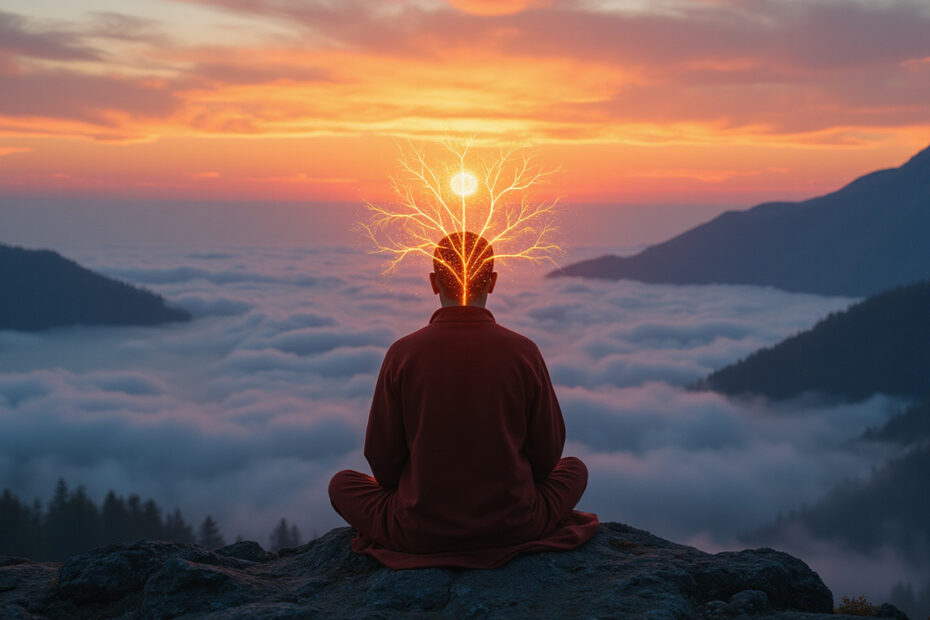
Vipassana Retreat Secrets: Daily Habits That Rewire Your Brain
If you’ve ever wondered why a Vipassana retreat feels so life-changing—and why the effects can linger for weeks or months afterward—the answer lies in habits that literally reshape your brain. While the 10-day silent format is intense, its real power comes from simple daily practices that you can bring back home and integrate into ordinary life.
This guide unpacks what actually happens in a Vipassana retreat, the brain science behind it, and the core habits you can adopt every day to gradually rewire your nervous system for clarity, emotional balance, and resilience.
What Is Vipassana, Really?
“Vipassana” is a Pali word meaning “insight” or “clear seeing.” It’s a meditation technique that:
- Trains you to observe reality—especially body sensations—as they are
- Cultivates equanimity: the ability to stay balanced in pleasure and pain
- Cuts through deep-seated habit patterns of craving and aversion
In classic 10-day retreats popularized by S.N. Goenka, Vipassana is taught in a rigorous container:
- Noble silence (no talking, reading, or devices)
- About 10 hours of meditation per day
- Simple vegetarian meals
- Clear structure and instructions
While the schedule is intense, it’s not about suffering for its own sake. The retreat is like a laboratory for testing and installing new mental habits that you can maintain long after you leave.
How Vipassana Rewires Your Brain
Modern neuroscience helps explain why Vipassana has such a powerful impact.
Down-regulating the “Default Mode Network”
The default mode network (DMN) is a set of brain regions active when your mind is wandering—ruminating about the past or worrying about the future. Overactivity in the DMN is linked to anxiety and depression.
Meditation, including Vipassana-style practices, has been shown to:
- Reduce DMN activity
- Increase connectivity between brain regions associated with attention and self-regulation
- Strengthen the prefrontal cortex (your “executive control” area)
Long-term meditators often show structural changes in brain areas linked to attention and emotional regulation (source: Harvard Gazette).
Training Emotional “Equanimity”
Vipassana doesn’t just teach awareness; it trains how you relate to thoughts, sensations, and emotions. Instead of:
- Grabbing onto pleasant experiences (craving)
- Pushing away painful ones (aversion)
You learn to notice everything with balance and neutrality. Repeatedly doing this under stress (physical discomfort, boredom, restlessness) rewires:
- The amygdala (fear and threat center)
- The insula (interoception, or internal body awareness)
- Circuits that govern emotional reactivity
Over time, the nervous system learns: “I can feel this fully, and I don’t have to panic or control it.”
The Core Vipassana Habit: Systematic Body Scanning
The central technique in a Vipassana retreat is a structured body scan.
How the Body Scan Works
You systematically move your attention across the body—from head to toe and back—observing sensations exactly as they are:
- Pressure, warmth, tingling, tightness, tension, pulsing
- Neutral or subtle sensations you’d usually ignore
- Unpleasant sensations without flinching or fusing with them
The crucial points:
- You observe, you don’t react.
- You notice impermanence. Every sensation arises, changes, and passes.
- You maintain equanimity. Pleasant or painful, you watch without clinging or resisting.
This repeated exposure in a calm, conscious way de-conditions automatic reactions and slowly loosens the grip of long-standing mental patterns.
Daily Vipassana-Inspired Habits You Can Maintain at Home
You don’t need a retreat center or 10 free days to benefit. The key is consistency, not intensity. Here are practical habits distilled from Vipassana practice that you can weave into daily life.
1. The 20-Minute Morning Scan
Goal: Start your day by stabilizing attention and emotion.
How to do it:
- Sit upright, eyes closed, in a quiet spot.
- Take a few natural breaths to settle.
- Start at the top of the head; move attention slowly downward: forehead, face, neck, shoulders, arms, chest, back, abdomen, pelvis, legs, feet.
- At each region, notice whatever sensations are present—subtle or strong—without judging or trying to change them.
- When the mind wanders (it will), gently bring it back to the current body area.
Even 10 minutes is valuable; 20 minutes builds stronger neural pathways for focused attention and emotional steadiness.
2. Micro-Scans During Stress
Goal: Use Vipassana in real time when triggered.
Stressful moments—an argument, an email from your boss, traffic—are where rewiring happens fastest.
Practice:
- Pause for 10–60 seconds when you notice stress.
- Bring attention to a specific area: chest, throat, belly, or face.
- Note sensations: tight, hot, buzzing, heavy.
- Silently label: “pressure,” “heat,” “contraction.”
- Stay with the sensations for a few breaths, allowing them to shift or stay as they are, without forcing.
You’re teaching your brain: “Stress can be felt and witnessed without being acted out.”
3. Equanimity Training With Everyday Discomfort
Most of us reflexively escape discomfort—scrolling, snacking, multitasking. Vipassana suggests the opposite: use small discomforts as training weights.
Examples:
- Itch while meditating: Notice it clearly. Don’t scratch for 30 seconds. Watch the urge rise, peak, and pass.
- Mild hunger between meals: Feel the sensations in the belly; observe the narrative (“I need food now”) without immediately reacting.
- Boredom in a line: Scan body sensations instead of grabbing your phone.
Over time, this erodes the automatic link between “uncomfortable” and “must fix this immediately,” which is at the core of many addictive and compulsive patterns.
4. A “Sensations First” Rule for Strong Emotions
When a surge of anger, fear, jealousy, or shame arises:
- Stop reacting verbally or behaviorally. Even a 5-second pause helps.
- Drop the story; go to the body. Feel where the emotion lives: chest, gut, throat, head.
- Scan those regions slowly. Name qualities: “tight,” “clenched,” “buzzing.”
- Stay with the raw felt sense for 60–120 seconds before returning to the situation.
This breaks the loop where thoughts fuel sensations, and sensations fuel more thoughts. You’re building a gap between feeling and reacting.
5. Intentional Silence Windows
Retreats use Noble Silence for a reason. Constant input keeps the mind agitated.
Try adding small “silent retreats” into your day:
- 20–60 minutes in the morning without phone, music, or talking
- Walking in nature with no podcast or headphones
- A “silent commute” where you observe sensations, sounds, and visual impressions instead of consuming content
Silence lowers mental noise and makes it easier to see the subtle shifts in your internal landscape—exactly what Vipassana trains.
6. Evening Reflection: Noticing Impermanence
Vipassana emphasizes anicca—impermanence. Making it explicit each evening reinforces this insight.
Quick nightly practice (5–10 minutes):
- Recall 2–3 intense moments from your day: a joy, an irritation, a worry.
- Ask: “Where is that feeling now?” Notice how something that felt huge a few hours ago has changed or faded.
- Feel gratitude for this constant change: no state, however painful, is permanent.
This reframes challenges: instead of “This will always be like this,” your brain learns “This too is in motion.”
One Simple Daily Framework: The 5-Point Vipassana Habit System
To make this practical, here’s a simple structure you can follow:

- Morning: 10–20 minutes of body scanning before devices.
- Daytime: 3–5 micro-scans (10–60 seconds) during stress or transitions.
- Discomfort reps: Choose one uncomfortable moment per day to “stay and observe” instead of escape.
- Silent window: At least 15–30 minutes of intentional silence.
- Evening: 5-minute impermanence reflection on 2–3 emotional moments.
Consistency with these five will matter more than any occasional long session.
Common Obstacles (and How to Work With Them)
“My mind is too busy; I can’t do Vipassana.”
A busy mind is not a problem; it’s the material you’re working with.
Expect wandering. The practice is returning, not staying.
- Expect wandering. The practice is returning, not staying.
- Even noticing “busy, busy, busy” is awareness.
- Shorter, more frequent sessions can help you build capacity.
“Sitting with discomfort feels overwhelming.”
If your nervous system is highly activated (due to trauma, burnout, or anxiety):
- Start with very small doses (10–20 seconds of observation).
- Combine with grounding: feel your feet on the floor, notice the room visually.
- Consider working with a trauma-informed therapist alongside practice.
“I lose the habit after a few days.”
Treat it like physical training:
- Tie practice to existing routines (after brushing teeth, before bed).
- Use a timer app or calendar reminder.
- Track streaks for motivation, but don’t guilt-trip yourself if you miss. Just resume.
Track streaks for motivation, but don’t guilt-trip yourself if you miss. Just resume.
Signs Your Brain Is Starting to Rewire
With consistent Vipassana-style practice, subtle shifts often appear within weeks:
- A slightly longer pause before reacting in anger
- Less intensity or shorter duration of anxious spirals
- More awareness of physical cues of stress before they explode
- Occasional glimpses of calm even amidst chaos
- Greater ability to “be with” sadness, grief, or fear without collapsing
These are not dramatic fireworks; they are quiet, structural changes in how your mind and nervous system handle experience.
Frequently Asked Questions About Vipassana Practice
1. Is Vipassana meditation suitable for beginners?
Yes. While a 10-day Vipassana retreat can be challenging, the basic techniques—observing the breath and scanning body sensations—are beginner-friendly. Start with short daily sessions (5–10 minutes) and gradually increase. A full retreat is best attempted once you have some comfort sitting with yourself in silence.
2. How is Vipassana different from mindfulness meditation?
Mindfulness is a broad category—being present with whatever arises. Vipassana meditation is a specific insight technique that emphasizes:
- Systematic observation of body sensations
- Clear recognition of impermanence, unsatisfactoriness, and non-self
- Training equanimity toward both pleasant and unpleasant experiences
You can think of mindfulness as the general skill; Vipassana is one structured form of training that skill.
3. Can I get the benefits of a Vipassana retreat without going on one?
You can gain many of the neural and emotional benefits—better attention, less reactivity, more balance—through consistent at-home Vipassana practice. However, retreats accelerate the process by providing:
- Deep immersion without distractions
- A clear schedule and guidelines
- A supportive container when things get intense
For many people, combining daily practice with occasional retreats offers the best of both worlds.
Bring Vipassana Off the Cushion and Into Your Life
Vipassana isn’t only about what happens on a cushion during a 10-day retreat. Its real gift is the set of daily habits that retrain your brain to experience life more clearly and respond more wisely.
You can start today with:
- A short morning body scan
- A 10-second pause to feel your body before reacting
- One small moment of discomfort that you choose to observe instead of escape
If you’re ready to deepen this path, commit to a 30-day experiment: practice the 5-point Vipassana habit system and track what shifts in your stress levels, relationships, and inner dialogue. When you’re ready, consider applying for a reputable 10-day Vipassana retreat to immerse yourself fully in the technique and anchor these habits for life.
Your brain will change in response to whatever you repeatedly do. Choose habits that train clarity, presence, and equanimity—and let Vipassana show you what’s possible.