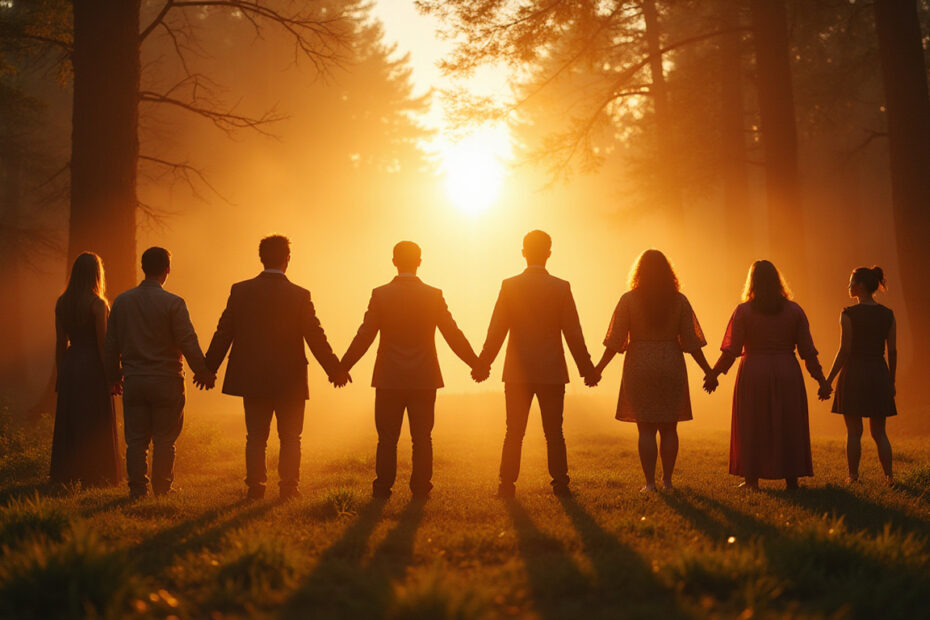
Finding a true spiritual community can be life-changing. In a world that feels increasingly disconnected, many people are longing for a place where they can be seen, understood, and supported on a deeper level. Whether you’re exploring your spiritual path for the first time or seeking a more aligned tribe, the right spiritual community can help you build meaningful relationships and transform your inner and outer life.
What Is a Spiritual Community?
A spiritual community is a group of people who come together around shared values, practices, and a desire for inner growth. It doesn’t have to be tied to a specific religion or tradition. It might be:
- A meditation group
- A yoga sangha
- A church, mosque, temple, or synagogue
- A mindfulness or breathwork circle
- An intentional living or spiritual study group
The unifying thread is a commitment to personal and collective evolution. In a healthy spiritual community, you’ll find:
- Emotional safety and non-judgment
- Shared practices aimed at growth and healing
- Mutual support through life’s challenges
- Space for honest questioning and exploration
Why Spiritual Community Matters in a Disconnected World
Loneliness has become so widespread that it’s often described as an epidemic. Studies link chronic loneliness to increased risks of depression, anxiety, and even physical illness (source: Harvard Health). A strong spiritual community helps counter this by meeting three essential human needs:
- Belonging – Knowing you have a place where you’re accepted, even when you’re struggling.
- Meaning – Exploring life’s big questions with others who care about truth and purpose.
- Support – Receiving encouragement, wisdom, and practical help when life is difficult.
When these needs are met, people often report:
- Reduced stress and anxiety
- Increased resilience and optimism
- A stronger sense of identity and purpose
- More compassion for themselves and others
The Inner Transformation: How Community Shifts Your Spiritual Life
A spiritual community doesn’t just give you friends; it changes the way you grow.
1. From Isolation to Shared Journey
Spiritual work can feel heavy when you’re doing it alone. Doubts, fears, and old patterns can easily pull you back. In community, you realize:
- Others have similar struggles
- You’re not “behind” or “broken”
- Growth is a shared, messy, and beautiful process
Seeing people at different stages of their path gives you perspective. The ones ahead inspire you; the ones walking with you encourage you; the ones you support help you deepen what you’re learning.
2. Accountability That Feels Like Love
Most people intend to meditate, journal, or pray regularly—but intention doesn’t always equal action. A spiritual community offers gentle accountability:
- Group meditation times
- Weekly classes or study sessions
- Check-ins with peers or mentors
This doesn’t have to be rigid or pressured. Instead, it feels like loving structure that helps you show up for what you truly want.
3. Mirrors for Your Blind Spots
We all have blind spots—patterns we can’t see on our own. In a conscious spiritual community, others can reflect these back kindly:
- “Have you noticed how hard you are on yourself?”
- “I see you shrinking when you speak. You have more to say.”
- “That story feels like old conditioning. Is it still true?”
These reflections are powerful catalysts for growth when they come from a place of compassion, not criticism.
The Outer Transformation: How Community Changes Your Everyday Life
Being part of a spiritual community doesn’t stay on the meditation cushion; it spills into your daily life.
- Relationships improve – You become more present, patient, and empathetic.
- Work feels different – You bring values like integrity, service, and mindfulness into your career.
- Choices become clearer – With a support system, it’s easier to align decisions with your inner truth.
- Service becomes natural – You feel called to give back, not out of obligation but out of genuine care.
Many people also experience a shift in priorities. Instead of chasing only external achievements, they value inner peace, authentic connection, and meaningful contribution.
How to Find the Right Spiritual Community for You
Not every spiritual community will be the right fit—and that’s okay. The key is to look for alignment and health.
Clarify What You’re Seeking
Before you start searching, ask yourself:
- What are my core values?
- What kind of practices draw me in (meditation, prayer, yoga, contemplation, chanting, study)?
- Do I prefer a specific tradition or a more interfaith/mystical approach?
- Do I want something local and in-person, or am I open to online communities?
Clarity helps you recognize the right community when you see it.
Explore Your Options Slowly
You don’t have to commit immediately. Instead:
- Visit several groups or centers.
- Attend open events, classes, or services.
- Try online gatherings or live streams if in-person isn’t available.
Pay attention not only to what is taught but to how it feels to be there.
Red Flags vs. Green Flags in a Spiritual Community
Here are some signs to help you discern:
Green flags (healthy signs):
- Leaders are transparent, humble, and open to questions.
- Members respect your boundaries and personal pace.
- Diversity is welcomed; differences are not shamed.
- Money and donations are handled openly, without pressure.
- You feel more grounded, empowered, and free after engaging.
Red flags (caution signs):
- Any hint of “we’re the only right way” thinking.
- Pressure to cut off friends/family who aren’t in the group.
- Excessive focus on the leader’s personality or authority.
- Guilt, fear, or shame used as motivational tools.
- Financial or sexual exploitation, or secrecy around these topics.
If you encounter red flags, listen to your intuition and step back. A healthy spiritual community supports your autonomy and dignity.
How to Build Deep Connections Within a Spiritual Community
Finding a community is only step one. Deep connection requires participation and vulnerability.
1. Show Up Consistently
Trust builds over time, not in a single meeting. Choose one or two gatherings you can attend regularly:
- Weekly meditation or service
- A monthly circle or study group
- A regular volunteer or service project
Consistency signals, “I’m here, and I care,” which invites deeper relationships.
2. Practice Honest Sharing
Surface-level conversation won’t nourish you for long. When the space is safe, try sharing:
- What you’re genuinely struggling with
- What you’re learning or questioning
- How you actually feel, not just what sounds “spiritual”
Over time, honest sharing helps others open up too, weaving a web of real connection instead of performance.
3. Offer Support, Not Just Receive It
Connection deepens when you give as well as receive. You don’t need to be an expert or a teacher to contribute.
You can:
- Listen deeply to someone’s story without trying to fix them
- Help set up or clean up after gatherings
- Check in on someone who seemed upset or quiet
- Share helpful resources—a book, a podcast, a practice that helped you
When you serve the community, you start to feel like it’s your community, not something you’re just visiting.
4. Respect Boundaries and Differences
A mature spiritual community respects individuality. Be willing to:
- Accept that others may believe differently than you
- Give people space if they’re not ready to share
- Share your views without needing to convince anyone
This creates a safe container where people can truly be themselves.

Online vs. In-Person Spiritual Community
Both online and in-person spiritual communities have strengths and limitations.
In-person community:
- Face-to-face presence and energetic connection
- Opportunities for local service projects
- Easier to form daily-life friendships
Online community:
- Access to teachers and groups you wouldn’t find locally
- Flexibility for people with mobility, health, or scheduling constraints
- Anonymity can make it easier to open up initially
Often, the most nourishing path is a blend of both: local connections plus online learning or support.
Simple Ways to Start Building Spiritual Community Today
You don’t need a large, established organization to begin. You can start small:
- Invite one or two friends to meditate or pray together once a week.
- Join an online spiritual group or forum that aligns with your values.
- Attend a local class, workshop, or retreat and stay in touch with people you meet.
- Volunteer with a service-oriented organization that resonates spiritually.
- Host a monthly discussion circle around a spiritual book or theme.
Over time, these small steps can grow into a deeply rooted spiritual community.
FAQ About Spiritual Communities
1. How do I find a spiritual community near me?
Search for terms like “spiritual community near me,” “meditation group,” “yoga community,” or “interfaith spiritual center” along with your city. Check community boards, local wellness centers, and social media groups. Attend a few gatherings and trust your intuition about where you feel most at home.
2. Can an online spiritual community be as meaningful as in-person?
Yes, an online spiritual community can be very meaningful, especially if you engage actively—attending live sessions, sharing honestly, and connecting with individuals one-on-one. While it may not fully replace in-person contact, many people find deep support and transformation through virtual groups.
3. What if I don’t follow a specific religion—can I still join a spiritual community?
Absolutely. Many communities describe themselves as “spiritual but not religious,” interspiritual, or contemplative. Look for groups that emphasize shared values (like compassion, mindfulness, or service) rather than rigid belief systems. You’re allowed to explore without having all the answers.
Step Into Community and Transform Your Life
You don’t have to walk your path alone. The right spiritual community can hold you when life is heavy, celebrate you when you grow, and gently challenge you when you’re stuck. It can help you remember who you really are—beyond stress, roles, and old stories—by surrounding you with others committed to the same discovery.
If your heart is longing for deeper connection, take one small step today: search for a local or online group, reach out to someone you trust about starting a circle, or attend that gathering you’ve been curious about. Your future self—and the people who are quietly waiting to meet you—will be grateful you did.
Your spiritual community is out there. All that’s left is for you to say yes and take the first step toward the deep connections and transformation you deserve.