

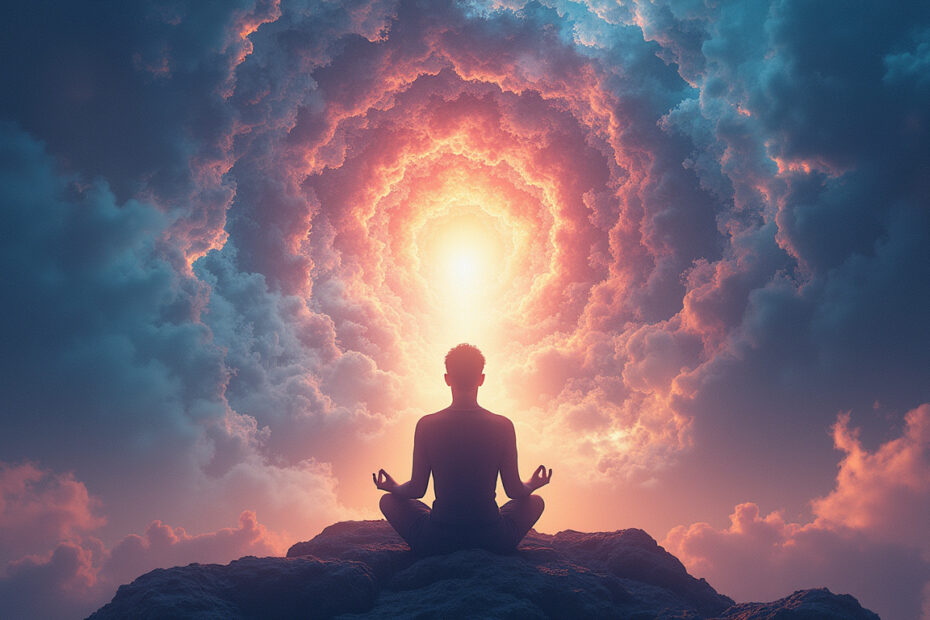
A mystical experience can feel like stepping outside of ordinary reality into something vast, luminous, and deeply meaningful. Whether it happens in meditation, in nature, during prayer, or seemingly out of nowhere, a mystical experience often leaves a lasting mark—changing how you see yourself, others, and life itself. In this guide, we’ll explore what a mystical experience feels like, what may be happening psychologically and spiritually, and how you can nurture conditions for more depth, insight, and growth.
What Is a Mystical Experience?
While traditions define it differently, a mystical experience is generally described as a direct, felt sense of connection with something greater than the everyday self. People might call that “God,” “the universe,” “the Absolute,” or simply “pure awareness.”
Common threads across cultures and religions include:
- A powerful sense of unity with all things
- A feeling of timelessness or being outside of clock-time
- Overwhelming peace, love, or bliss
- A sense of profound insight or “knowing” that’s hard to put into words
The psychologist William James famously outlined features of mystical experience such as ineffability (hard to describe), a sense of revelation, transience, and a feeling of being moved by a power beyond the ordinary mind (source: Stanford Encyclopedia of Philosophy).
What a Mystical Experience Feels Like
Mystical experiences can vary tremendously, but many people report similar qualities. You may experience some, all, or different variations of these.
1. A Sense of Boundless Unity
One of the clearest hallmarks is a dissolving of the usual sense of “me in here” and “world out there.” You might feel:
- As if you and everything around you are part of one living whole
- A deep kinship with people, animals, plants, or the entire cosmos
- That the boundary of your body is less solid, more fluid or transparent
Some describe this as becoming “one with everything,” while others say it’s like remembering something they somehow always knew but had forgotten.
2. Timelessness and Spacelessness
In a mystical experience, ordinary time can feel irrelevant:
- Minutes can seem like hours—or hours like seconds
- You may feel you’ve stepped out of time altogether
- Past, present, and future may feel as though they are somehow “all here”
This shift in time perception is why some experiences that last only a few moments can feel infinitely rich and expansive.
3. Overwhelming Presence and Aliveness
Many report an intense sense of presence—as if life itself has become more vivid:
- Colors may seem brighter and more alive
- Sounds feel clearer, more resonant
- The simplest things—breathing, touching a leaf, hearing a bird—can feel sacred
This heightened presence is often accompanied by the sense that “this is more real than ordinary reality,” not less.
4. Deep Peace, Love, or Bliss
Emotionally, a mystical experience can be profoundly moving:
- Waves of unconditional love—for yourself, others, everything
- A peace that feels unshakable, even in the face of personal difficulties
- Joy or bliss that has no obvious external cause
Sometimes this is gentle and subtle; at other times, it’s so intense that people weep, laugh, or feel totally overwhelmed.
5. A Sense of Insight or Revelation
People often come away with the feeling that they’ve seen some fundamental truth:
- “Everything is connected”
- “Love is the ground of reality”
- “I am not just this small separate self”
Even if the insight is simple in words, the felt sense can be life-altering, shifting priorities, values, and the way you relate to others.
Types of Mystical Experience Across Traditions
Mystical experience shows up in many paths, often with different language but similar essence.
Religious and Devotional Mysticism
In religious contexts, mystical moments are often framed as encounters with the divine:
- Christians may describe feeling united with Christ or filled with the Holy Spirit
- Sufis (Islamic mystics) speak of annihilation in God (fana) and union (baqa)
- Bhakti yogis in Hinduism experience overwhelming devotion and unity with a chosen deity
These experiences typically involve prayer, chanting, or surrender to a higher power.
Nondual and Contemplative Mysticism
Nondual traditions emphasize recognizing the underlying oneness of reality:
- Advaita Vedanta points to the realization that Atman (self) is Brahman (absolute reality)
- Zen and other Buddhist schools speak of awakening to emptiness or Buddha-nature
- Some contemplative Christians and contemplatives of other paths speak of “pure awareness” or “ground of being”
Here, the mystical experience may be more about clarity and insight into the nature of consciousness itself.
Nature-Based and Spontaneous Mysticism
You don’t need a religious framework to have a mystical experience:
- A sense of merging with a forest, ocean, mountain, or starry sky
- A sudden wave of unity and meaning in everyday life—a subway ride, a conversation, a piece of music
- Spontaneous experiences triggered by grief, birth, crisis, or extreme awe
These can be just as powerful and transformative as explicitly religious experiences.
What Causes Mystical Experiences?
No single cause can explain every mystical experience, but several factors often play a role.
Brain and Psychology
Neuroscience suggests:
- Changes in activity in regions related to self-representation (like the default mode network) can reduce the sense of separate self
- Meditation, prayer, and certain breathing practices alter brain states, increasing the chance of mystical-type experiences
- Psychedelics (used in clinical and traditional settings) reliably increase reports of mystical experiences, accompanied by distinct patterns of neural activity
From a psychological lens, mystical experience can also arise as the mind reorganizes itself under stress, grief, or major life transitions.
Spiritual and Philosophical Views
Spiritual traditions interpret mystical experience as:
- Glimpses of a deeper dimension of reality that is always present
- Moments when the ordinary filters of perception relax, revealing unity and sacredness
- A natural capacity of consciousness, like an inner sense we don’t usually use fully
Your interpretation will depend on your worldview—but the impact can be profound regardless of the explanatory model.
Potential Benefits of Mystical Experiences
A genuine mystical experience can have long-term positive effects:
- Greater sense of meaning and purpose
- Reduced fear of death and increased acceptance of impermanence
- More compassion and empathy, seeing others as less separate
- Healing from trauma or addiction, in some research contexts, especially when integrated well
- Shift in values toward authenticity, service, and inner growth
However, not all after-effects are easy. Sometimes these experiences shake up your identity, relationships, or beliefs, creating a “spiritual growing pain” period.
Challenges and Misunderstandings
While mystical experiences can be beautiful, there are some common pitfalls.
Ego Inflation and Specialness
After a powerful mystical moment, it’s easy to believe:
- “I’m more advanced or special than others.”
- “I’ve arrived; there’s nothing more to learn.”
This is just the ego co-opting the experience. Authentic growth usually brings humility, not superiority.
Spiritual Bypassing
Using the memory of a mystical experience to avoid dealing with real-life issues—trauma, boundaries, emotions, responsibilities—is called spiritual bypassing. A genuine mystical path does not exempt you from human work; it deepens it.
Confusion and Disorientation
Sometimes after a mystical opening:
- Old beliefs no longer fit, but new ones haven’t formed
- Relationships or life choices may come into question
- You might feel “between worlds” for a while
Supportive community, therapy (especially spiritually-informed or transpersonal), and grounded practices can help integrate these shifts.

If experiences become frightening, destabilizing, or interfere with daily functioning, consider support from a mental health professional familiar with spiritual experiences.
How to Grow Toward Mystical Experience (Safely and Genuinely)
You can’t force a mystical experience, but you can cultivate conditions that make depth and insight more likely while supporting long-term growth.
1. Establish a Regular Contemplative Practice
Choose one or two practices and stick with them consistently:
- Meditation (mindfulness, loving-kindness, or nondual awareness practices)
- Prayer (spoken, silent, or contemplative)
- Breathwork (gentle, not extreme, to avoid dysregulation)
- Contemplative reading of wisdom texts with reflection
Even 10–20 minutes daily can slowly shift your baseline awareness.
2. Cultivate Presence in Everyday Life
Mystical experience often arises in simple moments when you’re fully here:
- Pay full attention to one daily activity—eating, walking, showering
- Notice sensations, sounds, and sights without labeling or judging
- Practice pausing throughout the day to take one conscious breath
Over time, this trains you to live closer to the layer of reality where mysticism lives.
3. Engage the Heart: Love, Gratitude, and Service
Mystical paths almost always emphasize the heart:
- Keep a brief gratitude list each day
- Practice compassion—wishing others well, including those you struggle with
- Offer small acts of service without seeking credit
A softened, open heart is fertile ground for authentic mystical experience.
4. Work with a Teacher, Guide, or Community
Not mandatory but often very helpful:
- A meditation teacher, spiritual director, or mentor can help you navigate unusual experiences
- A supportive community provides context, grounding, and shared language
- Hearing others’ stories prevents you from feeling alone or “weird”
Look for guides who are ethical, humble, and open to questions.
5. Integrate, Don’t Chase
If you’ve had a mystical experience:
- Journal what you remember—feelings, insights, symbols
- Ask: “What would it look like to live just 1% more in alignment with that?”
- Focus on small daily shifts rather than trying to recreate the peak moment
Chasing intensity can become addictive and distracting. Integration—letting the experience quietly reshape your life—is where real transformation happens.
6. Take Care of Body and Mind
A stable system supports deeper states:
- Sleep enough and eat nourishing food
- Move your body: yoga, walking, stretching, any mindful movement
- Address mental health issues with appropriate support
Mystical experiences land more safely in a well-supported nervous system.
Simple Practices to Deepen Your Own Mystical Sensitivity
Here is a short sequence you can try regularly:
-
Sit quietly for 5–10 minutes
- Gently focus on the feeling of breathing in the chest or belly.
- When thoughts wander, notice and return without judgment.
-
Open to a sense of connection
- Silently repeat a phrase such as, “May I feel connected to all of life,” or “I open to reality as it is.”
-
Practice nature contemplation (a few times per week)
- Sit or walk in nature with your phone off.
- Let yourself feel the life around you—trees, sky, wind—as if you’re part of one organism.
-
Reflect and integrate
- Afterward, write a sentence or two: “What did I notice?” or “How would I live if this world is truly interconnected?”
No fireworks are required. Subtle shifts in perception, over time, prepare the ground for deeper mystical insight.
FAQ About Mystical Experiences
What is a mystical experience in simple terms?
A mystical experience is a powerful, direct feeling of being connected to something larger than your ordinary self—whether you call that God, the universe, or pure awareness. It often includes a sense of unity, peace, and profound meaning that ordinary language can’t fully capture.
Are mystical spiritual experiences always religious?
No. Mystical spiritual experiences can occur inside or outside formal religion. They may arise in prayer or worship, but also in nature, art, deep meditation, or during intense life events. The core is the felt sense of profound connection and insight, not adherence to a specific belief system.
What is a mystical state of consciousness and is it safe?
A mystical state of consciousness is a temporary shift where ordinary sense of self and time soften or dissolve, revealing a deeper feeling of unity, presence, and meaning. For most people, especially with good mental health and grounding practices, such states are safe and can be beneficial. If experiences become frightening, chaotic, or disrupt daily life, it’s wise to seek guidance from a therapist or experienced spiritual mentor.
A mystical experience is not just a dazzling moment—it’s an invitation. Whether you’ve had such an experience or simply feel drawn to the possibility, you can begin now: slowing down, turning inward, opening your heart, and living with a little more presence and care. If you’d like support on this path, consider starting a simple daily practice, joining a contemplative group, or working with a seasoned guide who understands both psychology and spirituality. Your next step doesn’t have to be dramatic; it just has to be sincere. Take that step today, and let the mystery meet you where you are.